Tech Transforms, People Deliver: Why talent must lead the logistics revolution
As logistics operations race to adopt automation, AI, and analytics, true transformation depends on people—not just technology.

I don’t think I have to remind any of our readers that logistics operations are under constant pressure to evolve. What once felt like occasional disruption has become the norm, with geopolitical instability, shifting trade rules, rising customer expectations, and ongoing cost pressures all driving the need for faster, smarter, more efficient supply chains.
In response, companies are doubling down on digitalization—embracing automation, AI, and analytics to boost agility and competitiveness. And it’s working.
As we’ve been tracking over the past few years, data-driven decisions are helping shippers optimize inventory, reroute freight in real time, and better anticipate risk. But as the pace of innovation accelerates, it’s worth asking: Are we redesigning our logistics and supply chain systems with people in mind?
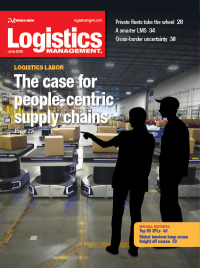
That question sits at the heart of our June cover story, “Talent Reinvention: Making the urgent case for people-centric supply chains,” by Inge Oosterhuis, global lead for talent and organization for supply chain and operations at Accenture, and Sarah Banks, global lead for freight and logistics at Accenture. While this is the first time we’ve worked with Oosterhuis, Banks has been a trusted labor source for LM for years. In fact, she presented a session on logistics labor at our Virtual Summit a couple of years ago.
In this new piece, Banks and Oosterhuis make a compelling case: Even as technology reshapes the rules of the game, it’s human talent that will ultimately determine how successful those changes are. Technology may power the next generation of supply chain systems—but people will drive the transformation.
That means logistics leaders must do more than roll out automation or upgrade platforms. They must consider how new tools affect their workforce—from warehouse staff and drivers to planners and analysts.
The article defines the workforce challenges we’re all familiar with, then offers high-level transformation strategies to move us forward. It also poses a few key questions: Are workers being trained to use advanced systems effectively? Are roles evolving to support both productivity and career growth? And perhaps most importantly: Are we creating environments where people feel empowered to adapt, contribute, and lead?
Talent strategy can no longer be a side conversation. It must be woven into the core design of any transformation initiative. As our authors point out, companies that invest in both technology and talent are far more likely to achieve the resilience, agility, and efficiency they’re aiming for.
In today’s volatile world, supply chain reinvention isn’t just necessary—it’s inevitable. But the smartest leaders understand that true transformation doesn’t start with technology. It starts with people. The companies that center their workforce in every change they make will be the ones best equipped to thrive—no matter what comes next.
“One thing is clear—as we move toward 2030, technology will not replace the need for people—it will redefine it,” write our authors. “Competitive advantage will belong to companies that act now to rethink how they attract, engage, and grow talent at every level.”

Article Topics
Accenture News & Resources
U.S.-based retailers are preparing for stock shortages this holiday season Redefining Resilience: How autonomy is reinventing global supply chains 36th Annual State of Logistics: 3PLs face challenges, but consolidation and tech investment offer path to resilience 3PLs Under Pressure: Growth collides with global logistics disruption Tech Transforms, People Deliver: Why talent must lead the logistics revolution Talent Reinvention: Making the urgent case for people-centric supply chains Rethinking Cybersecurity: Ready for a makeover in supply chain risk management More AccentureLatest in Logistics
U.S. Chamber of Commerce-led letter to USTR reiterates support for USMCA Q3 intermodal volumes see annual gains, reports IANA Manufacturing declines for the ninth consecutive month, reports ISM Looking at the impact of tariffs on U.S. manufacturing UP CEO Vena cites benefits of proposed $85 billion Norfolk Southern merger Proposed Union Pacific-Norfolk Southern merger draws praise, skepticism ahead of STB Filing National diesel average is up for the fourth consecutive week, reports Energy Information Administration More LogisticsAbout the Author

Subscribe to Logistics Management Magazine

Find out what the world's most innovative companies are doing to improve productivity in their plants and distribution centers.
Start your FREE subscription today.
November 2025 Logistics Management
Latest Resources