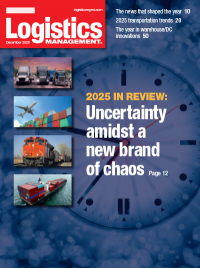
2025 in Review: Uncertainty amidst a new brand of chaos
December 1, 2025
2025 delivered a near repeat of 2024's volatility, with tariffs, uneven demand, political uncertainty, and shifting trade dynamics leaving logistics managers stuck in a constant state of reaction. Across every mode—trucking, intermodal, rail, ocean, parcel, and shipper operations—experts point to the same themes: excess capacity, fragile confidence, tariff-driven distortion, and a growing reliance on technology as the industry waits for clarity that never quite arrives.
The Logistics and Supply Chain News that Shaped 2025
December 1, 2025
A handpicked roundup of the top 10 logistics and supply chain stories from 2025, highlighting the most significant trends and themes identified by LM Group News Editor Jeff Berman—this curated list goes beyond simple popularity metrics, offering deeper insights into the key developments shaping the industry.
Logistics & Transportation Management “2025 Must Reads”
December 1, 2025
As the logistics and freight transportation landscape continues to evolve, the Logistics Management editorial staff has selected the “Must-Read” features from 2025.
2025: Groundhog Day all over again
December 1, 2025
The logistics industry enters 2026 feeling a strong sense of déjà vu, as shifting tariffs, uneven freight markets, and persistent uncertainty left many managers reliving the same disruptions throughout 2025. Yet amid the volatility, technology—especially AI—offers a path forward, and those willing to adapt, rethink partnerships, and invest in smarter tools will be best positioned to navigate the chaos ahead.
Emerging trends in logistics technology adoption
December 1, 2025
Companies worldwide are accelerating their adoption of advanced logistics technologies—from cloud platforms and control towers to generative and agentic AI—as they push toward higher levels of automation, autonomy, and real-time decision-making. Yet with markets, industries, and regulatory environments maturing at different speeds, success hinges on strong data foundations, selective tech investment, and a phased roadmap that builds from analytics and automation toward predictive and fully autonomous logistics capabilities.
Truckload 2025: How carriers are navigating a three-year freight slump
November 1, 2025
The $387 billion U.S. truckload sector is still stuck in a three-year freight recession, with soft demand, rising bankruptcies, and tariff-driven volatility continuing to weigh on carriers. Yet, amid mergers, bankruptcies, and shifting global trade, leading operators like J.B. Hunt, Knight-Swift, and Werner are adapting business models, pursuing cross-border growth, and investing in efficiencies to weather the downturn.
Rail and Intermodal in the Spotlight: Will AI drive a new era?
November 1, 2025
As rail and intermodal rebound from years of underinvestment, new technology and AI-driven analytics are helping to modernize networks, improve service levels, and restore shipper confidence. With visibility, safety, and fluidity on the rise, industry leaders say rail’s digital transformation is finally catching up—setting the stage for a new era of intelligent, data-driven logistics.
Regulatory Reset: How deregulation is disrupting trucking in 2025
November 1, 2025
The first year of deregulation under the Trump administration is reshaping the trucking industry, as federal agencies roll back emissions rules, language requirements, and speed limiter mandates. While supporters hail the moves as “pro-trucker,” critics warn that looser oversight could slow the industry’s shift toward cleaner, safer, and more autonomous operations.
2025 Digital Freight Matching Roundtable: From spot chaos to smart capacity
November 1, 2025
AI-driven digital freight matching platforms are transforming the brokerage landscape, helping shippers and carriers automate workflows, boost utilization, and navigate the lingering freight recession. Industry leaders say technology adoption is now table stakes, with consolidation, predictive pricing, and hybrid human-tech models driving the next wave of growth and efficiency.
Data, AI, and Automation: The new engines of motor freight
November 1, 2025
Data, AI, and automation are transforming motor freight management as shippers, carriers, and brokers use digital tools to cut costs, improve visibility, and manage risk in a volatile market. Experts from Gartner and MIT say the real advantage comes when companies align people, processes, and technology to turn digital investments into lasting performance gains.
The “T” Word: How tariffs shook global trade
November 1, 2025
Tariffs, trade restrictions, and new export-control rules made 2025 one of the most complex years in global logistics, forcing shippers to rethink sourcing, compliance, and cost structures. As 2026 approaches, experts urge companies to invest in people, processes, and technology to strengthen compliance programs, automate trade management, and stay resilient amid ongoing regulatory uncertainty.
3PLs in the Fast Lane: Meeting the e-commerce surge with tech, scale, and smarts
October 1, 2025
As e-commerce sales surge toward $8 trillion, third-party logistics providers (3PLs) are evolving to handle higher order volumes, tighter delivery windows, and complex returns using automation, AI, and integrated warehouse management systems (WMS). By offering scalable fulfillment, reverse logistics, and real-time visibility, 3PLs help shippers of all sizes optimize operations, cut costs, and enhance customer satisfaction in a rapidly changing digital marketplace.
From Cost Savings to Customer Satisfaction: Why a TMS is essential for modern logistics
October 1, 2025
A Transportation Management System (TMS) empowers logistics managers to optimize freight costs, improve visibility, and standardize processes while enhancing customer experience and operational efficiency. By leveraging automation, carrier management, reporting analytics, and sustainability tracking, a TMS helps companies scale, reduce costs, and gain actionable insights for smarter, data-driven transportation decisions.
15th Annual Rail/Intermodal Roundtable: Seeking growth drivers amid big M&A questions
October 1, 2025
The 15th Annual Rail/Intermodal Roundtable examines the current state of the U.S. rail and intermodal markets, highlighting modest carload growth, improving service levels, and the ongoing impact of tariffs, truck competition, and emerging technology. Experts also weigh in on the potential Union Pacific-Norfolk Southern merger, forecasting that regulatory review and broader economic conditions will shape service, pricing, and growth opportunities over the next several years.
Top 30 Ocean Carriers: Navigating a still-volatile seascape
October 1, 2025
The feature examines the volatile ocean shipping landscape, highlighting how tariffs, geopolitical tensions, fleet overcapacity, and port congestion are reshaping trans-Pacific and global container markets. Insights from top carriers, including Maersk, Hapag-Lloyd, and MSC, as well as analysts from Drewry and Freightos, reveal how shippers are navigating rate fluctuations, front-loaded cargo, and evolving peak season timing to optimize ocean freight strategies.
U.S. Foreign-Trade Zones in 2025: How new tariffs and proclamations are changing the playbook
October 1, 2025
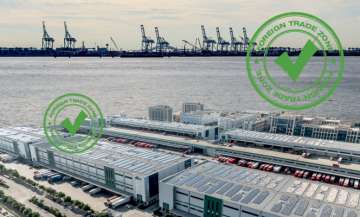
U.S. Foreign-Trade Zones (FTZs) continue to provide importers and exporters with duty deferral, export exemptions, and operational efficiencies, even as 2025 tariff policies—including reciprocal duties, higher Section 232 rates, and the end of de minimis—reshape the importing landscape. By leveraging FTZs, companies can manage costs, streamline compliance, and maintain global competitiveness while navigating evolving trade regulations.
Revolutionizing SCM Software: Real-time visibility, AI, and seamless integration
September 4, 2025
Modern supply chain management (SCM) software is transforming logistics with real-time visibility, AI-driven decision-making, and seamless integration across WMS, TMS, YMS, and ERP systems. These intelligent platforms help companies boost agility, optimize operations, and respond instantly to disruptions, delivering measurable ROI and improved supply chain performance.
2025 YMS Update: How yard management systems are transforming the modern supply chain
September 4, 2025
Modern yard management systems (YMS) are transforming supply chain operations by improving trailer flow, real-time visibility, and dock scheduling efficiency. Companies across industries are adopting modular, AI-enabled YMS solutions to reduce yard congestion, streamline operations, and integrate seamlessly with WMS and TMS platforms.
Annual Study of Logistics and Transportation Trends: The great disconnect
September 4, 2025
The 34th Annual Study of Logistics and Transportation Trends reveals a growing disconnect in the industry, as logistics professionals recognize challenges from AI adoption, workforce shortages, and tariff disruptions but struggle to take effective action. This year’s findings highlight gaps in technology implementation, workforce development, and operational strategies, offering critical insights for shippers aiming to bridge the knowing-doing gap.
The Great Disconnect: Bridging the knowing/doing gap in logistics
September 4, 2025
The 34th Annual Study of Logistics and Transportation Trends uncovers the "great disconnect" in logistics, revealing that leaders recognize the importance of AI, workforce development, and technology integration but struggle to translate insights into action. This year’s findings offer actionable strategies for bridging the knowing/doing gap, helping supply chain and logistics professionals improve performance, adoption of emerging technologies, and operational resilience.