Breaking Down Silos: The rise of integrated supply chain ecosystems
Standing at the intersection of interconnected physical assets and automated processes is supply chain management (SCM) software, which serves as the connective tissue in today’s ever-evolving landscape.
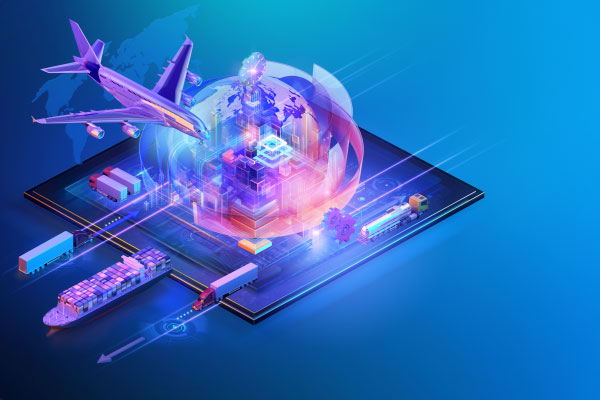
If this year’s ProMat show was any indication, the vast array of logistics, supply chain and material handling solutions and equipment are becoming increasingly intertwined and interconnected.
If you or any number of your colleagues attended the mammoth trade show in Chicago in March, you saw equipment manufacturers pairing up with robotics developers; conveyor companies with software vendors; and automated storage and retrieval (AS/RS) makers with tote manufacturers right on the expansive exhibition floor, where cohabitation and collaboration were clearly the name of the game this year.
The motivation behind this collaboration movement is pretty clear: Much like the wide-reaching networks that these systems support and orchestrate, they themselves also have to function as cohesive ecosystems in order to deliver maximum efficiency and results. This interconnectedness reflects the growing demand for holistic solutions that address the entire supply chain, where isolated, incremental improvements may or may not contribute to the greater good.
Standing at the intersection of those interconnected physical assets and automated processes is supply chain management (SCM) software, which serves as the connective tissue in this ever-evolving landscape. These sophisticated warehouse management systems (WMS), labor management systems (LMS), yard management systems (YMS) and transportation management systems (and other assets to create synchronized, responsive ecosystems. TMS)—among other solutions—are integrating not only with one another, but also with equipment.
All together now
Howard Turner, director, supply chain systems at St. Onge Co., says the interconnectedness movement is also happening within the SCM software space itself.
“Software companies have been merging all types of applications, be it TMS, WMS, YMS or some other type of application,” says Turner, “all with the goal of getting multiple applications onto the same platform.”
Turner sees the cloud as the ultimate facilitator of this convergence. Companies across the board are adopting more cloud-based solutions and fueling a global software sector that’s expected to exceed $1.3 trillion in total market volume by 2029—up from a current $934.3 billion. With a market volume of $390.5 billion, software as a service (SaaS) is currently the dominant player in the public cloud market sector.
The advent of application programming interfaces (API), which are rules and protocols that allow different software applications to communicate and share data, is another force behind the fusing of SCM software platforms.
“Where this ‘convergence’ was mostly lip service 10 years ago, we’re now seeing a move to truly single platform solutions,” says Turner, who points to the emergence of microservices architectures (collections of small, independent services that communicate to perform tasks) as a third catalyst for building more flexible and scalable integrated systems.
“Many companies are using the microservices approach to access only the functionality that they need and all on the same platform,” says Turner, who adds that this not only gets potentially-disparate systems on the same page, but it also gets them working from the same database. “Along with the obvious benefits—more consistent data, streamlined reporting and better operational visibility—the setup is especially beneficial for users, who don’t have to jump around between systems to get a complete picture of what’s going on in their supply chains at any given point.”
For example, users can check order statuses and transfer inventory between DCs (WMS); check inventory out in the yard (YMS); and view in-transit shipments and estimate delivery times (TMS), all in what looks like one system from their perspective. “This ‘blurring of the lines’ between systems helps create a good user experience because everything kind of looks and feels the same,” says Turner, who sees even more ‘blurring’ ahead for the SCM space as companies work to consolidate their applications onto unified platforms.
Turner adds:
“A WMS isn’t going to do what a TMS can do and vice versa, but this approach does bring everything together under the same roof and lets users work with what basically ‘looks’ like a single supply chain execution system.”
Within the four walls of the warehouse/DC
Bob Kennedy, principal at RC Kennedy Supply Chain Consulting, says over the last 10 years he’s seen the expansion of the core WMS—the tool that warehouse and DC operators use to run their operations—into additional functionality and even additional software products that are now becoming integrated.
“The WMS vendors want to offer a portfolio solution as opposed to just the WMS, many of which now come with slotting tools, planning tools, and even some TMS capabilities [or, the tools for integrating TMS and WMS],” says Kennedy. “These vendors want their footprint to expand beyond just the core.”
When that footprint expansion happens, the companies using the WMS gain greater visibility over their supply chains. Add artificial intelligence (AI) to the mix, and the tool itself starts to run a bit more cohesively, quickly and autonomously.
In keeping with the “convergence” theme, WMS providers are also using more low-code/no-code development, allowing users to build applications with minimal or no traditional programming. And, they’re using microservices that let users pick and choose which functionalities they need most, “versus forcing them into a single software configuration.”
Speed-to-market is another issue that’s top of mind for SCM vendors right now. Specific to WMS, Kennedy says that vendors understand that the market is changing quickly and they’re working to stay in lock step with—or in some cases, out in front of—these shifts.
This is another area where low-code/no-code, cloud and microservices are proving their value. “There’s a race between vendor and customer to stay in sync because business requirements are changing so rapidly,” adds Kennedy. “Keeping up is difficult, so software vendors are using more flexible architectures that give their customers more flexibility in how they deploy and use them.”
Next-gen supply chain tech
Manual tasks have always been the anathema of the modern supply chain, where excessive hands-on moves can waste time, take too much manpower, create ergonomic issues for employees and hurt productivity.
Companies have been using technology to reduce manual work for decades, but Nathan Lease, a research director for Gartner’s Logistics and Customer Fulfillment Team, says that the “systemization and automation” movement is now underway in full force in the modern DC and warehouse.
More recently, AI and machine learning have become the shining stars on the automation front, where they help optimize complex processes like order picking routes and warehouse layout; predict equipment maintenance needs before failures occur; and enhance real-time inventory accuracy. The technology isn’t just automating physical movements either; it’s also intelligently orchestrating those movements and proactively addressing potential disruptions.
Lease sees good potential ahead for AI in SCM, but notes that there’s still some work to be done in this area, as companies lean into using more AI and software vendors incorporate more of its capabilities into their platforms.
“I see AI advancing and being used in more of these types of technology platforms, but I haven't quite seen it in full motion just yet,” says Lease, who has seen some companies experiment with using AI-powered vision cameras to monitor trailer ingress and egress, and RFID and GPS trackers to keep tabs on where those vehicles are out in the yard at any given time. “We’re at a point where all the different, core SCM technology providers are thinking through and trying to roadmap out their automation play advances,” says Lease.
At the other end of the spectrum, shippers are retrenching and looking closely at how to best divvy up their IT budgets across the various supply chain management solution options. Citing a recent Gartner user survey, Lease says that they’re also reassessing their prior investments and trying to avoid repeating past mistakes on the tech investment front.
Gartner asked survey participants what their greatest obstacle to delivering an effective digital logistics operation was for their companies. “Limited value realized from existing technology investments was one of the top responses for companies that are not currently hitting their goals and objectives in this realm [versus “high performers” that are achieving their goals],” says Lease. “Basically, they’re struggling to get value from their existing technology.”
Time to turn the page
To companies dissatisfied with their past software investments, Lease suggests a tighter focus on return on investment (ROI) when evaluating, choosing and deploying SCM software and other solutions.
Start with your current technology stack, says Lease, and work to maximize its value or find room in the budget for replacement options that will meet or exceed ROI expectations. These steps are especially critical in an era where strategic initiatives may be deprioritized due to shifts in the business environment and broader economy.
“There has to be a reason to prioritize an investment in digital transformation,” says Lease, who sees more digitization ahead for the logistics and supply chain sector. Companies that work to drive more value out of their existing technology, and then prioritize new investments accordingly, will be able to “set themselves up for success over the next five years,” he adds.
As for the SCM vendors who are driving much of the innovation either internally or based on their customers’ needs, Lease says they continue to innovate, leverage advancements like AI and develop new capabilities for their platforms.
“They pretty much all have strategic roadmaps to get more into AI automation and process streamlining at this point,” adds Lease. “In the end, it really comes down to the merger of people, process and technology. The ‘people’ and the ‘process’ must work in conjunction with the ‘technology’ to ensure software vendors are delivering all of the value that they’re promising.”

Article Topics
Software News & Resources
Drive Agility and Resilience Across Your Supply Chain The Hidden 23% Driving Up Your Labor Spend How physical security helps mitigate supply chain risks The Future of Last-Mile Logistics: Balancing Automation, Efficiency, and Human Expertise Engineering the future of logistics—from the inside out 2025 Digital Freight Matching Roundtable: From spot chaos to smart capacity 3PLs in the Fast Lane: Meeting the e-commerce surge with tech, scale, and smarts More SoftwareLatest in Logistics
FTR’s Shippers Conditions Index shows modest growth Trucking executives are set to anxiously welcome in New Year amid uncertainty regarding freight demand ASCM’s top 10 supply chain trends highlight a year of intelligent transformation Tariffs continue to cast a long shadow over freight markets heading into 2026 U.S.-bound imports see November declines, reports S&P Global Market Intelligence FTR Trucking Conditions Index shows slight gain while remaining short of growth AAR reports mixed U.S. carload and intermodal volumes, for week ending December 6 More LogisticsAbout the Author

Subscribe to Logistics Management Magazine

Find out what the world's most innovative companies are doing to improve productivity in their plants and distribution centers.
Start your FREE subscription today.
December 2025 Logistics Management
Latest Resources