Beyond the Buzz: Building a smarter supply chain ecosystem
From ProMat’s electric show floor to the pages of our May issue, it’s clear: logistics pros aren’t just adapting to technology—they’re building a smarter, fully integrated supply chain ecosystem.

I’d like to update Ben Franklin’s old saying: “Nothing is certain but death and taxes.” My 2025 version might read: “Nothing is certain but death, taxes—and the constant evolution of logistics and supply chain technology.”
To validate that update, all you had to do was walk the floor at the recently concluded ProMat show in Chicago. Calling it “busy” doesn’t quite do it justice. At times, the energy generated by the 50,000+ attendees felt downright electric.
As you might expect, most of the buzz centered on technology—software, automation, and robotics—that have become the beating heart of today’s logistics and supply chain conversations. Feeding off that momentum, we’ve once again devoted our May issue to putting this ongoing tech evolution into perspective for logistics professionals.
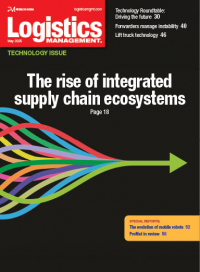
Leading off on our cover, contributing editor Bridget McCrea explores software’s expanding role in what she calls the “integrated supply chain ecosystem.” Inside, I present our Annual Technology Roundtable, featuring insights from four top tech analysts (page 30); global correspondent Karen Thuermer reports on new digital tools from freight forwarders (page 40); and contributing editor Amy Wunderlin dives into real-world innovations and applications for autonomous mobile robots (AMRs) on page 52.
As McCrea reports this month, we’re witnessing a new level of collaboration that’s working to tie every link in the supply chain together in effort to eliminate any remaining blind spots—a movement driving the buzz. Evidence of this was seen at ProMat, as equipment manufacturers pared up with robotics developers and software providers, all neatly cohabitating in booths.
“Much like the wide-reaching networks that these systems support and orchestrate, they themselves also have to function as cohesive ecosystems in order to deliver maximum efficiency and results,” says McCrea. “This interconnectedness reflects the growing demand for holistic solutions that address the entire supply chain, where isolated, incremental improvements may or may not contribute to the greater good.”
While McCrea does an outstanding job of giving shippers the 30,000-foot vision of the benefits an integrated supply chain ecosystem will bring, our Annual Technology Roundtable dives into the current state of some of the vital factors that create that system.
Gartner’s Brock Johns shares how shippers can better optimize transportation networks with TMS; Norm Sanez of St. Onge offers his update on warehouse/DC automation and how far we’ve come; long-time robotics source Dwight Klappich of Gartner shares where we stand on adoption and innovation of robots in our operations; and St. Onge’s Howard Turner gets a little more granular on the lifeblood of the integrated supply chain ecosystem—software.
Whether it’s software stitching together once-siloed systems or robotics taking on roles once thought impossible, one thing’s clear: this isn’t just another tech cycle. It’s a true evolution—fueled by collaboration, innovation, and a shared urgency to meet rising customer expectations.
If ProMat is any indication, logistics and supply chain professionals aren’t just adapting to change—they’re working to build a smarter supply chain ecosystem.

Article Topics
Warehouse News & Resources
ASCM’s top 10 supply chain trends highlight a year of intelligent transformation Federal Reserve moves forward with its third consecutive rate cut IKEA moves more manufacturing to U.S. as tariffs raise costs Logistics growth sees mild decline in November, states LMI DHL’s 2025 Peak Season approach includes more planning and less panic Services economy remains on growth track in November, reports ISM The Warehouse Efficiency Playbook More WarehouseLatest in Logistics
FTR’s Shippers Conditions Index shows modest growth Trucking executives are set to anxiously welcome in New Year amid uncertainty regarding freight demand ASCM’s top 10 supply chain trends highlight a year of intelligent transformation Tariffs continue to cast a long shadow over freight markets heading into 2026 U.S.-bound imports see November declines, reports S&P Global Market Intelligence FTR Trucking Conditions Index shows slight gain while remaining short of growth AAR reports mixed U.S. carload and intermodal volumes, for week ending December 6 More LogisticsAbout the Author

Subscribe to Logistics Management Magazine
Find out what the world's most innovative companies are doing to improve productivity in their plants and distribution centers.
Start your FREE subscription today.
December 2025 Logistics Management
Latest Resources