Port of Long Beach appoints Hacebaga as its next CEO, effective January 1
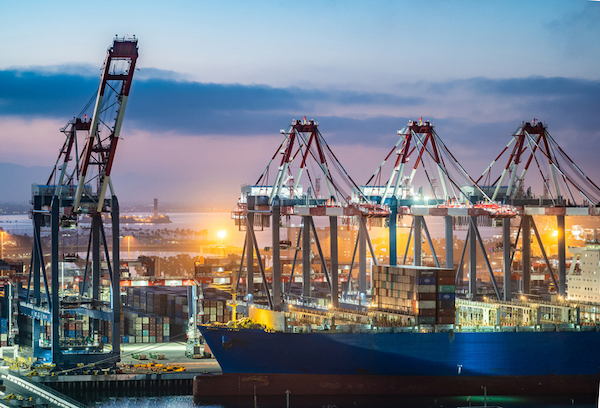
Following its early October announcement that Port of Long Beach (POLB) CEO, Mario Cordero, will retire at the end of 2025, following the last 8.5 years in his current position—and, prior to that, seven years on the Federal Maritime Commission and eight years as a member of the Long Beach Board of Harbor Commissioners—the Long Beach Board of Harbor Commissioners today will announce that Dr. Noel Hacebaga will take over as POLB CEO on January 1, 2026.
Hacebaga currently serves as POLB Chief Operating Officer. He has been at POLB for the last 15 years in various senior management roles, and in his current position he oversees daily operations, including commercial services, engineering, finance and administration, planning and environmental affairs, and strategic advocacy.
Over his tenure at POLB, Hacebaga has led the port in myriad initiatives, including: supporting the CEO in the Port’s response to the pandemic-era global supply chain disruptions; directing the Business Recovery Task Force and coordinating with industry, labor and government partners to keep cargo moving; and leading POLB’s Supply Chain Information Highway, a digital platform designed to improve cargo visibility and data sharing across the national freight network.
What’s more, he also negotiated a number of POLB business transactions, including the multibillion-dollar sales of Long Beach Container Terminal and Total Terminals International, and. in his previous role as POLB Managing Director of Commercial Operations and Chief Commercial Officer, he led the Port through historic industry realignment and record cargo recovery following a major carrier bankruptcy. And he also served as Executive Director of the Intermodal Container Transfer Facility Joint Powers Authority, which oversees a near-dock rail operation supporting both POLB and the Port of Los Angeles.
Hacebaga also has taken active roles with various industry trade organizations and groups, including serving on the board of the Coalition for America’s Gateways and Trade Corridors and the American Association of Port Authorities (AAPA), and he was also Chairman of the Board of Directors of the Intermodal Association of North America.
Hacebaga’s appointment received strong support from POLA Mayor Rex Richardson.
“The Port of Long Beach is entering a pivotal decade—one defined by bold climate action, digital transformation, and generational infrastructure investments,” said Richardson. “Dr. Hacegaba is well-positioned to guide this next chapter as we accelerate toward zero-emission operations, expand our global competitiveness, and continue driving economic opportunity for our community. I support his appointment and look forward to working together to build the port of the future and strengthen Long Beach’s leadership on sustainability and innovation.”
In an interview with LM, Hacebaga said that, going forward, POLB’s mission is clear and its long-term plan for the future is defined and guiding it forward.
“One of the hallmarks of the Port of Long Beach is our ability to plan for the future and execute the plan,” he said. “As we navigate the headwinds of shifting trade policies and tariff uncertainty, we will stay laser-focused on moving our projects and initiatives forward as we keep cargo moving reliably, sustainably and with velocity. The Port of Long Beach is entering a pivotal period. We have key infrastructure projects underway and sustainability goals that we want to meet. Looking for ways to keep the momentum and accelerate progress will be a key focus going forward as we continue to build on our value proposition and strengthen our competitiveness.”
As an example, he observed that in Long Beach, POLB is building the port of the future with an industry-leading $3.2 billion capital improvement program over the next decade that he said will dramatically improve rail capacity inside the port and rail connectivity across the national freight network.
In terms of what he views as the primary challenges and concerns for the ocean shipping sector, Hacebaga placed shifting trade policies and tariff uncertainty reshaping trade flows and trade lanes at the top of the list.
“These changes mean we have to work harder than ever to protect market share and explore new markets,” he said. “As we navigate these headwinds, we will also stay laser-focused on keeping cargo moving as we help move the industry forward. We are building on our value proposition by delivering state of the art infrastructure and industry leading sustainability programs. We are not pulling back on our infrastructure investments and not slowing down our transition to zero emissions operations. We are leveraging subnational collaboration such as green shipping corridors with ports in Asia to continue the momentum of decarbonizing the maritime shipping industry. As the very first Green Port, we have 20 years of experience of how to grow cargo while reducing emissions. This will continue to be our focus going forward.”
When asked to assess the 2025 Peak Season from POLBs perspective, Hacebaga observed how tariff uncertainty—marked by starts and stops—has created mini-peaks throughout the year.
And he added that the gains in cargo volumes that POLA saw in the first half of the year were offset by declines in the second half, while the swings in cargo have been choppy with new tariff announcements driving shipments and pauses spreading shipments.
“As a result, shipments arrived ahead of season,” he said. “Still, in the month of August—during the traditional peak season—we handled 901,846 TEUs. That was the second-busiest August on record and the sixth-busiest month in our 114-year history.
It has been a year of unpredictability and uncertainty as the industry lives within a new tariff landscape. There were predictions of dramatic declines in cargo because of trade policies, but so far that has not happened. Through October, the Port has moved 8,229,916 TEUs, up 4.1% from the same period last year and that was a record year.”

Article Topics
POLB News & Resources
Port of Long Beach appoints Hacebaga as its next CEO, effective January 1 POLA and POLB volumes see October declines POLA and POLB volumes remain strong in August July volumes hit records for Port of Los Angeles and Port of Long Beach POLA and POLB see mixed June volumes Port of Long Beach reports May volume declines POLA and POLB post strong April gains, but port leaders warn of major May drop due to tariff uncertainty More POLBLatest in Logistics
Port of Long Beach appoints Hacebaga as its next CEO, effective January 1 USPS-Amazon contract uncertainty grows as reverse auction plan raises stakes for 2026 renewal Preliminary November Class 8 truck orders see another month of declines U.S. rail carload and intermodal volumes are mixed, for week ending November 29, reports AAR Logistics growth sees mild decline in November, states LMI CBP launches five-year pilot allowing non-asset-based 3PLs Into CTPAT for the first time DHL’s 2025 Peak Season approach includes more planning and less panic More LogisticsAbout the Author

Subscribe to Logistics Management Magazine

Find out what the world's most innovative companies are doing to improve productivity in their plants and distribution centers.
Start your FREE subscription today.
December 2025 Logistics Management
Latest Resources