Port Tracker report points to ongoing import declines as 2025 ends and into 2026
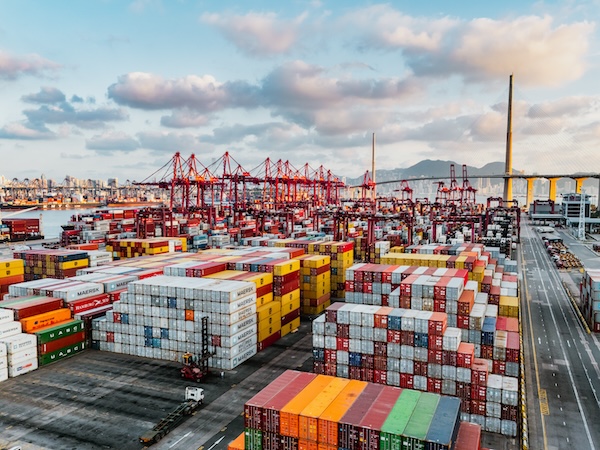
The ongoing stretch of annual declines in United States-bound retail container imports is expected to remain intact into 2026, according to the according to the new edition of the Global Port Tracker report, which was recently issued by the National Retail Federation (NRF) and maritime consultancy Hackett Associates.
The ports surveyed in the report include: Los Angeles/Long Beach; Oakland; Tacoma; Seattle; Houston; New York/New Jersey; Hampton Roads; Charleston, and Savannah; Miami; Jacksonville; and Fort Lauderdale, Fla.-based Port Everglades.
Authors of the report explained that cargo import numbers do not correlate directly with retail sales or employment because they count only the number of cargo containers brought into the country, not the value of the merchandise inside them, adding that the amount of merchandise imported provides a rough barometer of retailers’ expectations.
Tariffs were again the main theme of the report, in observing how the White House reduced tariffs on certain food products, whereas the roadmap for other tariffs, specifically the legality of those imposed under the International Emergency Economic Powers Act (IEEPA), are being considered by the U.S. Supreme Court, could shift depending on the court’s decision. Should the IEEPA tariffs be overturned, the report noted that the White House could look to reinstate them under other trade authorities.
“Stores are stocked up and ready for a record holiday season but there is still a great deal of uncertainty about what will happen in 2026 with trade policy,” NRF Vice President for Supply Chain and Customs Policy Jonathan Gold said. “Regardless of what develops, retailers will adjust their supply chains accordingly and strive to ensure that consumers have affordable options when they shop.”
For October, the most recent month for which data is available, U.S. imports, for the ports surveyed in the report, came in at 2.07 million Twenty-Foot Equivalent Units (TEU), excluding the Port of Charleston, which marked a 1.8% sequential decline and a 7.9% annual decline.
Port Tracker issued projections for November and the subsequent months, including:
- November, at 1.91 million TEU, down 11.6% annually;
- December, at 1.86 million TEU, down 12.7% annually (the report said following the July peak of 2.29 million TEU, November and December would mark the slowest months of 2025, with December being the slowest month since June 2023’s 1.83 million TEU);
- January, at 2.0 million TEU, down 10.3% annually (which would be its first sequential gain in six months through January);
- February, at 1.86 million TEU, down 8.5% annually;
- March, at 1.79 million TEU, down 16.8% annually; and
- April, at 1.97 million TEU, down 10.9% annually
The report explained that November and December are viewed as “traditionally slow” months, adding that the steep annual declines cited in the report are due, in part, because late 2024 imports saw gains related to port strike-related concerns, coupled with retailers importing earlier this year, in an effort to avoid tariffs.
And it added that total imports for the first half of 2025, at 12.53 million TEU, rose 3.7% annually, with calendar year 2025 estimated to come in at 25.5 million TEU, for a 1.4% annual declines.
Hackett Associates Founder Ben Hackett wrote in the report that it is becoming clear that the administration’s tariff policy is not achieving its goals—either economically or geopolitically.
“The economic reality is that the tariffs represent the largest tax hike since 1993 and that most of the tariffs impact lower- and middle-class income earners who face rising grocery prices,” he said. “We are seeing the results of the tariffs in the weakening of demand going forward from the fourth quarter of this year and likely into the first half of next year. Container shipping rates are already declining on both coasts due to less need for cargo space for goods from both Asia and Europe.”

Article Topics
3PL News & Resources
Port Tracker report points to ongoing import declines as 2025 ends and into 2026 National diesel average sees its steepest decline in nearly a year Port of Long Beach appoints Hacebaga as its next CEO, effective January 1 USPS-Amazon contract uncertainty grows as reverse auction plan raises stakes for 2026 renewal Logistics growth sees mild decline in November, states LMI CBP launches five-year pilot allowing non-asset-based 3PLs Into CTPAT for the first time DHL’s 2025 Peak Season approach includes more planning and less panic More 3PLLatest in Logistics
Port Tracker report points to ongoing import declines as 2025 ends and into 2026 National diesel average sees its steepest decline in nearly a year Port of Long Beach appoints Hacebaga as its next CEO, effective January 1 USPS-Amazon contract uncertainty grows as reverse auction plan raises stakes for 2026 renewal Preliminary November Class 8 truck orders see another month of declines U.S. rail carload and intermodal volumes are mixed, for week ending November 29, reports AAR Logistics growth sees mild decline in November, states LMI More LogisticsAbout the Author

Subscribe to Logistics Management Magazine

Find out what the world's most innovative companies are doing to improve productivity in their plants and distribution centers.
Start your FREE subscription today.
December 2025 Logistics Management
Latest Resources