On the Road Again: Three Ways Data Is Enabling Smarter Transportation Management
Transportation is evolving rapidly, thanks to supply chain technology powered by data and analytics. Digitization is driving big changes that can help meet the pace of change.
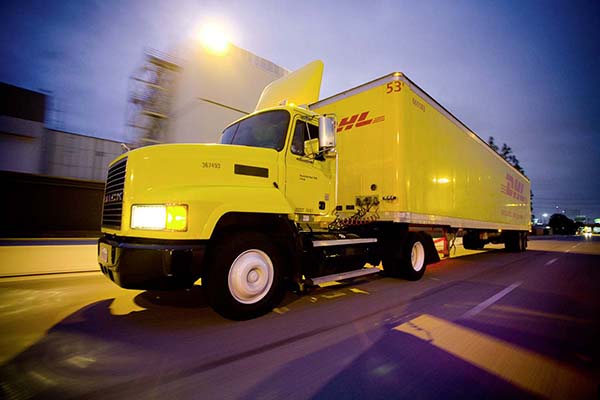
The rise of e-commerce continues to drive greater expectations around speed, agility and visibility. Transportation and warehousing providers have been forced to evolve rapidly to keep pace with increasingly high service level demands – from manufacturers, retailers and consumers. Supply chain technology – powered by data and analytics – are enabling that evolution.
These powerful tools are helping businesses become more informed, efficient and sustainable. Here are the top two making an impact today, along with one coming soon.
Monitoring ensures consistency and quality
Within the last few years alone, technology has propelled the industry beyond simple track-and-trace data into a whole new world of supply chain visibility. Now, customers can not only track their packages through transport, they can receive text or email alerts when delivery vehicles have stopped moving for some period of time. The same data can indicate that the delivery is within a mile of its destination, allowing receiving facility managers to plan ahead and eliminate surprises.
This greater visibility even has implications beyond on-time deliveries. This data will ultimately lead to companies being able to carry less inventory, because they will know with greater certainty where their products are located and exactly when they are needed. This could lead to significant cost savings over time.
Data is also driving greater customization and control across transportation. Internet of Things (IoT) sensors within trailers now enable the ability to monitor and report on temperature, humidity, movement and other important factors in real-time allowing a driver or dispatcher to take action prior to an issue becoming a problem.
Fleet management systems enable efficiency and productivity
Fleet management systems are also playing a large role in driving greater transportation efficiency. Systems communicate with vehicles on a constant basis, gathering data about how long a vehicle has been on the road, where it is headed and which route would be the most efficient. These systems reduce idle driver time, optimize fuel efficiency, enhance safety and reduce paperwork.
This constant communication between vehicles and the warehouse or manufacturing facility also enables greater flexibility and real-time responses to unplanned events. For example, if the original driver assigned to a pick up gets delayed, fleet management technology can automatically re-assign the load to another driver, avoiding downtime or late deliveries. Some large carriers even use data to make routes shorter, keeping drivers closer to home and job satisfaction high.
Digital freight marketplaces are also enabling companies to think beyond today’s shipment by providing greater transparency in the trucking industry. Leveraging technology, shippers are able to see regional trends and specific lane cost information, as well as driver preferences, while carriers have access to details like loading/unloading times and lane history data. All these insights can help drive lower operating costs without sacrificing service.
Vehicle-to-vehicle communication enables platooning
Finally, data will play a role, in coordination with other technologies, in one of the most exciting developments in transportation: platooning. Platooning links three or four trucks for trips on long stretches of Interstate highways. A driver is required for the lead vehicle, and the remaining trucks follow a digital tether, a short distance apart. The lead vehicle controls the speed, direction and braking of all vehicles, which respond with near-zero reaction time. Once within a range of a destination, the platoon pulls off to a dedicated lot, where each truck is met with a driver to shepherd that vehicle to its delivery point.
Platooning is likely to be a game changer for transportation. This application will save driver labor costs since only one driver will be needed for every three or four trucks on the road. It also has the potential to increase road safety, by eliminating human error and speeding up reaction times. The technology also decreases the distance between vehicles, increasing road network capacity. Platooning has environmental benefits as well. Vehicles running at a constant controlled speed release less CO2 emissions and use less fuel. Tests have already proven that this technology can save as much as 11 percent on fuel costs for a three-truck platoon. And though it may seem like something too futuristic to put into practice, companies like TuSimple are already moving freight on autonomous trucks today.
Sharing the cost of technology
Carriers and 3PLs are working together today to leverage these and other technologies to drive greater efficiency and cost savings across the supply chain without compromising service levels. While individual manufacturers and warehousing facilities could also deploy similar approaches, it would likely be cost and time prohibitive. That’s why working with a 3PL can be a good option. They have proven experience leveraging emerging technologies and can often help organizations quickly take advantage of what’s available (and on the near horizon) at a scalable cost.
To learn more about how digitization is driving changes in transportation, read DHL Supply Chain’s full research report—available here.

Article Topics
IOT News & Resources
The artificial intelligence (AI) conundrum Key characteristics of emerging digital supply networks Leveraging Artificial Intelligence (AI) to Transform Supply Chain Planning and Resilience The Warehouse Data Capture Evolution Warehouse/DC Automation & Technology: It’s “go time” for investment Driving the Risk Out of Line Haul Fleet Management with AIoT Technologies Increase the Accuracy of Supply Chain Business Decisions Using Integrated Data Management and AI More IOTLatest in Logistics
Looking at the LTL market with Scooter Sayers U.S. Department of Transportation targets ‘CDL Mills’ as thousands of training providers removed from federal registry National diesel average falls 7.3 cents, down for second consecutive week, reports EIA The Warehouse Efficiency Playbook Drive Agility and Resilience Across Your Supply Chain November Edge Report: What’s shaping freight now Worried About Supplier Risk? This Template Helps You Stay Ahead More LogisticsSubscribe to Logistics Management Magazine
Find out what the world's most innovative companies are doing to improve productivity in their plants and distribution centers.
Start your FREE subscription today.
November 2025 Logistics Management
Latest Resources