GXO posts record-setting Q3 earnings results
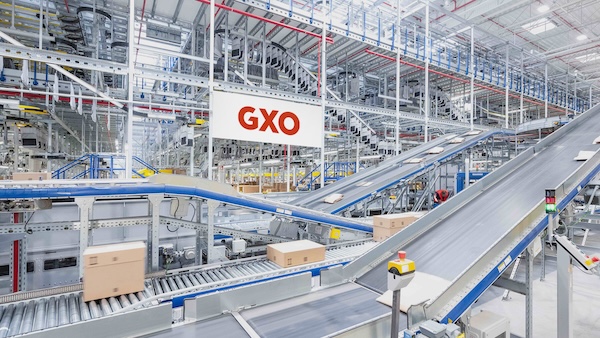
Greenwich, Conn.-based global contract logistics services provider GXO Logistics Inc. reported a company record for quarterly revenue, in its third quarter earnings announcement earlier this week.
Revenue, at $3.4 billion, saw an 8% annual gain, with organic revenue up 4%, and net income, at $60 million, rose 42% annually. Adjusted earnings per share, at $0.79, was flat, topping Wall Street expectations, at $0.77.
“We delivered record revenue in the third quarter, as well as double-digit adjusted EBITDA growth, underscoring the strength and resilience of GXO’s business model,” said Patrick Kelleher, chief executive officer of GXO. “New business wins rose 24% year over year, and our commercial pipeline, which stands strong at $2.3 billion, is geographically diversified and scaling in high-growth sectors. The integration of Wincanton is progressing swiftly, with synergy realization on track, and as we approach year-end, we’re pleased to reaffirm our full-year guidance.
Looking ahead, our clear priorities are to accelerate growth and expand margins. Since joining GXO in August, I’ve been deeply impressed by the quality of our operations and teams. We’re building from a position of strength and are primed to enter a new era of growth that delivers significant value to our customers and shareholders.”
This marked Kelleher’s first earnings call as CEO of GXO. He replaced Malcolm Wilson, whom stepped down earlier this year.
In the Q&A below, Kelleher provided LM with an overview of the company’s third quarter performance, in addition to other topics.
LM: What were the key drivers for GXO’s record-setting third quarter?
Kelleher: It was a strong revenue quarter, and it was reflected by [new business] deals we signed earlier in the year as a key driver of growth. For us, customer churn has been minimized this year through the end of the third quarter. I think that has been a big contributor as well. From a cost perspective, it is really good execution by the team in managing costs and especially labor, in terms of even better opportunities for margin expansion.
LM: With the different verticals GXO serves, are there some key trends or themes you are seeing that stood out in the third quarter?
Kelleher: Things are going well across the verticals we serve. I think that speaks to the resilience in our business. I am really excited with the diversification that we have in the industry verticals we serve. So, while 70% of our businesses probably could be characterized as consumer-focused, the other 30% is B2B. Each of the industry verticals come with their own macroeconomic headwinds and tailwinds, and our diversified portfolio, I think, allows us to deliver the consistent revenue, especially that we saw in the third quarter. The other thing that really excites me is that our pipeline on B2B activity— aerospace and defense, industrial, and the life sciences, space—is increasing. What we are seeing from a macroeconomic perspective, especially in the U.S., is that tariffs are having an impact on increased activity in aerospace defense and certainly that's not just the tariff impact, but also some of the decisions taken in view and so forth around increased defense spending. In the industrial sector, we're seeing manufacturing coming back to the U.S., and also more infrastructure projects in the U.S. that we're supporting, like what we're doing on data centers and the work we are doing there that is moving concurrently with the push in the development of more AI centers in the U.S., especially. And life sciences continue to grow in particular, particularly as there's a drive to reduce costs in healthcare world, which is a mega trend that we definitely benefit from. I think we are interesting, in that our financial performance won't necessarily track with economic level of activity that impacts where there are headwinds; the customer interactions increase because they need to save money.
LM: What are GXO’s plans on the acquisition front?
Kelleher: It is really important to clarify that I am driving a new era of growth at GXO. Our priority is organic growth, and it is something we will place a lot of emphasis on. M&A will be part of our future, but we are going to be very disciplined. Our priorities very clearly sit with opportunities that could present themselves in North America, globally, and in industry verticals of aerospace and defense, industrial, and life sciences. When I say we are going to be very disciplined, that means we are really focused on organic growth.
LM: How is GXO working with customers on Foreign Trade Zones (FTZ), given all the tariff activity over the course of 2025?
Kelleher: They are a great part of our [service] offering. Right now, we have more than 70 FTZ, or bonded, warehouses around the world. It is an area we see growing and not just in the U.S. We recently signed a lease with the Johor-Singapore Special Economic Development Zone that is set up for intra-Asia and is based in Malaysia. It is very much focused on collaboration and to drive a lot of efficiencies, particularly shipping product into and out of Singapore and intra-Asia.
LM: How are you viewing the 2025 Peak Season?
Kelleher: Our focus is on the actions we have taken to position labor based on our customers’ forecasts of low single-digit increases over last year’s peak. We will have a better idea as we get through Black Friday and the holiday shopping season that materializes. We are moving forward with the labor in place ready to execute it.
LM: How is GXO leveraging AI, in terms of service and operational efficiencies?
Kelleher: There are two swim lanes that we're following there. The first is our proprietary AI tools that we're developing and planning to improve warehouse and supply chain operations, delivery savings, productivity savings, and value for our customers in service. We leverage the new GXO IQ tool for the deployment of those AI tools, so that's linked to warehouse management systems across our 1,200 DCs. The proprietary tools that we develop are focused around things like slotting, picking optimization, replenishment optimization, and some forecasting activity. The second lane is focused on how we can leverage third-party AI to improve our own business operations. There's plenty of work that's being done and so we don't need to spend money on developing it ourselves. We can buy right off the shelf and execute in HR, IT, finance and so forth, and we embrace that going forward as well.
LM: What are your key growth objectives as a company going forward?
Kelleher: I really want to see movement in our amplification of growth in North America, on the three strategic industry verticals (aerospace and defense, industrial, and life sciences). We will be measuring our progress against those, and that will be on the backdrop of very clear strategy that we'll be communicating as part of our 2026 investors day.
LM: Is GXO looking to increase its staffing numbers for peak season and also over the course of 2026?
Kelleher: We have increased hiring for peak season, as we do every year. This year it was interesting, in that it was less difficult to secure labor than it has been in the past several years, which has been a good thing for us. As we go into 2026, especially with organic growth as a priority, we are going to be adding jobs, both in the warehouse, and will also be looking for people who can help implement robotics, automation, and AI solutions. Which I think makes GXO so exciting. The warehouse has become a new playground for tech innovation. It is fascinating for me, having been in the industry 32 years; there's so many exciting things going on.

Article Topics
GXO News & Resources
GXO posts record-setting Q3 earnings results DHL Supply Chain North America and GXO each announce executive leadership changes GXO and Blue Yonder herald new multi-year agreement GXO Logistics CEO Wilson will retire in 2025 GXO again sets a new company record with Q2 earnings GXO heralds partnership with Apptronik on an AI-enabled humanoid robot GXO’s acquisition of Wincanton is a done deal More GXOLatest in Logistics
Port Tracker report points to ongoing import declines as 2025 ends and into 2026 National diesel average sees its steepest decline in nearly a year Port of Long Beach appoints Hacebaga as its next CEO, effective January 1 USPS-Amazon contract uncertainty grows as reverse auction plan raises stakes for 2026 renewal Preliminary November Class 8 truck orders see another month of declines U.S. rail carload and intermodal volumes are mixed, for week ending November 29, reports AAR Logistics growth sees mild decline in November, states LMI More LogisticsAbout the Author

Subscribe to Logistics Management Magazine

Find out what the world's most innovative companies are doing to improve productivity in their plants and distribution centers.
Start your FREE subscription today.
December 2025 Logistics Management

Latest Resources