USPS reports $9.0B loss for fiscal year 2025
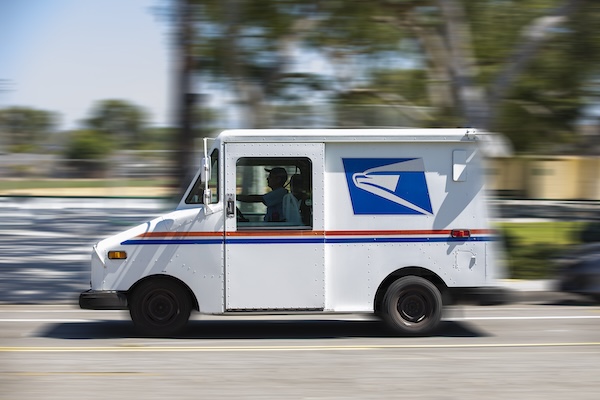
Fiscal year 2025 earnings for the United States Postal Service (USPS) saw further declines, the organization reported late last week.
Operating revenue, at $80.5 billion, saw a 1.2% annual gain over fiscal year 2024, which USPS said was largely paced by its USPS Ground Advantage offering, as well as what it called strategic price increases in its mail and shipping groups. And its net loss under generally accepted accounting principles, at $9.0 billion, trailed the $9.5 fiscal 2024 net loss, which USPS said was related to a $916 million operating revenue increase, transportation expense reductions of $422 million, a and a decrease in workers’ compensation expense of $1.1 billion, partially offset by increased compensation and benefits expense of $1.7 billion, and higher other operating expenses of $221 million.
“In surveying the results of the past year, the occasional appearance of financial progress—such as our profitable first quarter—is far outweighed by the reality of our significant systemic annual revenue and cost imbalance,” said Postmaster General David Steiner. “To correct our financial imbalances, we must explore new revenue opportunities and public policy changes to improve our business model. Most importantly, we must operate more efficiently and compete more effectively to best perform our public service mission.”
To that end, USPS added that it is seeking further administrative and legislative reforms to remedy outdated and unwarranted financial and regulatory burdens. These reforms include: changes in retiree pension benefit funding rules for the Civil Service Retirement System (CSRS) benefits, diversification of pension assets, raising the statutory debt ceiling, and workers’ compensation administration reform.
USPS reported that First-Class Mail revenue increased $370 million, or 1.5%, on a volume decline of 2.2 billion pieces, or 5.0%, compared to the prior year. Marketing Mail revenue increased $350 million, or 2.3%, on a volume decline of 764 million pieces, or 1.3%, compared to the prior year. Shipping and Packages revenue increased $315 million, or 1.0%, on a volume decline of 415 million pieces, or 5.7%, compared to the prior year.
In its Form 10-K statement, USPS said that its Shipping and Packages business is subject to intense competition, as some of its major customers continue to increase their delivery densities across a greater geography. It also noted that in-sourcing from major customers, major e-commerce leaders, and other competitors continues to grow.
“Our ability to remain competitive and maintain or grow our shipping services market share significantly impacts both revenue and volume,” said USPS.
Shipping and Packages revenue, at $32.580 billion, was up 1% annually, and volume, at 6.837 million pieces dipped 5.7% annually. Priority Mail Services revenue, at $6.383 billion, fell 17.6% annually, with volume, at 546 million pieces, off 15.8%. Parcel Services revenue at $9.024 billion, was off 15.8%, with volume down 21.9%, to 2.961 billion pieces. Package Services revenue, at $922 million, rose 1.7% annually, and volume fell 6%, to 400 million pieces.
The USPS Ground Advantage offering, which was rolled out in July 2023, saw revenues of $16.2 billion, for a 20.7% annual increase, with 2.930 million pieces delivered, for a 21.0% annual increase. This service is comprised of two-to five- day service standards for packages up to 70 pounds, and USPS is incorporating three services—USPS Retail Ground, Parcel Select Ground, and First-Class Package Service—into this Ground Advantage service.
USPS CFO Luke Grossmann said that these results reflect the difficulties of the organization’s mandated cost structure and the continued decline in volume, offset to some degree by the Postal Service’s efforts to push back against those trends by aggressively managing the costs it can control and by the judicious use of its pricing authority.
“We remain focused on moving toward financial sustainability through growing our USPS Ground Advantage package business, creating additional operational efficiencies, and developing product strategies to generate growth,” he said.

Article Topics
United States Postal Service News & Resources
USPS-Amazon contract uncertainty grows as reverse auction plan raises stakes for 2026 renewal USPS reports $9.0B loss for fiscal year 2025 USPS files notice with Postal Regulatory Commission for temporary Peak Season rate hikes USPS sees a $3.1 billion quarterly fiscal third quarter loss Amazon announces plans to triple delivery network, targeting rural U.S. with $4B push for same- and next-day deliveries USPS names David Steiner as next Postmaster General and CEO USPS Postmaster General Louis DeJoy announces March 24 as his last day More United States Postal ServiceLatest in Logistics
FTR’s Shippers Conditions Index shows modest growth Trucking executives are set to anxiously welcome in New Year amid uncertainty regarding freight demand ASCM’s top 10 supply chain trends highlight a year of intelligent transformation Tariffs continue to cast a long shadow over freight markets heading into 2026 U.S.-bound imports see November declines, reports S&P Global Market Intelligence FTR Trucking Conditions Index shows slight gain while remaining short of growth AAR reports mixed U.S. carload and intermodal volumes, for week ending December 6 More LogisticsSubscribe to Logistics Management Magazine

Find out what the world's most innovative companies are doing to improve productivity in their plants and distribution centers.
Start your FREE subscription today.
December 2025 Logistics Management

Latest Resources