U.S. rail carload and intermodal volumes are mixed in November
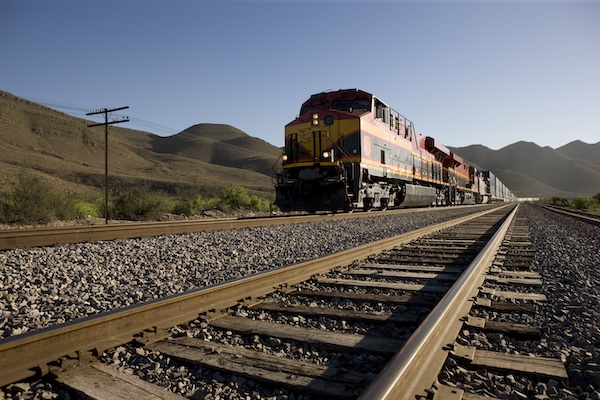
United States rail carload and intermodal volumes were mixed in November, according to the new edition of the “Rail Industry Overview (RIO),” which was recently published by the Washington, D.C.-based Association of American Railroads (AAR).
This free publication is issued monthly by the AAR and provides insights from AAR’s economists, regarding what rail traffic is saying about the current state of the economy, as well as where things may be headed. It also features a Freight Rail Index (FRI), which AAR said “tracks movement across the most economically sensitive rail traffic commodities,” including U.S. carload commodities (excluding coal and grain) and intermodal containers and trailers.
AAR Chief Economist Rand Ghayad told LM that the RIO essentially provides a summary of the key findings from the roughly 45 reports AAR produces for various industry stakeholders, with some of those reports geared towards those in the freight rail industry, as well as policy makers, and academics, with data and information coming from what he called a wide range of sources.
“Rail volume or rail traffic data in general is usually seen as a very important and solid indicator of what's happening in the economy,” he said. “So, if you want to know how is the economy is going to be moving over the next couple of months, one way is actually to look at what's happening in the rail industry. The whole idea of RIO is to summarize the findings from everything we're putting out there and connect the dots with what's happening in the economy. If the industry is doing well, it means the economy is on the right track. If the industry is not doing well, it means there are some concerns about how the economy is proceeding. It's meant to be very easy to digest. It's not meant to be very technical. It's not meant to be only for, rail folks. It's meant to be for everybody who's interested to know about the economy, and mostly about how rail drives the economy.”
The November FRI was down 0.4% from October to November, falling for the seventh time in the last eight months, and it was off 4.4% annually, due largely to an intermodal slowdown in recent months, noted the report.
November rail carloads posted a 1.5% annual gain, with nine of the 20 carload commodity groups it tracks up annually, including crushed stone, grain, and coal. Commodity groups seeing declines included motor vehicles and parts, petroleum products, and metallic ores, among others.
The weekly carload average for the month, at 220,075 represents the third-lowest monthly tally in 2025. And on a year-to-date basis through November, U.S. rail carloads are up 1.8%, or almost 193,00 carloads, annually, at roughly 10,660,300, with 12 of the carload categories tracked by AAR up annually for that span.
“As we near the end of 2025, the U.S. economy remains in many ways like it was at the beginning of the year: growing modestly but under a cloud of uncertainty,” the report said. “That uncertainty has impacted rail volumes throughout the year, including in November.”
On the intermodal side, November shipments fell 6.5% annually, with total volume through November, at 13.0 million containers and trailers posting a 1.9%, or nearly 247,000 units, annual decrease. The report attributed the annual decline to port activity slowing down after a retail inventory buildup earlier in the year, adding that consumer caution appears to be increasing.
“From June through November, intermodal volume declined year-over-year in four of the six months as business inventories normalized and the need for restocking diminished,” stated the report. “Moreover, retailers have grown increasingly cautious amid signs of softer consumer demand. The most recent government consumer spending data say total inflation-adjusted spending was flat in September from August, and spending on goods was actually down. A cooling labor market and falling consumer confidence—November consumer confidence was near a post-pandemic low—have raised additional concerns about spending. Compounding this, the average household savings rate today is well below its historical norm, limiting the financial cushion for consumers. Finally, the declining share of goods in total consumer spending throughout 2024 and 2025 reduced demand for goods transport. The goods share is now back to its pre-pandemic level, suggesting this factor should be less of a drag on rail freight going forward.”

Article Topics
3PL News & Resources
U.S. rail carload and intermodal volumes are mixed in November Federal Reserve moves forward with its third consecutive rate cut National Electric Manufacturers Association calls for stronger enforcement, predictability in upcoming USMCA review U.S.-bound imports slide in November as seasonal slowdowns and tariff uncertainty weigh on volumes IKEA moves more manufacturing to U.S. as tariffs raise costs Leadership turmoil threatens supply chain resilience, notes Gartner survey Port Tracker report points to ongoing import declines as 2025 ends and into 2026 More 3PLLatest in Logistics
U.S. rail carload and intermodal volumes are mixed in November DOT revokes licenses of 17,000 non-domiciled CDL holders in California Federal Reserve moves forward with its third consecutive rate cut National Electric Manufacturers Association calls for stronger enforcement, predictability in upcoming USMCA review U.S.-bound imports slide in November as seasonal slowdowns and tariff uncertainty weigh on volumes IKEA moves more manufacturing to U.S. as tariffs raise costs Leadership turmoil threatens supply chain resilience, notes Gartner survey More LogisticsAbout the Author

Subscribe to Logistics Management Magazine

Find out what the world's most innovative companies are doing to improve productivity in their plants and distribution centers.
Start your FREE subscription today.
December 2025 Logistics Management

Latest Resources