Federal Reserve moves forward with its third consecutive rate cut
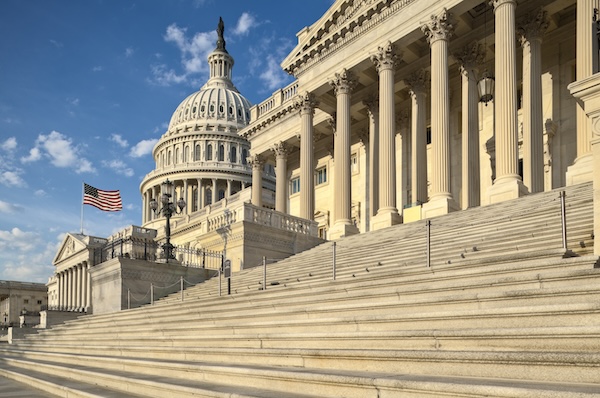
Earlier today, the Federal Reserve announced it has lowered the target rate, for the federal funds rate, which comes from its Federal Open Market Committee (FOMC) for the third consecutive month, dropping it by 0.25%, to 3.5%-to-3.75%, its lowest rate level since 2022.
This followed the past two FOMC meetings, in which the federal funds rate was lowered to 4.0%-to-4.25% and 3.75%-to-4.0%, respectively.
As previously reported by LM, Federal Reserve Chairman Jay Powell said in late August that the Fed was possibly open to reducing the rate, which came to fruition in September.
That represented a shift from previous Fed meetings. In late July, it kept the rate at 4.25%-to-4.5%, which marked the fifth time in 2025 rates remained unchanged. Which was preceded by three consecutive rate cuts in 2024, including: a reduction to 4.75%-to-4.5% in September; a reduction from 4.50%-to-4.75% in November; and a reduction to 4.25%-to-4.50% in December. Today’s action represents the third rate cut in 2025.
The FOMC said that available indicators suggest that economic activity has been expanding at a moderate pace, as job gains have slowed this year and the unemployment rate has edged up through September. And it added that more recent indicators are consistent with these developments. Regarding inflation, it said that it has moved up since the beginning of 2025 and remains somewhat elevated.
“The Committee seeks to achieve maximum employment and inflation at the rate of 2 percent over the longer run,” the FOMC said. “Uncertainty about the economic outlook remains elevated. The Committee is attentive to the risks to both sides of its dual mandate and judges that downside risks to employment rose in recent months.”
While concerns regarding the economy, driven in large part by ongoing tariffs and trade policy, which many industry stakeholders view as increasing supply chain uncertainty on myriad levels, bringing inflation down remains a key objective for the Federal Reserve, at a time when much remains in flux, for various reasons.
Nine of the 12 Federal Reserve board members voted to cut the rate by 0.25% with one other board member voting to lower the rate by 0.5%, and two other board members preferring no change.
Keith Prather, Armada Corporate Intelligence Managing Director, said that he did not think today’s cut alone will do much, adding that a subsequent cut early in 2026 is needed to really build a little momentum.
“It's more psychological than anything, and a follow-up quarter point early next year will certainly help with credit card and auto interest rates—and might spur a little bit of activity,” he said. “But it isn't enough to really move the needle. Getting the 10Y [Treasury rate] down below 4% would be the catalyst. I'm also hearing that the benefits from the tax bill really won't be felt at a consumer level until January or so. If that's the case, that could be a surprising consumer-led catalyst (if each household sees an additional $200-$300 a month in their paycheck) and that's significant. Sentiment is really weak on the consumer and small business front. We also need to see those improve—and a Fed rate cut is a step in the right direction. That might free up a little business investment - but again, I think a 10Y rate below 4% would be the bigger catalyst.”
And Paul Bingham, Director, Transportation Consulting, for S&P Global Market Intelligence, said that this cut helps on expectations for declines in costs of capital and inventory carrying costs but itself isn’t enough to suddenly boost activity that would significantly expand freight demand.
“The weakness in industrial production and a softening in consumer spending demand are projected to continue to be a headwind to freight demand growth,” explained Bingham.
As previously reported, a recently-conducted Logistics Management reader survey of more than 100 freight transportation, logistics, and supply chain stakeholders found that 63% of respondents felt a rate cut would help, with 37% saying it would not.
Reasons cited for the former included: access to cheaper capital helping the sector and various businesses; reducing interest payments and improving cash flow; spurring housing sector growth; and improving consumer demand, among others. And reasons for the latter included: labor issues not subject to interest rates and deflation, among others.

Article Topics
3PL News & Resources
Federal Reserve moves forward with its third consecutive rate cut National Electric Manufacturers Association calls for stronger enforcement, predictability in upcoming USMCA review U.S.-bound imports slide in November as seasonal slowdowns and tariff uncertainty weigh on volumes IKEA moves more manufacturing to U.S. as tariffs raise costs Leadership turmoil threatens supply chain resilience, notes Gartner survey Port Tracker report points to ongoing import declines as 2025 ends and into 2026 National diesel average sees its steepest decline in nearly a year More 3PLLatest in Logistics
Federal Reserve moves forward with its third consecutive rate cut National Electric Manufacturers Association calls for stronger enforcement, predictability in upcoming USMCA review U.S.-bound imports slide in November as seasonal slowdowns and tariff uncertainty weigh on volumes IKEA moves more manufacturing to U.S. as tariffs raise costs Leadership turmoil threatens supply chain resilience, notes Gartner survey Port Tracker report points to ongoing import declines as 2025 ends and into 2026 National diesel average sees its steepest decline in nearly a year More LogisticsAbout the Author

Subscribe to Logistics Management Magazine

Find out what the world's most innovative companies are doing to improve productivity in their plants and distribution centers.
Start your FREE subscription today.
December 2025 Logistics Management

Latest Resources