Looking at some parallel supply chain thoughts
Latest Logistics News
Union Pacific-Norfolk Southern merger application is filed with the Surface Transportation Board FedEx posts fiscal first quarter earnings growth U.S. rail carload and intermodal volumes are down, for week ending December 15, reports AAR DAT’s November Truckload Volume Index sees more mixed results November intermodal volumes see annual decline, reports IANA More 3PLWhile attending the Council of Supply Chain Management Professionals (CSCMP) EDGE annual conference in Orlando earlier this month, a few distinct, but somewhat parallel, thoughts came to mind.
One thought was that this conference really had the “feel” of as close to a full rebound from the depths of the pandemic as I could have envisioned. The halls were crowded with people networking, catching up, and meeting new people—one of the best parts of a conference like CSCMP EDGE.
That was welcome, to be sure. Last year’s conference, to be fair, was similar in that respect, but I do think this year’s really had even more of a “things are back to normal” feel to it. Which, again, is a good thing, as it bodes well for things that many people come to conferences for, like networking, and, of course, relationship building.
So, while conference halls are back to pre-pandemic levels, and there is a feeling of normalcy in the air, following a very interesting, and, at times, challenging, period over the last three-plus years, that leads to the second parallel thought.
And that thought is that while things have returned to a more traditional cadence, where does the supply chain fit in?
It has always “fit in,” given its major role and objective in moving freight and cargo from point A to point B, but, for the first time in what feels like a long time, it seems like the supply chain is not receiving what felt like all the blame for all of the economy’s problems and issues, at the same time.
The problems we saw during the pandemic were unprecedented in many ways, there is no doubt about that. We won’t rehash all of them in this space but to quickly name a few, things like a massive decline in demand for certain products and services, labor availability, and rate pressures for shippers, were at, or near the top of many lists. We also saw a massive uptick in demand for things like home projects and remodeling efforts, which kept those related supply chains humming, of course.
What is the best way to assess, or make sense of things, in terms of where they stand now?
Well, I don’t claim to have definitive answers to that question, not by a long shot, but one thing probably all industry stakeholders can agree on, or at least acknowledge, is that demand and shipment and import levels remain depressed, leaving many stakeholders to describe the current environment as a freight recession.
That can be viewed as subjective, sure, but for those in certain sectors, like furniture or apparel, as examples, it can be considered accurate, no doubt. And, as has been noted in this space before, the ongoing inventory situation, with many retailers still working off elevated levels on the heels of a lengthy overstocking period, has also been an obstacle for carriers and shippers, amid the aforementioned decreased demand.
One thing that was apparent at CSCMP was a meshed feeling of concern, caution, and tempered optimism, when looking out over the next 12-to-18 months, and a bit beyond. Note that I listed concern first, as there are two major ongoing conflicts, in Ukraine and Israel, respectively, which need to be monitored, especially from an energy and fuel perspective. There is also the upcoming 2024 election, which will receive a decent amount of attention going forward, for a whole host of logistics-related reasons, including: trade, commerce, infrastructure, fleet electrification efforts, and labor, among many others, too. And with the holidays coming quickly coming up, a decent amount of attention will be focused on Peak Season-focused efforts, which are already well underway.
That said, there are a lot of different things that supply chain stakeholders—on all sides—will need to pay close attention to in the coming months. These things are not optional. They all matter and play a large role in the direction of our economy going forward. Those not in the supply chain learned first-hand over the course of the pandemic exactly how vital the sector is, but now, hopefully, supply chain is simply part of the story and not the story itself.

Article Topics
3PL News & Resources
Union Pacific-Norfolk Southern merger application is filed with the Surface Transportation Board FedEx posts fiscal first quarter earnings growth U.S. rail carload and intermodal volumes are down, for week ending December 15, reports AAR DAT’s November Truckload Volume Index sees more mixed results November intermodal volumes see annual decline, reports IANA USPS bets on last-mile expansion to drive revenue and enable faster delivery for retailers and logistics providers Cass Freight Index sees annual declines in November More 3PLLatest in Logistics
Union Pacific-Norfolk Southern merger application is filed with the Surface Transportation Board FedEx posts fiscal first quarter earnings growth U.S. rail carload and intermodal volumes are down, for week ending December 15, reports AAR DAT’s November Truckload Volume Index sees more mixed results November intermodal volumes see annual decline, reports IANA Looking at the state of the parcel market with Robert Persuit, Sr. Director of Business Development, ShipMatrix Teamsters Rail Conference makes its case for the Union Pacific-Norfolk Southern proposed merger to not be approved by the STB More LogisticsAbout the Author

Subscribe to Logistics Management Magazine

Find out what the world's most innovative companies are doing to improve productivity in their plants and distribution centers.
Start your FREE subscription today.
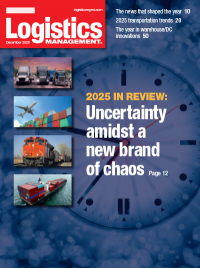
December 2025 Logistics Management
Latest Resources