Data capture takes on processes, people and assets
Best known for its ability to identify and track inventory, data capture technologies of all types are being swept into a far more powerful information web. The idea is to use the technology to improve processes through improved deployment of people and assets.


Over at Dick’s Sporting Goods, they use four words to guide distribution center operations:
- Flexible
- Fast
- Flawless
- Frugal.
Certainly, those are four powerful words when talking about fulfilling direct-to-store and direct-to-consumer orders. And, many DC technologies can help accomplish those four things. But perhaps the most often overlooked technology partner here is data capture from
bar codes to voice and portable terminals, to name a few.
“Most companies have a narrow view of what data capture can do. Too often, they think of it just for identifying inventory and tracking it at various stages along the way,” explains Linda Grady, national accounts manager at Bastian Solutions. “People need to see a broader, bigger picture for data capture,” she continues.
And leaders, such as Dick’s, do just that. In fact, the value proposition for data capture today is broad.
At Dick’s, it feeds critical information into the warehouse management system (WMS), warehouse control system (WCS) and warehouse execution system (WES) to direct daily operations. Those three systems direct manual and automated systems.
At Lipari Foods, voice-directed picking increases productivity. And it does that, at least in part, by leveraging directions from the WMS, sending instructions to pickers in real time.
Apex Tool Group also uses voice. “Picking is the main driver of the DC,” says Chris Rufa, senior director of global distribution at Apex. Using voice, “the goal is to streamline the picking processes, reduce complexity, and improve accuracy while extending the life and functionality of the WMS,” he adds.
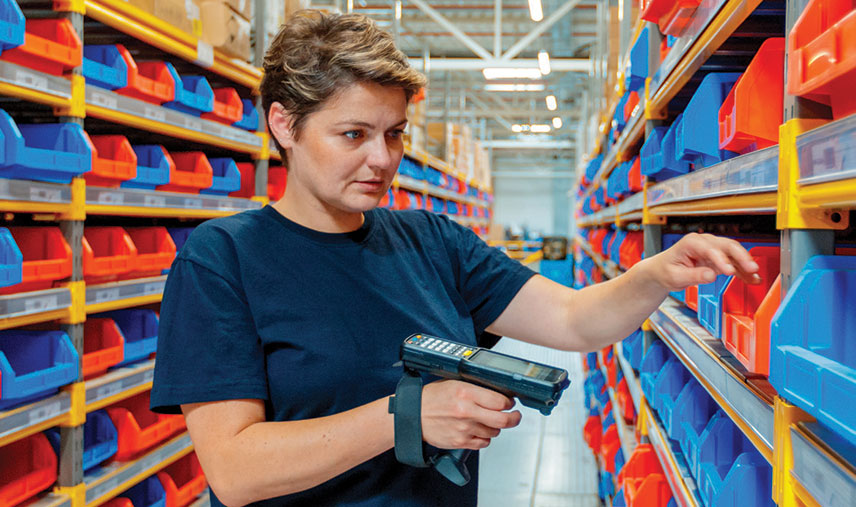
As these and others link data capture to broader operations, “the technologies are moving from being responsible for transactional visibility to constant visibility,” explains Mark Wheeler, director of supply chain solutions at Zebra Technologies. “But we’re only about 15% of the way there,” he adds.
Broader visibility
Needless to say, making the move from transactional to constant visibility is complicated and requires quite a bit of planning. “Basically, you have to decide upfront why you are collecting the data and what you are going to do with it,” says Grady.
Dan Gilmore, vice president of marketing at Softeon, adds that these early decisions “drive data flow to the right places and directly affect communications across the facility and even beyond. What you don’t want to do is send data and messages to systems that don’t need the information in the first place. All that will do is slow overall response time and bog down the system.”
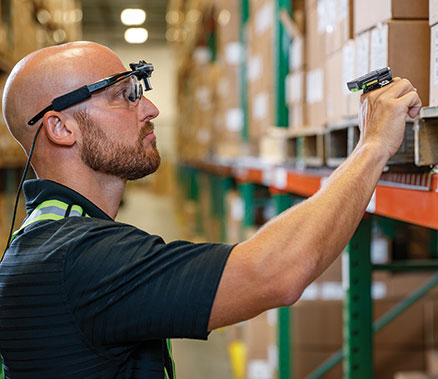 For a long time, the data capture technology decisions from bar codes to radio frequency identification (RFID) were focused on the easiest way for workers to physically collect data. For instance, is it easier for a worker to use a ring scanner to read a bar code or to follow voice commands? But, more is going on here right now.
As you might expect, product developments continue unabated. One example is Honeywell’s FlexRange, an eighth-generation imager that captures bar codes up close and at distances to 35 feet. Another is Zebra’s RS 5100 single-finger ring scanner for reading one- and two-dimensional bar codes.
These and other product advances are still important because they continue to streamline data capture itself. However, “in many cases, how the data is collected is a secondary consideration to the system’s need for many different types and sources of data,” says Justin Ritter, director of project operations at Lucas. As he points out, it’s not uncommon to have a mix of data capture technologies in a single DC streaming data to those key points that Gilmore spoke of.
“It’s not just about scanning product,” says Taylor Smith, chief marketing officer at Honeywell Productivity Solutions and Service. “Data capture now brings many other benefits including improved work flow and heightened safety as well as effective device utilization, especially in highly automated facilities,” he adds.
An example of that is voice middleware. According to Gary Glessner, vice president of sales and marketing at Speech Interface Design, voice middleware can act as a WMS light, providing grouping and batching of inventory for efficient picking. “In other words, voice, in this instance, provides both visibility and control, improving productivity in the picking process,” Glessner says.
He continues that Lipari Foods uses voice to direct all of its case and each picking in the ambient temperature, refrigerated and freezer sections of its DC. But when changes to the business dramatically increased its SKU count, they were forced to co-mingle products within pick faces that had previously been the home to single products. Lipari added a bar code scan of each picked product to its voice-directed process to ensure accuracy.
Voice directs picks to totes/carts, case pick and man-up picks. However, bar code scanning is much more effective at determining the worker’s location because the bar code must be scanned, ensuring 100% location verification.
“Voice opens up the possibilities of Lipari’s WMS,” says Glessner. “In real time, it can assign pick slots, reassign dock doors as needed and modify pick paths.” Voice improved productivity 22% and reduced mispicks impressively at Lipari.
At Apex Tool Group, voice improved productivity, slashed picking errors and led to dramatic savings in retailer-imposed fines for shipping errors, explains Ritter at Lucas. In the new system, the WMS sends orders to a work execution server and the middleware manages the creation and release of work assignments across the DC.
Another benefit, says Ritter, is the ability to provide real-time performance data by individual worker. The information is also valuable to supervisors. “This allows people to know how they are doing against standards. But it also offers supervisors predictive insights into staffing levels and work completion goals, allowing them to make adjustments to maximize inventory flow through the DC.”
Processes, people and assets
This brings us to the epicenter of data capture’s value to DCs today. Besides collecting transactional data, these technologies also feed data to various systems that monitor processes, people and assets. It’s all about collecting more knowledge about and adding structure to DC operations even as they become less structured due to ever-changing customer requirements. It’s a never-ending battle.
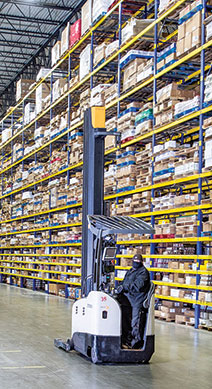 One example is Honeywell’s Guided Work Solutions platform. It uses multi-modal data input—bar codes, voice, vision, keypad—to document work flow. The Android and Apple iOS software is then able to analyze those processes and offer solutions to improve them, explains Smith.
Even the data capture equipment itself is being closely monitored these days, says Smith. Honeywell software, known as Operational Intelligence, collects data about the devices themselves and monitors their condition. This ensures they are operationally effective continuously, helping to keep processes efficient.
Zebra’s MotionWorks Warehouse is a near real-time warehouse asset tracking system that improves asset tracking and processes. Wheeler says improved asset visibility facilitates workflow optimization while preventing errors. Central to the system’s abilities is a data intelligence platform that uses machine learning to produce actionable insights that adapt processes to optimize flow and staffing levels.
SmartPack Trailer combines hardware, software and analytics to provide real-time operational visibility into loading operations, says Wheeler. Using 3D sensors and imaging technology, the load monitoring unit provides a visual of trailer loading. Some of the key metrics it monitors include load density, trailer fullness and load quality.
“This is a process that until now has been basically invisible to everyone except those doing the trailer loading. Now there is hard data about loading processes and efficiencies, opening the door to process improvement that affect both shipments from the DC and unloading at the other end,” explains Wheeler.
There’s also the matter of tracking people in the DC. Softeon’s Gilmore talks about Visual Warehouse software tied to a WMS that puts a two-dimensional rendering of the DC layout on a screen. Workers wear a tracking device that identifies their location and activities using either Wi-Fi or Bluetooth.
The software allows analysis of worker activities and processes. Are they taking the most efficient pick path? Is there excessive dwell time at any location? Do workers wander outside of the pick zone? The answers to those and many other process questions facilitate improvements in pick activities and worker behavior in the DC, explains Gilmore.
The tracking devices, he continues, can also be used to pair an individual with an autonomous mobile robot or a picker with a cart in a pick-to-light area. The point, says Gilmore, is to ensure the right person is performing the expected picking function and delivering items to the appropriate robot or cart.
Honeywell’s Smith describes a similar Wi-Fi or Bluetooth beacon that identifies the location of the person to within 30 centimeters. The idea here is to more efficiently route workers through the DC. Smith says this is at the proof-of-concept stage right now.
All of which leads us to the early stages of traditional data capture technologies becoming part of the Internet of Things (IoT) in DCs.
Bastian’s Grady says the concept is beginning to get some traction inside the four walls and even outside of them. Clearly, the foundation is being built with all that is being done to improve processes and better deploy people in real time.
The next stage, says Grady, is to use many different types of sensors to track shipments outside the four walls. It’s all part of the evolution of data capture from providing transactional visibility to constant visibility.

Article Topics
Mobile & Wireless News & Resources
2025 Robotics Application Conference rolls out session, speaker lineup Descartes introduces new tool to more effectively catch freight fraud Echo subsidiary Roadtex opens up two new locations Real World Solutions for a Mobility Manufacturer Connected Workers: A Key Imperative for Distribution Centers Tightening up on your inventories How to Optimize Your RFID Mandate Labeling within the Supply Chain More Mobile & WirelessLatest in Logistics
Looking at the impact of tariffs on U.S. manufacturing UP CEO Vena cites benefits of proposed $85 billion Norfolk Southern merger Proposed Union Pacific-Norfolk Southern merger draws praise, skepticism ahead of STB Filing National diesel average is up for the fourth consecutive week, reports Energy Information Administration Domestic intermodal holds key to future growth as trade uncertainty and long-term declines persist, says intermodal expert Larry Gross Railroads urged to refocus on growth, reliability, and responsiveness to win back market share Q&A: Ali Faghri, Chief Strategy Officer, XPO More LogisticsAbout the Author

About the Author
Subscribe to Logistics Management Magazine

Find out what the world's most innovative companies are doing to improve productivity in their plants and distribution centers.
Start your FREE subscription today.
November 2025 Logistics Management

Latest Resources