
Your organization’s most valuable asset
Over the past few years, we’ve used our June issue to address the importance of continuing education and the steps logistics management professionals can take to help recruit, nurture and retain the single most valuable asset of any organization—its people.

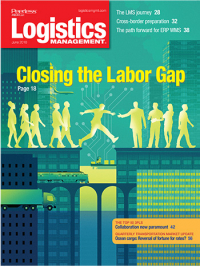
However, during several of the industry conferences this spring, I had multiple conversations about what many are now calling a “labor crisis” in our industry. Sure, we’ve been covering the ongoing truck driver shortage for years as well as the need for a “youth movement” in the industry, but we’ve yet to draw attention to the growing shortage of talent needed to occupy the mid-and senior-level management positions that we now need to lead more dynamic logistics and supply chain teams.
I was surprised to find that according to a survey conducted by DHL late last year of 360 logistics industry participants, 46% ranked finding the mid-level manager as “difficult,” but 73% ranked finding the executive level as “most difficult.” And, according to Logistics Management’s 2018 Salary Survey, it’s that mid-to executive-level employee who’s pulling in a prettydecent salary—between $109,000 for an operations manager title and up to $187,000 for a vice president or general manager level title. Isn’t the hope of a bigger salary through the years enough to keep good people around?
“The growth of e-commerce and the use of technology to make it all work is stripping away that blue-collar mantel and increasing the white-collar appeal, so I was certainly heartened to hear educators and analysts report that logistics is becoming a more mainstream career path for new graduates entering the workforce,” says contributing editor Bridget McCrea, author of this month’s Logistics Management cover story. “However, the game has changed in terms of retaining this new breed of employee—and salary alone isn’t going to keep them engaged.”
As McCrea reports, supply chain and logistics organizations have been caught off-guard by this current labor shortage hitting just about every rung of the logistics and supply chain ladder, from inside the four walls of the DC, to the cabs of our trucks, to the cubicles in our offices, all the way to the corner office.
“So, the bad news is that now most logistics organizations have fallen well behind on attracting and retaining new talent and lack the resources they need to fill available positions,” McCrea says. Adding to that, the U.S. Bureau of Labor Statistics estimates logistics jobs will grow by 26% between 2010 and 2020—a number that may be impossible to keep up with on the current path. The time to turn the tables on the talent gap is now.
With the help of Tisha Danehl, vice president of Ajilon, a staffing agency serving the supply chain and logistics industries, McCrea gives readers a list of tips that can help change the way organizations are thinking about recruitment and retention. “Ideas like streamlining the hiring process to not miss out on valuable talent, offering flex time, creating formal mentorship programs, and making the recruiting message more friendly and focused on women are just a few,”
says McCrea.
“As we’ve learned through our research, salary alone is no longer enough to retain valuable people. Today we need to nurture, develop and create a healthier
work environment.”

Article Topics
Columns News & Resources
2025: Groundhog Day all over again Emerging trends in logistics technology adoption Rail and Intermodal in the Spotlight: Will AI drive a new era? From Cost Savings to Customer Satisfaction: Why a TMS is essential for modern logistics Rail and Intermodal in the Spotlight: Will tech and AI drive a new era? Annual Study of Logistics and Transportation Trends: The great disconnect Myth-Busting Your Supply Chain Design: Tips for building resilience and efficiency More ColumnsLatest in Logistics
FedEx posts fiscal first quarter earnings growth U.S. rail carload and intermodal volumes are down, for week ending December 15, reports AAR DAT’s November Truckload Volume Index sees more mixed results November intermodal volumes see annual decline, reports IANA Looking at the state of the parcel market with Robert Persuit, Sr. Director of Business Development, ShipMatrix Teamsters Rail Conference makes its case for the Union Pacific-Norfolk Southern proposed merger to not be approved by the STB USPS bets on last-mile expansion to drive revenue and enable faster delivery for retailers and logistics providers More LogisticsAbout the Author

Subscribe to Logistics Management Magazine

Find out what the world's most innovative companies are doing to improve productivity in their plants and distribution centers.
Start your FREE subscription today.
December 2025 Logistics Management

Latest Resources












