
What’s next: Implementing “touchless” DCs through advanced warehouse systems
The ability to automate DC operations by employing AI technologies that include a closer convergence of WCS, WES and WMS solutions is on the horizon. Designing touchless operations that reduce the dependence on traditional labor sources will better position supply chains in their quest to provide an uninterrupted flow of goods and improved resiliency.
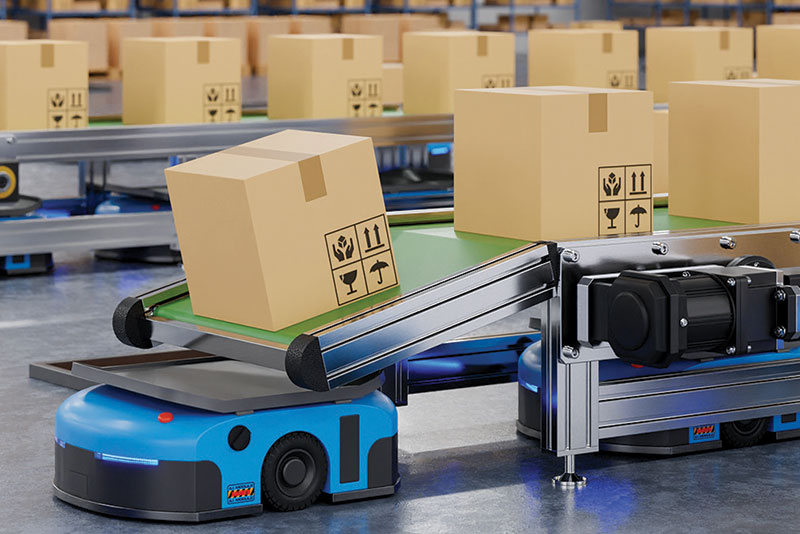

Brown cartons whisk by at breakneck speeds as the sound of pneumatic triggers divert the cartons onto a separate path or down a chute. Red laser light beams sparkle and scan shiny white labels on the cartons checking their contents and determining their destination.
Okay, we’ll admit that it’s a little difficult to romanticize warehouse automation, but it’s amazing to watch in action. All these cartons, conveyors and laser lights are part of a highly sophisticated system that continues to advance into the realm of autonomy and artificial intelligence (AI).
At the heart of this automation are two types of system working together to execute the seemingly choreographed performance: the warehouse management system (WMS) and the warehouse control system (WCS). While these systems have existed since the 1990s, a revolution is afoot to increase the level of sophisticated autonomy through a warehouse execution system, or WES.
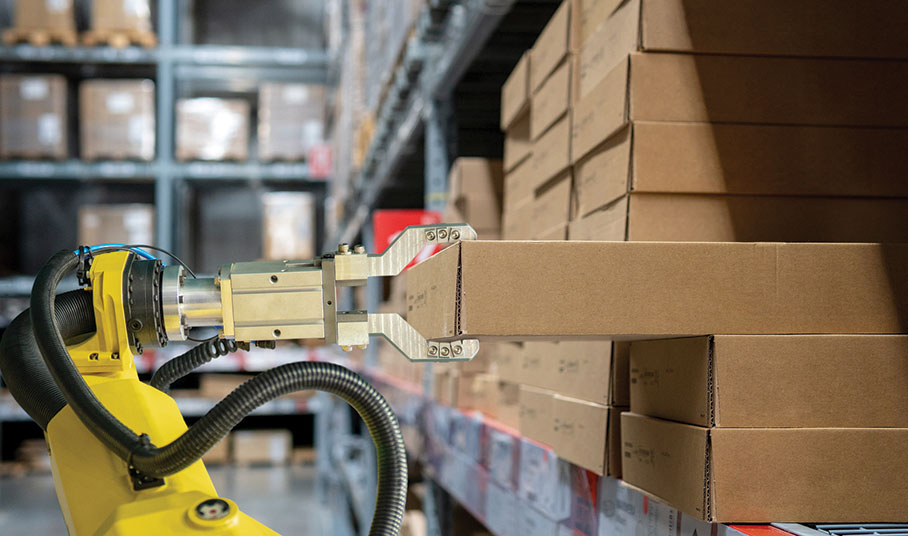
COVID-19 and warehouse automation
The impact of COVID-19 on warehousing and distribution could well outlast the pandemic itself, as labor health concerns, hampered supply chains and a new wave of automated warehouses and distribution centers continue to emerge.
Warehouses, distribution and fulfillment centers were crippled, as health and safety issues became top of mind, especially as cases spread in high-profile operations like Amazon. However, the impact of the pandemic has also prompted renewed assessments of DC operations on everything from the degree of automation and advanced software necessary in a warehouse today to the importance of building size, work area design and location.
The pandemic underscored the growing prevalence of e-commerce fulfillment and the increasing need to mitigate labor and productivity risks through providing a safer, less congested work environment largely enabled through increased automation.
It’s important to keep in mind that systems and automation capabilities were developing rapidly before the pandemic. However, COVID-19 brought an accelerated awareness and actuated bringing those changes to light. In short: It’s been a wakeup call for some, an affirmation for others. What’s more, experts agree, when the pandemic finally moves on, its impact on warehouses and distribution centers certainly won’t dissipate any time soon.
The rise of warehouse execution systems
A traditional fulfillment warehouse employs a WMS to receive inventory, locate and track its movement within the warehouse. When fulfillment orders are sent from the ERP or OMS, the WMS creates a “wave” of work based on the available inventory and resources to pick, pack and ship the orders within the committed order cycle time.
WES key function benefits:
Dynamic labor balancing
- Provides real-time, system-directed labor balancing across multiple work zones
- Bases decisions on current priorities and workload demands
- Synchronizes the operation of all work zones
- Accounts for “zone transfer” penalties in excessive worker movements
Sorting machine optimization
- Real-time optimized decision item sortation
- Increases sortation capacity by 28%
- Reduces “problem orders” by 75%
- Reduces processing and material handling labor
- Allows workers to work to their own capacity
Next-order optimization
- Makes real-time decision of the next order to release
- Bases decisions on order priority, ship requirements, order ages, picker locations and available inventory
- Allows nearly immediate processing of priority orders
- Determines what orders are “not picked” in resource-limited operating conditions
Revolving batch picking
- Eliminates low productivity wave transition periods
- Maximizes continuous resource utilization
- Levels processes, eliminating harmonic peaks and valleys behavior
The WMS is a passive system that requires input from users indicating tasks have been completed. Optimization of the inbound/outbound processes is typically engineered into the operations and not through the WMS.
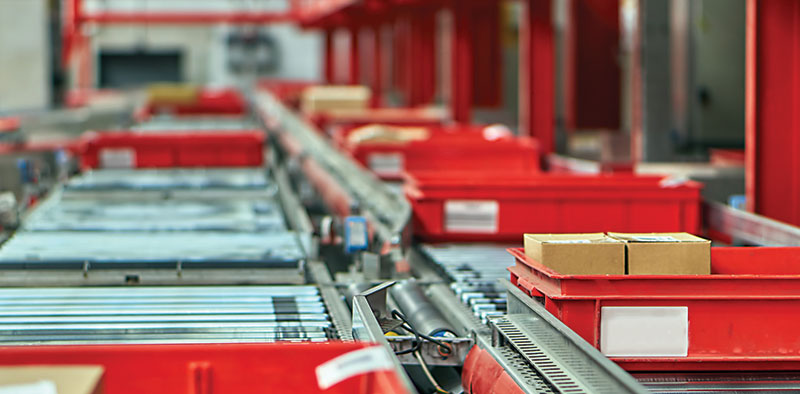
Fulfillment warehouses that utilize automation—such as conveyors, sorters, and pick/put to light—employ warehouse control systems. The WMS sends information to the WCS regarding the objective of the automation, and then the WCS utilizes the information from the WMS to control the automation to move or route product to a destination or turn on a light in a pick-to-light rack.
Both WMS and WCS work in relative isolation. These systems are unable to react to changes in production, bottlenecks, service-level commitments or emergencies. They require human intervention to re-prioritize, re-route or expedite an order or process.
A warehouse execution system, on the other hand, can coordinate and direct all resources: labor and material handling equipment in real time. The reactive WES moves production in a continuous flow to optimize service levels and can react to production issues and reprioritize workload such as the ability to drop a high priority order to the warehouse without creating a new wave (waveless picking) or disrupting the current production flow.
WES can also work to improve production and service beyond the four walls of the warehouse to prioritize an inbound receipt for an emergency order. Using predictive analytics and complex algorithms, a WES can detect issues and prescribe a solution without human interaction.
WES in action
Here’s an example of how a WES can function within a fulfillment center to coordinate the expedition of a last minute, high priority order.
A next-day air delivery order for multiple items is dropped on a warehouse. The WES can prioritize a receipt of an inbound shipment containing the necessary inventory and can allocate receiving resources and assign available dock doors and automation. Upon scan of the inbound carton, the WES coordinates with the WMS to send the carton to replenishment.
The WMS/WES issues a task to replenish the inventory. A pick command is generated without a wave to pickers within the zones containing the inventory, the units are picked into multiple bins, and then the bins are routed by the WCS to be expedited.
To further explain the value of WES, let’s use a pouch sortation system such as SDI’s Joey sorter. Individual items are scanned and placed into pouches. Using advanced algorithms, the pouches are sorted and shuffled until the items on the order are next to one another and advance to the beginning of the line for packing.
The pouches are then routed to a packing station where they’re cartonized and sent by the WCS to the overnight shipping lane in time for next day air pick-up.
Resource visibility
A WES has visibility to all available resources and can coordinate activities to meet committed service levels. Integrated with wearable devices and scanners, a WES has visibility to individual activities and can identify production delays. Based on these shifts in production, the WES can re-assign tasks to available resources to increase efficiency and throughput.
The IoT (Internet of Things) revolution will provide a greater number of devices and equipment for which the WES can utilize in the optimization of the fulfillment workflow. Wearable devices can be tracked for location, productivity and feedback, while driverless trucks can be deployed to pick a pallet for replenishment. Inbound trailers can be geofenced and assigned a dock door with allocated resources to unload the merchandise.
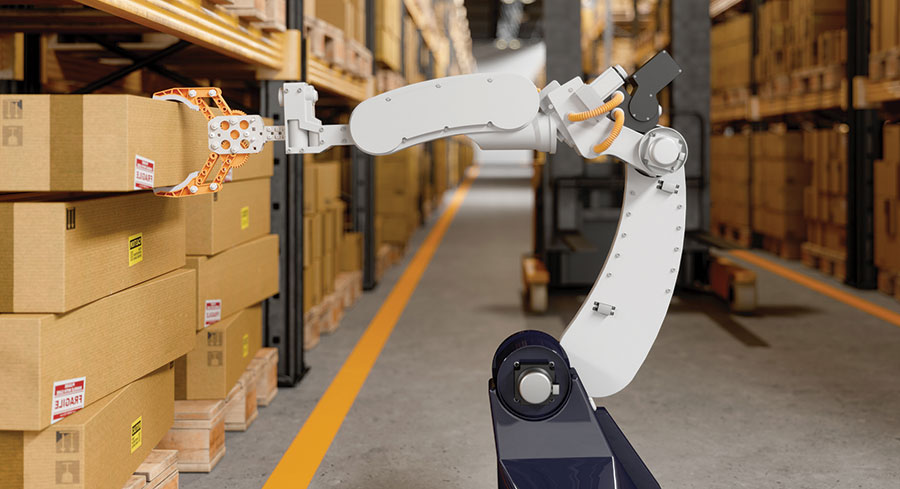
Incorporating WES functionality to advance automation
For larger, complex operations that include a high degree of automation, both a WCS and WMS are going to be needed. WES is not usually going to be a replacement for WMS; but rather will work in combination with it. And, in the future, it’s foreseen that WMS will include enough intelligence so that WCS/WES can be rolled into the WMS solution.
This integration could relieve some pressure from implementation and will reduce the costs of running multiple “warehouse management oriented” systems in one facility. For heavily automated solutions, approximately 20% of the implementation effort will be required to manage the integration of the warehouse systems.
Looking to the future
In the future, there may be standard messaging systems developed that will allow for simpler integration of warehouse automation and their management systems.
The warehouse execution of the future will likely include increased use of autonomous mobile robots and artificial intelligence capabilities such as cognitive computing and machine learning and may also contain automation control knowledge in larger amounts than they do currently.
Many WES vendors are building modular solutions to alleviate the need to integrate across all processes. Companies can select which aspect of their fulfillment process needs WES functionality and purchase a purpose-built module. Applying these “NextGen” technologies, WES proves to be much more flexible in nature compared to a WMS or WCS that must encompass all aspects of the fulfillment process and automation.
AI and warehouse execution
In the past, fulfillment warehouse decisions were based on historical data analysis. However, the impact of COVID-19 is causing consumption behavior to bullwhip in more sporadic ways than ever before, and no one really knows what to expect for day-to-day operations. Companies are guessing as to which patterns will remain and which are temporary.
Artificial intelligence can help solve these unforeseen challenges. Looking to the future, predicting customer demand requirements will utilize significant amounts of data from new sources, such as the IoT and external partner collaboration to determine the next optimal move in a fulfillment center. AI transforms an overwhelming amount of data into usable insights to support a multitude of decisions in the fulfillment center.
WES application landscape
Companies are rushing to develop fulfillment execution systems to enable the advanced features and increased automation opportunities. The solutions are currently being developed by WMS and WCS software providers, material handling and automation vendors as well as standalone WES developers.
At this point in time, one solution does not typically meet all requirements. Companies are challenged to find the right combination of WMS, WES, and WCS that works best for their future requirements—in more automated facilities that are designed to mitigate labor and productivity risks.
It’s now more challenging than ever to identify the right partners to implement warehouse solutions. And, it begs the question of having a single software solution or multiple software solutions in place to plan, manage, control and optimize a fulfillment distribution center.
Touchless fulfillment is right around the corner
With the disruption of normal routines and standard business practices due to COVID-19, organizations are now looking for emerging digital technologies to ensure they’re better prepared for the future. The leaders are seizing the opportunity to advance competitively.
The pandemic taught our supply chain teams a hard lesson to look beyond the current technologies and traditional ways to setup, organize and operate DC Operations. Historically, warehouse design and technologies were deployed and implemented with the primary focus of maximizing space utilization, throughput and productivity.
Other than a few ergonomic considerations, little was done to design facilities in a way that also mitigated labor and productivity risks due to previously unknown threats such as disease spread.
Automating DC operations and employing AI technologies that include a closer convergence of WCS, WES and WMS solutions is on the horizon. Designing touchless fulfillment centers that reduce the dependence on traditional labor sources through innovative technologies will better position supply chains in their quest to provide an uninterrupted flow of goods and resiliency to its customers regardless of the circumstances.

Article Topics
Warehouse News & Resources
Logistics growth sees mild decline in November, states LMI DHL’s 2025 Peak Season approach includes more planning and less panic Services economy remains on growth track in November, reports ISM The Warehouse Efficiency Playbook Worried About Supplier Risk? This Template Helps You Stay Ahead Close the warehouse labor gap with overlooked talent pools Real Answers for Automation at the Loading Dock More WarehouseLatest in Logistics
USPS-Amazon contract uncertainty grows as reverse auction plan raises stakes for 2026 renewal Preliminary November Class 8 truck orders see another month of declines U.S. rail carload and intermodal volumes are mixed, for week ending November 29, reports AAR Logistics growth sees mild decline in November, states LMI CBP launches five-year pilot allowing non-asset-based 3PLs Into CTPAT for the first time DHL’s 2025 Peak Season approach includes more planning and less panic Union Pacific–Norfolk Southern merger filing with the STB is delayed delayed until mid-December More LogisticsSubscribe to Logistics Management Magazine

Find out what the world's most innovative companies are doing to improve productivity in their plants and distribution centers.
Start your FREE subscription today.
December 2025 Logistics Management

Latest Resources












