
Warehouse Management Systems (WMS) reigns in the modern warehouse
A long-time mainstay in productive warehouse environments, WMS is more than proving its value in today’s resource constrained business environment.
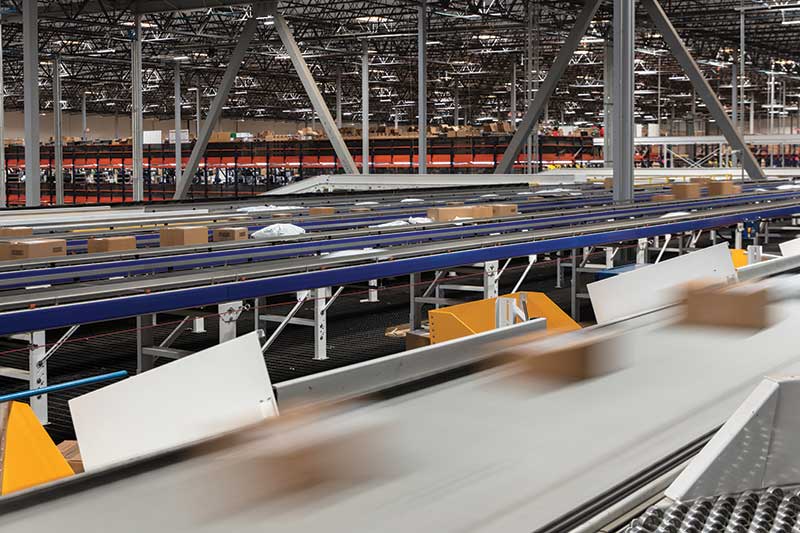

Running a productive warehouse or distribution center (DC) has always required a carefully thought-out approach that factors in the people, systems, product and physical space. These elements have to work together to achieve three core goals: receive product, store goods and get orders shipped out the door.
Over the last few years, the persistent labor shortage, growth of e-commerce and ongoing supply chain constraints have presented new challenges for most warehouse operators—more than half of which rely on warehouse management systems (WMS) for help navigating these complexities.
According to Peerless Research Group’s recent “Materials Handling Technology Study,” 56% of companies are currently using WMS in their operations. And the 32% of companies that are either evaluating, purchasing or upgrading software in the next 24 months will be investing in WMS to help manage their warehouses or DC operations inventory and operations. However, as 2023 dawned, Siddharth Ram says that some companies began “tightening their belts” in response to potential economic headwinds.
“Companies really need to see the value in the software that they’re adding to support increased throughput in their facilities,” says Ram, vice president of Capgemini’s consumer products, retail and services business unit. One area where WMS adds value, for example, is by helping companies manage the stock-keeping unit (SKU) proliferation that so many of them are facing.
“Manufacturers, distributors and logistics providers are dealing with a lot more SKUs today than they were five to seven years ago,” says Ram. “They’re also dealing with larger volumes of smaller orders. Both trends have pushed companies to double down on their warehouse and DC investments.” Companies are also figuring out how to scale their facilities in order to take on an even larger set of SKUs and volume of orders, he adds, and investing in WMS to support those goals.
To help companies envision what their warehouse operations could look like, but without disrupting their current operations, Capgemini has been using “pilot warehouses” that incorporate WMS and other systems. These smaller operations manage fewer SKUs, but they enable a proof of concept before the company makes the full-blown investment in new systems.
For example, one national distributor of aftermarket auto parts has 10 warehouses in the United States and sources its parts from suppliers in India and China. Rather than roll out new systems (WMS included) across all 10 of its locations—plus a handful in Europe—the distributor conducted a pilot in a single North Carolina facility.
“Once it’s proven there, they’ll roll it out to their other warehouses,” says Ram. “This phased-in approach may take more time, but in the end it will deliver value because the company will know its ROI before increasing its investment over time.”
More companies may adopt this kind of phased-in software approach this year as the economy cools, interest rates stay high, and as inflation remains a concern. Ram also sees more companies using digital twin technology when implementing new warehouse technology, particularly those that can’t afford to shut down an operation and test out a new solution.
“With digital twins, you can design and redesign workflows and configure how you pick and pack orders,” says Ram, who adds that digital twin usage is increasing in the fulfillment environment. “Once you’ve created that digital simulation and tested it out, you go ahead and officially roll it out.”
WMS gets into microfulfillment
Every year, ARC Advisory Group does a WMS market research study that includes a current market analysis and a five-year market and technology forecast.
Reflecting on the company’s most recent study, Clint Reiser, director of supply chain research at ARC, says one of the biggest things that stuck out was the sheer amount of investment that larger WMS providers were funneling into their platforms.
“Putting money into your platform is nothing new, but the development efforts the companies are putting forth to make their solutions ‘Cloud native’ is pretty strong right now,” says Reiser, who pegs the global WMS market value at about $1 billion.
“Everyone’s also talking about putting in microservices, which enable the providers to use contained building blocks for their applications. Those building blocks allow software developers to adapt, change and expand their platforms without having to take down the whole system to do it,” Reiser explains.
With the Cloud, users can stay on the most recent version of the software without needing an IT department to handle the upgrade and maintenance work. The cloud also allows shippers to pick and choose which features and functionalities they want or need, versus having to implement a full-blown, on-premises WMS solution. As this and other benefits of Cloud computing continue to emerge, its value proposition is only getting stronger for shippers.
Reiser, who also develops ARC’s annual “Warehouse Automation Study,” says that the market is currently valued at about $15 billion (worldwide). One overlapping trend across both research studies was an increased interest in using microfulfillment centers, or those small-scale, highly-automated warehouse facilities that are situated close to end consumers.
Where vendors initially focused on shuttle systems and other automated equipment in these smaller facilities, Reiser says software is now playing an increasingly important role in these smaller, but powerful centers.
“Manufacturers,
distributors and
logistics providers
are dealing with a lot
more SKUs today than
they were five years
to seven years ago…
They’re also dealing
with larger volumes
of smaller orders.
Both trends have
pushed companies to
double down on their
warehouse and DC
investments.”
“Going forward, I expect microfulfillment to become more of a software play, and I think the WMS vendors are going to have a better win [than the automation providers did] with these smaller centers,” says Reiser. “WMS vendors will put their technology in the microfulfillment center as a beta test and see how it plays out. I think they’re having a higher success ratio than the automation vendors did.”
Reiser’s prediction is based on three key realities: automation requires a higher upfront, CAPEX investment; the equipment needs to be maintained; and automation can generally handle about 80% of the goods flowing through the facility.
“There is still 20% that requires a human element, like going upfront and grabbing certain items,” says Reiser. “The software system that manages the overarching process ensures that all of the orders are prepared and ready to go. As a result, I’d say these ‘dark store’ type microfulfillment center implementations will be a decent growth opportunity for WMS going forward.”
Eyes open
If the pandemic did one thing for supply chains, it opened peoples’ eyes to the importance of having smooth-running global supply networks that shepherd products from origin to destination. And maybe more importantly, it revealed the gaps in existing supply chains and pushed organizations to address those issues before the next potential crisis comes along.
“Companies understand that there’s a certain amount of fragility in their supply chain that they need to invest in,” says Dwight Klappich, research vice president at Gartner, whose most recent “Supply Chain Technology Users Wants and Needs Survey” found that 43% of respondents plan to increase their WMS investments over the coming year. “That’s pretty good considering the economic climate that they’re operating in,” says Klappich, who conducted the survey during the fourth quarter of 2022.
“Only 9% of companies said they were reducing their investments in WMS and 45% said they were going to maintain the status quo,” Klappich adds. He points to the continued need to drive efficiency in the warehouse as a key motivation behind the new WMS investment.
The ongoing labor shortage is also pushing more companies to “drive as much efficiency as possible to try to get as much work—or more work—done with the same amount of people,” Klappich adds. “The bottom line is that the WMS market is healthy right now.”
The next big thing
As he surveys the WMS environment and ponders what lies ahead, Klappich sees the convergence of WMS software and warehouse robotics as the “next big thing.”
Klappich points to Manhattan Associates’ warehouse execution system (WES) and Blue Yonder’s Robotics Hub as two examples of how vendors are moving in this direction. The latter is a software-as-a-service (SaaS) application that supports accelerated onboarding and integration of multiple robotics vendors in a warehouse or DC facility.
“Software vendors are recognizing that they need to add functionality as more robots work either alongside humans or autonomously,” says Klappich. “Companies that have already invested in WMS want to know how their software can work together with different types of robots, manage different types of work and operate on different levels.”
Looking ahead, Klappich sees advanced analytics, artificial intelligence (AI) and other advanced technologies playing a role in the warehouse, where they can enhance decision-making and help companies do more with less—particularly on the labor front.
Software developers are also honing their user interfaces (UIs) in a way that helps reduce training time and gets new employees up and running quickly on their systems. “That’s manifesting in WMS and other solutions right now,” says Klappich.
“Companies don’t want it to take four days to train someone on how to use their WMS. In fact, the ultimate goal is no training at all.”

Article Topics
Capgemini News & Resources
Revolutionizing SCM Software: Real-time visibility, AI, and seamless integration Evolution of the Connected Supply Chain: ERPs lead the charge with smart tech AI in Supply Chain Software: Opportunities, Challenges, and the Future of Automation Warehouse Management Systems (WMS): The ultimate e-commerce warehouse orchestrator The Rise of the Intelligent Supply Chain: Driving efficiency with data and automation Beyond the horizon: What’s next for supply chain management (SCM) software? Yard Management Systems (YMS) Update: Optimize your yard, optimize your business More CapgeminiLatest in Logistics
FTR’s Shippers Conditions Index shows modest growth Trucking executives are set to anxiously welcome in New Year amid uncertainty regarding freight demand ASCM’s top 10 supply chain trends highlight a year of intelligent transformation Tariffs continue to cast a long shadow over freight markets heading into 2026 U.S.-bound imports see November declines, reports S&P Global Market Intelligence FTR Trucking Conditions Index shows slight gain while remaining short of growth AAR reports mixed U.S. carload and intermodal volumes, for week ending December 6 More LogisticsAbout the Author

Subscribe to Logistics Management Magazine

Find out what the world's most innovative companies are doing to improve productivity in their plants and distribution centers.
Start your FREE subscription today.
December 2025 Logistics Management

Latest Resources












