Top trends in reverse logistics
Two of the trends making an impact on reverse logistics besides the increase of e-commerce and the increased focus on customer centricity—are the circular economy and robotics. Here are some suggestions for transforming your reverse process to meet today’s pressing demands.

Retail e-commerce continues its upward trajectory despite slowed economic activity, expecting to grow from $3.3 trillion today to $5.4 trillion globally by 2026, according to Morgan Stanley’s “Global E-commerce Growth Forecast 2022.” Commensurate with e-commerce growth, reverse logistics is forecasted to grow to $954 million by 2029, with a CAGR of 5.3%, according to Data Bridge Market Research.
Reverse logistics remains an important function in the supply chain strategy of organizations looking to execute on their commitments to sustainability, customer service, and value capture from returned goods. Returns occupy the bulk of the reverse logistics space, according to the National Retail Federation, and it’s estimated that, on average, 17% of retail orders are returned, with peaks as high as 30% during holiday peak season.
In addition to returns, other reverse logistics market segments such as re-commerce, recycling, and end-of-life disposal are seeing similar growth, as the concept of the “circular economy” continues to take shape and mature as a logistics and marketing competitive advantage. Re-commerce is one such mechanism in the circular economy in which goods are refurbished, repurposed and resold, extending the life cycle of products.
Two of the trends affecting reverse logistics, besides the increase of e-commerce and the increased focus on customer centricity, are the circular economy and robotics.
The circular economy and re-commerce
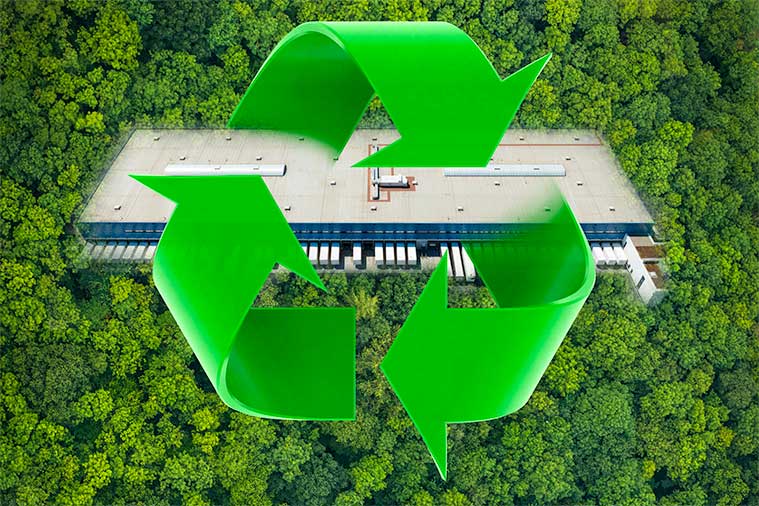
The circular economy, as understood in supply chain, aims to create a closed loop where waste is eliminated and resource efficiency is maximized. In its current application, the circular economy has manifested as an approach by companies to use and reuse products with the goal of creating more resilient and sustainable supply chains.
To help reduce their environmental impact, some forward-looking fashion brands have committed to closed-loop programs in apparel, enabling shoppers to send their used garments off for recycling as well as clothing rental services to minimize their carbon footprint.
Consumer electronics companies are also looking to reduce the millions of tons of electronic waste ending up in landfills. On the healthcare technology side, a lead medical device manufacturer has committed to a closed-loop program for electronic recyclables that works to reduce waste and conserve resources. Electronics are collected from users, processed, and then either refurbished or recycled depending on their condition. Reusable parts are incorporated into new products, refurbished products are sold at reduced costs, and recycled materials are used to create new products.
A strong reverse logistics capabilities understanding is an enabler of the circular economy. Understanding the end-to-end reverse logistics cost, processes and operating model can impact how end-to-end supply chain processes are designed.
In situations where there are growing reverse logistics activities, partnerships with third-party logistics (3PL) providers have been put in place for returns by the shopper and back-end processing by distribution centers (DCs) to more effectively manage the reverse logistics process.
For instance, in the fourth quarter of 2022, a global U.S.-based parcel and courier carrier announced plans to greatly expand its consolidated returns services. This expanded service enables shoppers to drop off their returns with no label or box, and then they’re consolidated, processed and shipped back to merchants via less-than-truckload.
Fewer shipments result in a more efficient and cost-effective returns process and offer a similar environmental uplift as shipments are reduced for the same number of returns, minimizing carbon emissions associated with reverse logistics.
Reverse logistics enhancements have extended to the gig economy, where food delivery services now offer package pickup services beginning this year that enable consumers to request the pickup and drop-off of prepaid packages to their local carrier.
As investments are made on the front-end to make returns seamless, a similar amount of effort is being deployed in the warehouses where the product is received, processed, and marked available for resale or disposal.
This is being driven by e-commerce, or the reuse and resale of previously owned products, an area expected to grow from $178 billion in 2022 to $289 billion by 2027. Beyond its application as an additional revenue stream, e-commerce provides organizations with a cost-avoidance tool for cross-border returns. Cross-border returns refers to the process of returning a product that was purchased in one country and shipped to another.
This process can prove to be costly due to the distance and compliance with regulations. Re-commerce offers an alternative by allowing the product to be sold or recycled locally rather than shipped back to the country of origin.
Robotics
Typically, reverse logistics and returns management has been a highly manual process. Now, we’re seeing an increase in automation via the use of robotics in distribution centers, such as autonomous mobile robots (AMRs), automatic guided vehicles (AGVs), and automated storage and retrieval systems (ASRS).
One example of this is the reverse logistics journey of a smartphone, which has become more automated. In this case, when devices are returned, they’re routed to the inspection area to be sorted and processed via AMRs.
Based on the inspection of the mobile devices, the AMRs will route the mobile device to inventory, or the next processing area. The routing and sortation of returnable goods are a major area of opportunity, as returned goods often arrive disorganized, cluttered, and in bulk.
While we’re a long way from fully automating returns, the innovation in AMRs and their use are demonstrating an increase in efficiency and accuracy of the returns management process while reducing costs and need for warehouse labor.
In addition to their reduction in manual tasks or “touches,” AGVs, AMRs, and ASRS offer near-real time data on product returns and inventory when fully integrated to warehouse management and inventory management systems.
Challenges
For any organization, leveraging these new tactics in reverse logistics isn’t as simple as flipping a switch and reselling returned product, using robotics for returns management, or managing end-to-end circular economy processes. In fact, reverse logistics creates a new layer of complexity for the entire supply chain.
With reverse logistics, products are collected, inspected and either refurbished or put back into inventory. From there, they’re either sent back to the point of sale or resold based on marketplace or platform. For telecommunication devices, there’s a trove of regulatory and quality assurance steps, resulting in additional costs. There are also certain product categories that aren’t profitable or attractive as a previously owned product.
Therefore, it’s crucial to leverage a cost-to-serve model before transforming the reverse logistics processes, pursuing a circular economy exercise, or considering the implementation of robotics to manage returns. Second-hand use cases for re-commence, apparel and electronics are already commonplace but now, consumer demand for oversized resale items such as furniture and large appliances have increased, partially fueled by the pandemic.
Reverse logistics for these oversized returns has typically been designated as too costly and was largely ignored for value recapture. Now, start-ups and 3PL offerings have emerged to help bridge this gap on behalf of brands looking to offer reverse logistic services for—oversized items—organizing the pickup, inspection and shipping of the item after a return request is submitted.
Re-commerce can play a critical role in the execution of supply chain sustainability practices and the environmental impact from consumers, keeping products in use for longer and reducing the amount of waste generated by returns. Buy-back and trade-in programs allow companies to reduce carbon footprints, conserve energy and resources, improving the environment and their bottom-line.
Transforming reverse logistics
Reverse logistics management requires a cross-functional process encompassing areas outside supply chain, such as sales, finance, and customer service. Companies aspiring to be more sustainable must consider this part of their global supply chain strategy.
Through three main actions, your reverse logistics transformation approach needs to consider cost-to-serve metrics; operating models and process changes; and use of automation to effectively enable customer centricity.
1. Focus on insights. Many companies fail to address reverse logistics as a cross-functional initiative across the enterprise. Companies need to perform a cost-to-serve analysis, pulling in all departments involved, not just logistics operations, and it needs to leverage advanced data management and analytics capabilities to understand the holistic cost of reverse logistics.
With the right analytical tools, companies can speed up decision-making on the most profitable disposition channel for each return, while increasing the impact in sustainability and reducing overall costs. Companies should leverage technology solutions to help navigate the right cost analysis and gain improved visibility into different stages of the reverse logistics cycle and disposition options to unlock value.
2. Revisit the operating model and reverse logistics processes with circular economy mindset. Many companies do not meet their operating targets when implementing supply chain technologies. Further, reverse logistics initiatives could fall short if companies do not align with overall sustainability targets.
As an element of the circular economy, having an efficient reverse logistics process requires the right touch points across other enterprise processes such as sales, finance, distribution, merchandising customer service, marketing, manufacturing and forward logistics.
An effective reverse logistics process is not solely the responsibility of the logistics operations team, but requires a collective effort across groups outside supply chain to ensure collaboration, optimization of the value proposition for reverse logistics and support to meet sustainability targets. It’s no longer acceptable to dispose damaged, returned goods in a landfill because it’s less expensive and easier to dispose.
Companies need to reevaluate what secondary uses their products have and consider opportunities to reuse, refurbish, remanufacture or recycle resources back into the supply chain.
Companies that establish a Center of Excellence, responsible for managing the end-to-end reverse logistics process and drive sustainability initiatives, will be most successful in following a true circular economy mindset.
3. Leverage automation. Some logistics service providers specializing in reverse logistics are piloting the use of robotics, automation and testing other digital technologies like artificial intelligence to provide logistics insights for product handling, inspection and allocation to the best channel possible.
This allows for the reuse of the returned product, making it more cost-effective and minimizing impacts of labor constraints for certain processes. By investing in robotics automation for the reverse logistics space, companies will reap the benefits in the long-term.

Article Topics
E-commerce News & Resources
DHL’s 2025 Peak Season approach includes more planning and less panic Q&A: Ali Faghri, Chief Strategy Officer, XPO Logistics real estate demand hits an inflection point, reports Prologis Industrial Business Indicator DHL eCommerce report finds logistics subscriptions and multi-carrier strategies are key to 2025 Peak Season success Fed delivers second straight rate cut as growth slows and job market softens New JLL report highlights strong Q3 industrial leasing activity Industrial vacancy rate holds at 6.6% in Q3 amid drop in construction starts and strong 3PL leasing activity, CBRE says More E-commerceLatest in Logistics
FTR’s Shippers Conditions Index shows modest growth Trucking executives are set to anxiously welcome in New Year amid uncertainty regarding freight demand ASCM’s top 10 supply chain trends highlight a year of intelligent transformation Tariffs continue to cast a long shadow over freight markets heading into 2026 U.S.-bound imports see November declines, reports S&P Global Market Intelligence FTR Trucking Conditions Index shows slight gain while remaining short of growth AAR reports mixed U.S. carload and intermodal volumes, for week ending December 6 More LogisticsSubscribe to Logistics Management Magazine

Find out what the world's most innovative companies are doing to improve productivity in their plants and distribution centers.
Start your FREE subscription today.
December 2025 Logistics Management
Latest Resources