
Third Party Logistics (3PL) providers bolster e-commerce fulfillment services
A continued shift to remote work; the need for retailers to offer nimble shipping options; and the importance of warehouse operations to reduce inventory while increasing throughput are factors pushing laser-focused 3PLs to invest heavily in automation to make it all happen.
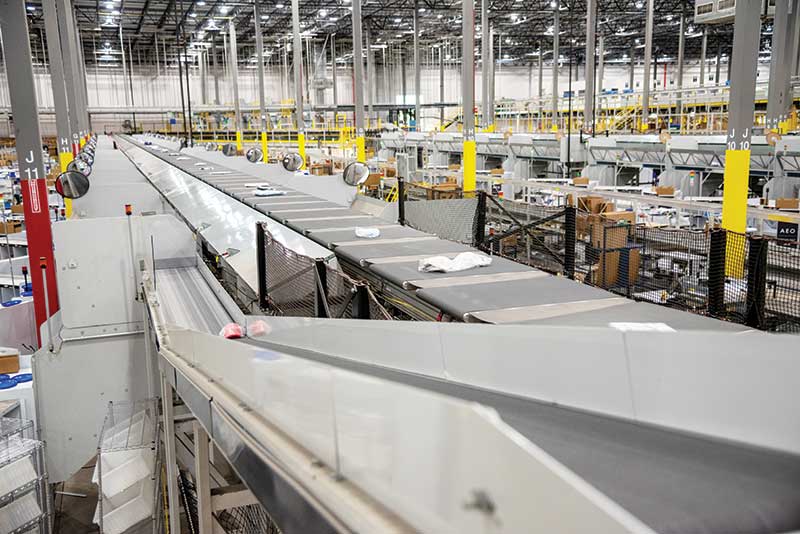

E-commerce fulfillment was already on an upward trend pre-pandemic. But when COVID-19 hit, this highly popular method of shopping accelerated—and by all forecasts will continue its hefty climb. Consequently, e-commerce continues to present new opportunities for third-party logistics (3PLs) providers and remains a strong growth driver for the industry.
Despite the fact that the e-commerce logistics market shrank 5.2% year-over-year in 2022, according to Transport Intelligence (Ti) data, the firm maintains the negative 2022 growth rate should not detract from e-commerce buying behaviors that are very firmly entrenched in the global economy and society.
“The size of the market in 2022 remains larger than pre-pandemic levels despite seeing some shrinkage,” says Nia Hudson, Ti Research analyst and team lead.
In 2019, worldwide retail e-commerce sales totaled $3.351 trillion, reports Insider Intelligence. Analysts project that sales will increase by 13.8% this year and total $6.169
trillion in 2023—an amount that will make up a 22.3% share of total retail sales.
This simply means that e-commerce can result in higher margins for 3PLs that provide integrated fulfillment and transportation management operations, points out Evan Armstrong, president of Armstrong & Associates (A&A). “Its volatile volumes play well for 3PLs that can flex labor and capacity more quickly than those with more static operations,” he says.
Opportunities are also encouraging more traditional providers like Maersk to move further into the e-fulfilment space. “To sum it up in one-word, 3PL’s e-commerce fulfillment is in a state of ‘adaptation,’” says Spencer Shute, principal consultant at Proxima. “Providers are investing in technologies—both software and hardware—to operationally increase efficiencies in e-commerce fulfillment.”
Market drivers
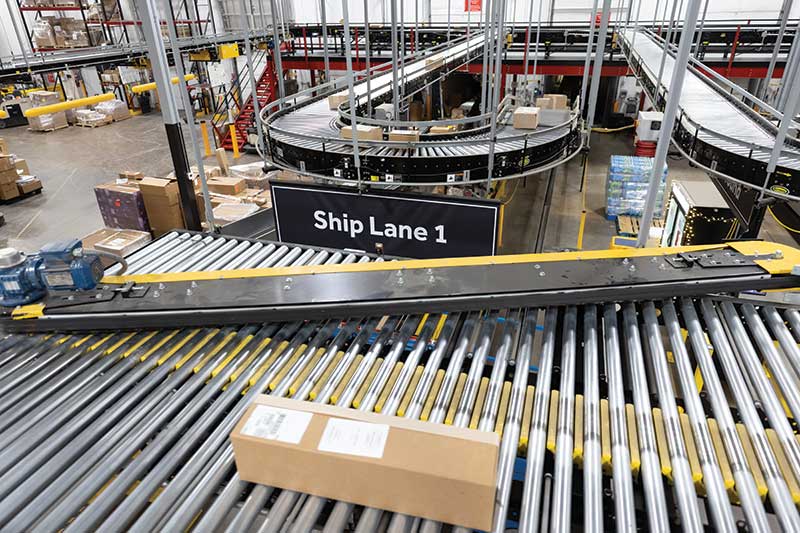
Shute sees three key factors driving 3PL e-commerce fulfillment services: a continuing shift by consumers to work remotely and increase home delivery orders; the need for shippers to remain completive and offer nimble shipping options to customers; and the importance of warehouse operations to work to reduce inventory while increasing throughput of products
To be able to handle e-commerce logistics requirements, 3PLs are investing significantly in logistics capabilities and increasingly making comprehensive changes to their e-logistics offerings.
To capture some of this business and expand services, 3PLs have experienced significant merger and acquisition (M&A) activity. A recent example is DHL’s acquisition of a majority stake in Monta as well as a minority stake in Link Commerce in 2022. It also acquired a Turkish parcel delivery group in 2023.
However, M&As have slowed into 2023 as profits have dipped amid a more challenging economic climate, says Ti’s Hudson.
Pushing e-commerce fulfilment is Amazon’s Fulfilment by Amazon (FBA) services. Here Amazon handles the entire fulfillment process for third-party sellers from storing inventory to picking, packing, and shipping of customers’ orders. Amazon will also provide customer service and process returns.
“Amazon’s expansion of its FBA services has been well documented, and it’s always looking to improve its services and expand its Prime benefits to more merchants,” says Hudson. She maintains that 3PLs will be consistently looking to capture some of Amazon’s market share given other retailers’ needs to compete with Amazon’s quick, free/cheap delivery despite its slim margins.
This has also given rise to an influx of dedicated e-fulfilment logistics providers like Shipbob and Shipmonk that are also pushing 3PLs to expand services to remain competitive.
Overall, speed is key and with faster delivery times having a big impact on e-commerce purchase decisions, 3PLs must confront changing operational needs to handle both the volume and the velocity of shipments, says Hudson says. “Shippers also increasingly desire to outsource their logistics services, particularly with end-consumers demanding quicker and easier delivery processes,” she adds. “Satisfying these requirements can be difficult to provide when logistics is done in-house.”
Technology offerings
Third-party logistics providers are rapidly investing in supportive technological offerings to stay laser-focused on all the factors impacting e-commerce fulfillment.
“These include everything from AI software forecasting to robotic fulfillment automation,” says Shute. “Bringing real-time and predictive data to clients as well as increasing fulfillment efficiency is a race in the marketplace today.”
Shippers and 3PLs, in particular, are working to become more proactive and resilient to avoid the supply chain
bottlenecks experienced during the pandemic, Shute notes. Consequently, to best manage the market drivers and the 3PL relationship, shippers must rely on data visibility and transparency across the supply chain.
“Data transparency allows for improved operational forecasts, fulfillment and shifts the network to be more proactive,” says Shute. “Improving the 3PL relationship with data sharing can be managed through new technologies implemented by 3PLs, but it’s critical to evaluating the offerings to not only fit today’s needs, but future needs as well.”
To expand and optimize services, robotic fulfillment automation helps 3PLs addresses human resource challenges, especially in warehouse operations. “Automation makes it possible to plan better and use talent more efficiently, particularly given that 3PLs today require better use of real-time data to meet required two-day and even two-hour delivery windows,” Armstrong explains.
Robotics are adding significant value to warehouse operations by helping to mitigate or eliminate errors, speed up order fulfilment, reduce overhead and running costs and facilitate better inventory management.
A recent McKinsey & Company report projected that by 2025, more than four million commercial robots will be installed at more than 50,000 warehouses worldwide. The global warehouse automation market, meanwhile, will reach $51 billion by 2030.
Warehousing market trends
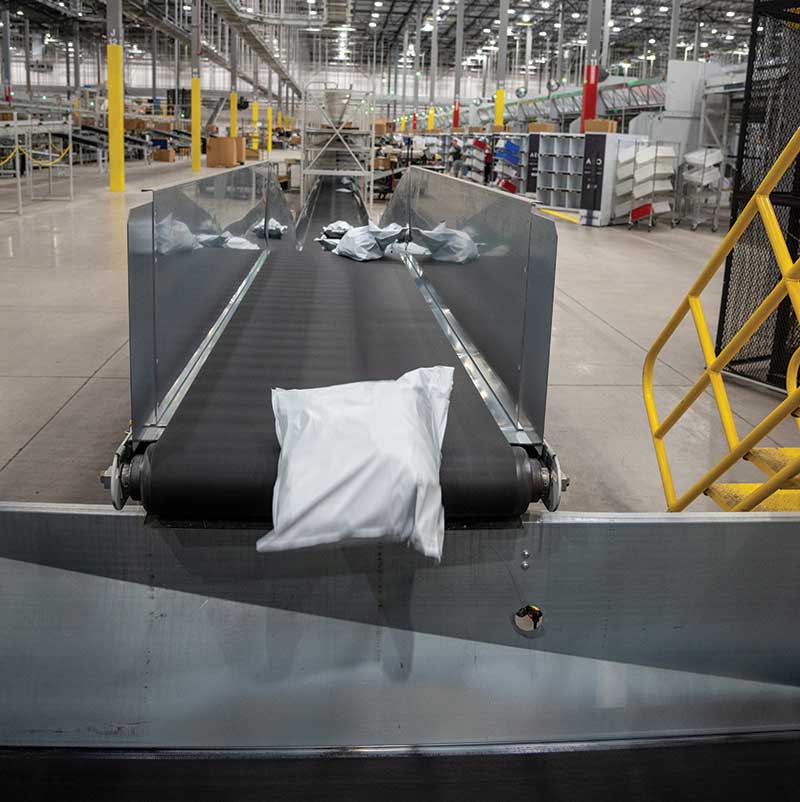
Robotics also plays an important role given the dramatic impact e-commerce is having in creating a tight real estate market for warehousing space.
“Nearly every major trend in warehousing—a tight labor market, adoption of new technologies, increased rents, low vacancy rates, and increasing demand—equally affect private and outsourced e-commerce warehousing,” remarks Armstrong.
Consequently, he observes that more multi-client warehouses with shorter-term contracts have come on market and have provided 3PL customers with increased flexibility, although there also might be increases in longer contracts due to high inflation, lease rates, and warehousing space pressure.
“Shippers want to deploy e-commerce fulfillment parcel shipping out of warehouses as close to the customer as
possible to increase service levels,” Armstrong says.
There’s also increasingly demand for verified-accredited wholesale distributors (VAWD) warehouses that provide a variety of e-commerce fulfillment services such as picking, packing, and shipping orders directly to customers.
“Many provide value-added services like bagging, labeling, bubble wrapping, performing drop-tests, and ensuring the goods are ready-to-ship,” Armstrong says. “Such labor-intensive work requires three times as many employees per square foot as a traditional contract warehouse.”
Customers also increasingly request that 3PLs offer a variety of delivery options such as access to a network of pick-up-drop-off (PUDO) locations and parcel lockers. “DHL e-commerce Solutions recently announced it was partnering with Cainiao to install parcel lockers across Poland,” Hudson says.
Cold chain warehousing is also experiencing unprecedented growth, given the rapid expansion of online grocery shopping caused by the pandemic. “E-commerce’s one-day or even two-hour delivery windows have increased the addition of cold chain facilities near population centers,” says Armstrong.
3PLs: Big investments in automated warehouses

Several providers have publicly committed huge capital toward automating warehouses. Among them, DHL Supply Chain recently announced a $15 million investment in robotics solutions from Boston Dynamics to further automate warehousing in North America.
The robotics solutions begin with equipping DHL facilities with Stretch, Boston Dynamics’ newest robot that is specifically designed to tackle several box-moving tasks in the warehouse, starting with truck unloading at select DHL facilities.
Next is its multi-purpose mobile robot that will handle additional tasks to support other parts of the warehouse workflow. This will effectively automate warehouse operations.
“Investing in warehouse automation plays an important role in increasing operational efficiency and improving service for our customers,” says Sally Miller, CIO, DHL Supply Chain North America.
Last year, FedEx Express launched DoraSorter, an AI-powered intelligent sorting robot, at its e-commerce sorting center in Guangzhou, China. DoraSorter’s core function is to sort parcels based on destination matches that the sorting center processes.
The sorting robot represents the company’s latest push in digitizing its operations and building a smart logistics network to handle the ever-growing volumes of e-commerce-related shipments in the region.
GXO is rapidly expanding its use of technology to meet demand for outsourcing logistics from current and new customers. Last year it signed a global agreement with 6 River Systems to add collaborative mobile robots to GXO’s logistics operations in the U.S. and Europe. GXO also implemented a fleet of Lowpads Autonomous Mobile Robots (AMRs), an industry first.
“By deploying Lowpad AMRs that are fully linked to our warehouse management and electronic data interchange systems, we’re enhancing accuracy, efficiency and quality for our customer, while easing the strain of a tight labor market and reducing costs,” says Luc Laurijssens, managing director for Belgium and the Netherlands at GXO.
GEODIS is implementing 1,000 LocusBots from Locus Robotics at its worldwide warehouse locations. LocusBots automatically learn the most efficient travel routes through a warehouse, to dramatically improve worker efficiency and productivity two times to three times over traditional cart picking.
Where’s it heading?
As e-commerce grows, so will competition among 3PLs that see profits in this hot market sector. Such competition benefits shippers that operate in e-commerce as long as their 3PLs can offer scalable services that can adapt quickly to fluctuating volumes, particularly during peak season.
“It’s important to pay attention to things like quick, accurate delivery, whether your 3PL offers real-time tracking updates for deliveries, as well as overall scalability,” says Hudson. “From the 3PLs point of view, this looks like service offerings such as shared warehousing and being able to provide quality demand forecasting and effective stock control.”
Shippers need to be clear on the features their 3PL can provide and how this helps maintain their competitiveness. And depending on needs, shippers may be wise to look beyond the larger 3PLs and explore fulfilment options with newer, tech-based providers that may be able to provide a more curated process, Hudson advises

Article Topics
Armstrong & Associates News & Resources
3PLs in the Fast Lane: Meeting the e-commerce surge with tech, scale, and smarts 36th Annual State of Logistics: 3PLs face challenges, but consolidation and tech investment offer path to resilience U.S. 3PL market rebounded in 2024, says new Armstrong & Associates report 3PLs navigate uncertainty in $10.15B Big and Bulky Last-Mile Market, notes Armstrong report 3PLs Under Pressure: Growth collides with global logistics disruption 2024 Digital Freight Matching Roundtable: Evolving for a digitized future E-commerce Fulfillment: A new standard for SPEED More Armstrong & AssociatesLatest in Logistics
FTR’s Shippers Conditions Index shows modest growth Trucking executives are set to anxiously welcome in New Year amid uncertainty regarding freight demand ASCM’s top 10 supply chain trends highlight a year of intelligent transformation Tariffs continue to cast a long shadow over freight markets heading into 2026 U.S.-bound imports see November declines, reports S&P Global Market Intelligence FTR Trucking Conditions Index shows slight gain while remaining short of growth AAR reports mixed U.S. carload and intermodal volumes, for week ending December 6 More LogisticsSubscribe to Logistics Management Magazine

Find out what the world's most innovative companies are doing to improve productivity in their plants and distribution centers.
Start your FREE subscription today.
December 2025 Logistics Management

Latest Resources












