Truckers blast EPA decision to allow tough, California air quality rules on heavy trucks
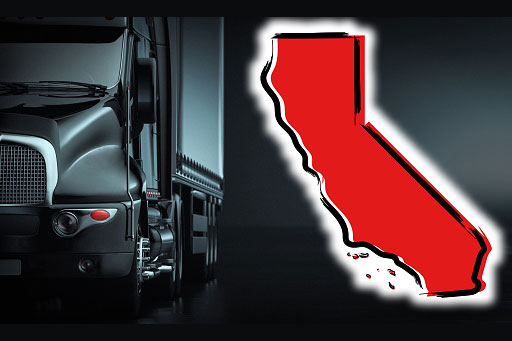
The trucking industry is blasting a decision by the Environmental Protection Agency (EPA) to allow California to set rules that will essentially ban new diesel trucks in the Golden State by 2035.
The Biden administration is allowing California to set rules phasing out diesel trucks. This has caused an uproar from regional and national trucking groups as well as the Owner-Operator Independent Driver Association (OOIDA) on the expected impact of the rules.
American Trucking Associations (ATA) President and CEO Chris Spear said the Biden administration’s decision to allow California to move forward with damaging and unrealistic emissions rule will harm the industry nationwide by causing a “patchwork” of separate state regulations that will harm interstate commerce.
“By granting California’s waiver for its so-called ‘advanced clean trucks’ rule, the EPA is handing over the keys as a national regulator,” Spear said. “This isn’t the United States of California, and in order to mollify a never satisfied fringe environmental lobby by allowing the state to proceed with these technologically infeasible rules on unworkable and unrealistic timelines, the EPA is sowing the ground for a future supply chain crisis.”
Spear said as the nation learned during the pandemic, the nation’s supply chain is fragile, and even small disruptions can cause huge problems nationally and globally.
“By allowing this incredibly disruptive, ill-conceived regime to move forward, EPA is creating a terrible mess for the hard-working men and women of our industry and the country to clean up,” he said.
Spear noted that the trucking industry has worked “tirelessly” with the EPA on aggressive, achievable timelines for reducing emissions. Over the past 35 years, he said, that collaboration has produced a 98% reduction in truck emissions.
“We continue to be committed to the path to zero, and we hope EPA will, as it becomes clear that California’s rhetoric is not being matched by technology, reverse course and create a single, achievable national standard,” he added.
The EPA’s waiver authorized California to enforce what it calls its “Advanced Clean Trucks” rule. That requires 75% of Class 4-8 truck sales to be zero-emission vehicles by 2035.
The EPA’s waiver gave the California Air Resources Board (CARB) the authority to enforce the Advanced Clean Truck rule and other regulations. The state needed White House authorization because its proposed rules exceeded EPA requirements.
Last November, the U.S. joined an international agreement to shift all truck sales to zero-emissions by 2040. The EPA followed with a December rule toughening heavy-duty truck emissions standards, beginning with model year 2027 vehicles.
California is the first known entity in the world to require zero-emissions trucks. That move has brought together disparate factions of the oft-divided trucking world.
The Owner-Operator Independent Drivers Association (OOIDA), which often clashes with ATA over issues such as driver pay and safety, took the unusual step of agreeing with ATA’s position on the California rule.
“Vehicle reliability and affordability are top priorities for OOIDA members,” OOIDA President and CEO Todd Spencer said in a statement. “We have yet to see proof that electric [trucks] are a realistic option for most trucking businesses considering the price tag and lack of charging infrastructure. The bottom line is that the technology they’re trying to mandate does not yet exist.”
Other trucking interests are wondering if, in this instance, California regulations are getting ahead of the technology. And they worry about the cost of implementing potentially harmful and unrealistic emissions rules on the industry.
Under California rules, new Class 8 heavy truck models would be zero-emission next year. Diesel and gasoline-powered drayage trucks must retire after 18 years to guarantee that they meet a zero-emission requirement by 2035.
In addition, under the California proposals issued by that state’s Air Resources Board, half of all new trucks purchased by state and local governments would be zero-emission in 2024, increasing to 100% by 2027.
Trucking interests worry that the high cost of such trucks, lack of sufficient charging stations and the limited range of these electric vehicles could cause serious operational worries for the industry.
“We’re flying blind into some pretty major questions about the practicality of actually implementing this rule,” one California trucking official said.

Article Topics
California Trucking Association News & Resources
Truckers blast EPA decision to allow tough, California air quality rules on heavy trucks Chaos in California! U.S. Appeals Court panel rules against truckers in owner-operator caseLatest in Logistics
Looking at the impact of tariffs on U.S. manufacturing UP CEO Vena cites benefits of proposed $85 billion Norfolk Southern merger Proposed Union Pacific-Norfolk Southern merger draws praise, skepticism ahead of STB Filing National diesel average is up for the fourth consecutive week, reports Energy Information Administration Domestic intermodal holds key to future growth as trade uncertainty and long-term declines persist, says intermodal expert Larry Gross Railroads urged to refocus on growth, reliability, and responsiveness to win back market share Q&A: Ali Faghri, Chief Strategy Officer, XPO More LogisticsSubscribe to Logistics Management Magazine

Find out what the world's most innovative companies are doing to improve productivity in their plants and distribution centers.
Start your FREE subscription today.
November 2025 Logistics Management
Latest Resources