State of Logistics 2024: Rail/Intermodal
Volumes are mixed as service levels show continued improvement
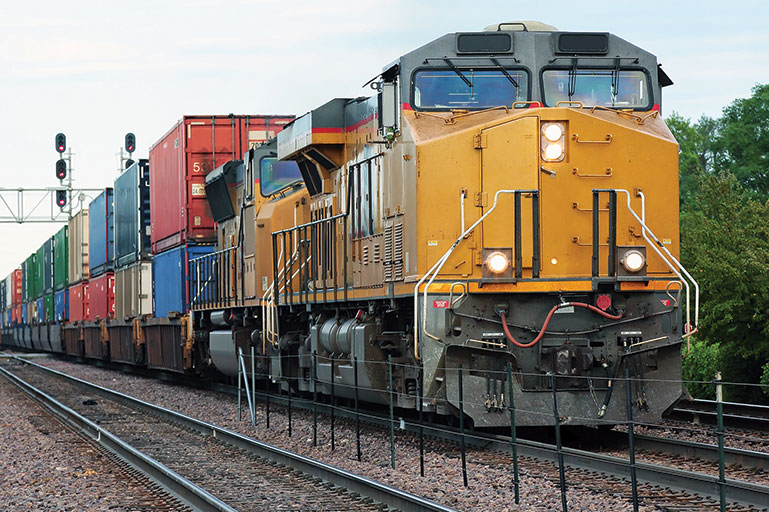

In this post-pandemic world, one way to define the ride that the freight railroad and intermodal sectors are on is that things are still “uneven.”
That can be seen through volume shifts going back to the onset of the pandemic as 2020 volumes sank due to the shuttered economy, while 2021 saw some volumes recover. Driven by easy comparisons, 2022 was mixed, and 2023 was also mixed, albeit slightly, with U.S. rail carloads up 0.7% and intermodal containers and trailers off 4.9%.
Here in 2024, patterns have shifted once again. On a year-to-date basis through May, the most recent month for which data is available, U.S. rail carloads are down 5% annually, slightly below 2022’s 4% annual decline for the same period, the lowest on record for this period, according to data issued by the Association of American Railroads (AAR). May alone was down for the 5th consecutive month, with the average weekly carload tally for May coming in at 212,160, pretty much in line with April.
On the intermodal side, May U.S. container and trailer volume, at 1,281,248 units, increased 7.6% annually, compared to an 11.1% decline for the same period a year ago, up annually for the ninth consecutive month. And, through the first five months of 2024, U.S. intermodal volume is up 8.7% annually, while off 3.1% compared to 2022. May’s average intermodal units per week, at 256,250, is up 7.6% annually.
“At first glance, rail traffic in May seems to display mixed signals,” says Rand Ghayad, chief economist for the Association of American Railroads.
“While coal’s continued decline has led to a decrease in total carloads, a closer examination reveals that carloads (excluding coal) increased for the fourth consecutive month. Although it’s unlikely that we’ll witness a reversal in coal’s trend, other commodities—such as intermodal traffic and petroleum—hold greater growth potential and will likely be more important strategically for railroads in the future.”
U.S. rail cargo volumes 2024

According to Ghayad, intermodal traffic spiked in May, maintaining its upward trajectory over several months. “This surge reflects both increased port activity and intensified efforts by railroads to compete in a fiercely competitive market. Additionally, solid volume gains were observed for petroleum products, chemicals, and grain,” he says.
Anthony Hatch, principal of New York-based ABH Consulting, describes the state of year-to-date rail traffic as “solid but uninspiring,” especially when taking relatively easy year-to-date comparisons into account. “In a sense, the numbers sort of flatter the railroads in that they are doing better than they actually are,” says Hatch. “This is a derived demand business. Some of it is the rails’ fault, or the fault of circumstances they’re part of, in that the business has not come back to them as fast as I thought it would. They lost share over the last five years, including the pandemic and recovery period, due to crew shortages. And some of that business is slowly migrating back.”
And with trucking rates still low, Hatch adds that there’s less incentive for shippers to move back to rail—which has, in turn, affected intermodal pricing and volume.
On the service side, it’s fair to say that railroads remain under the watchful eye of the Surface Transportation Board (STB), going back to its 2022 service hearings. At that time, the STB said that various stakeholders have indicated that there have been substantial increases in problems arising from tight car supply and unfilled car orders; delays in transportation for carload and bulk traffic; increased origin dwell time for released unit trains; missed switches; and ineffective customer assistance.
However, Hatch adds that things have been improving on that front. “Service is better than it was a year ago, and it’s much better than it was 10 years before that,” he says. “Shippers may say things are worse, but that has more to do with standards continuing to rise.”

Article Topics
AAR News & Resources
U.S. rail carload and intermodal volumes are mixed, for week ending November 29, reports AAR U.S. rail carload and intermodal volumes are mixed, for week ending November 8, reports AAR U.S. rail carload and intermodal volumes see declines, for week ending November 1, reports AAR U.S. rail carload and intermodal volumes see annual declines, for week ending October 25, reports AAR U.S. rail carload and intermodal volumes are mixed, for week ending October 18, reports AAR U.S. rail carload and intermodal units are mixed, for week ending October 11, reports AAR AAR President & CEO Jefferies examines the current state of freight rail policy and regulations More AARLatest in Logistics
USPS-Amazon contract uncertainty grows as reverse auction plan raises stakes for 2026 renewal Preliminary November Class 8 truck orders see another month of declines U.S. rail carload and intermodal volumes are mixed, for week ending November 29, reports AAR Logistics growth sees mild decline in November, states LMI CBP launches five-year pilot allowing non-asset-based 3PLs Into CTPAT for the first time DHL’s 2025 Peak Season approach includes more planning and less panic Union Pacific–Norfolk Southern merger filing with the STB is delayed delayed until mid-December More LogisticsAbout the Author

Subscribe to Logistics Management Magazine

Find out what the world's most innovative companies are doing to improve productivity in their plants and distribution centers.
Start your FREE subscription today.
December 2025 Logistics Management

Latest Resources