
Robotic automated storage and retrieval systems (AS/RS) on the move
There is no shortage of new ideas for flexible, efficient and even futureproof automated storage and retrieval systems. Here are nine ready to impact operations right now.
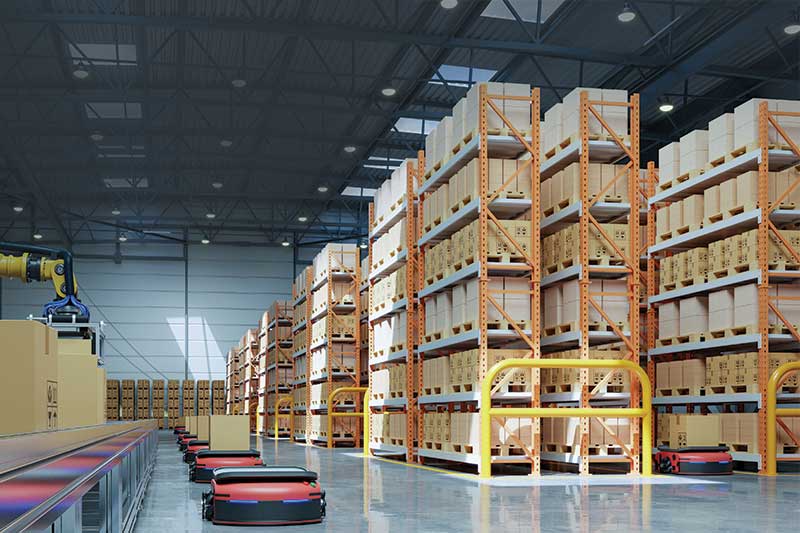
Robotic AS/RS has been around for a while. Shuttles and bots, you know. If nothing else, you’ve probably seen them at the shows.
But as you may have already heard, the technology continues to reinvent itself in significant ways.
The form factor is broader than ever. And so are its storage and retrieval capabilities.
It’s tough to keep them all straight, actually. So, we talked to several suppliers to help you make some sense of it.
The first part of this story (below) focuses on suppliers’ more general comments about robotic automated storage and retrieval systems (AS/RS) as a technology.
The second part features nine of the latest designs for robotic AS/RS. These include ones with new shuttles and bots as well as autonomous mobile robots in the rack and on the floor. There’s even one that travels upside down. And don’t forget about that old standby—fixed position, single-arm robot.
If this doesn’t have your attention by now, AS/RS may not be for you. But don’t be fooled into thinking this generation of AS/RS is more of the same traditional unit and mini-loads.
Big picture
That said, we have to start with a warning.
There is no universal agreement on what is a robotic AS/RS. That’s not a whole lot different than 15 years ago when in-lane shuttles started invading AS/RS of all sizes. Keeps the conversations interesting.
“I don’t really care what the mechanism is,” says Luther Webb, solutions strategist and operations expert at Trew.
“What’s important is throughput, speed, inventory availability for all orders, storage capabilities and accessibility to SKUs,” Webb adds casually.
By the way, Trew does not have its own robotic AS/RS offering. But it does integrate robotic AS/RS from other suppliers with advanced automated handling systems.
Some would say Webb’s list of capabilities is incomplete.
“Robotic AS/RS offers labor savings, less travel and high efficiency,” says Andrey Bakholdin, chief growth officer at Brightpick.
Three favorites from Monty McVaugh, head of product at OPEX, are high-density, highly flexible and futureproof.
Over at AutoStore, key distinguishing characteristics of robotic AS/RS are scalability, stability of the system and ability to cope with future uncertainty. That’s according to Margherita Carrozzo, director of product strategy and operations.
Minimal maintenance is another standout of robotic AS/RS, says Yegor Anchyshkin, founder of InStock.
The list of benefits of the technology just gets longer depending on the number of sources. So, let’s add our own: versatile. Check with your supplier as to which characteristics are dominant for their technology.
Robotic AS/AR Solutions to Lower Handling Cost/Piece

That said, we tried to build a profile for a typical robotic AS/RS. So, we asked Trew’s Webb. And, true to form, he had one. Well, he actually offered four:
- Module,
- Aisle,
- Cube
- Corral.
Now, Webb’s definitions are fairly short, which given everything is probably prudent on his part.
Module is basically a stand-alone sub-system that not only stores and retrieves, but also processes picks all within one defined module.
Aisle is focused solely on storage and retrieval in an individual aisle or collection of them connected to pick stations with conveyance.
Cube is a 3D dimensionally enhanced aisle-based system dedicated to storage and retrieval with picking stations within its perimeter.
Corral includes both aisle- and cube-based systems that transport picks with robots to adjacent areas for order fulfillment. See the graphic above for more details.
By the way, the majority of suppliers interviewed were more focused on systems for brownfield facilities than greenfield ones. And that typically included a system built to a maximum 40-foot clear height. Clearly, this is not about historic, 110-foot tall unit load systems.
And to go along with that theme is the ability to expand the existing robotic AS/RS in new modules (not to be confused with Webb’s modular category).
That’s part of the profile mentioned earlier that enables robotic AS/RS to accommodate a rolling parade of changes from SKUs to operational requirements. Again, such flexibility on an easily manageable scale is not often touted as a common characteristic of historic AS/RS systems.
There’s also the matter of adapting the system to daily demands and required flows.
At the Consumer Electronics Show in January, KION, Nvidia and Accenture touted their warehouse of the future. It uses AI and digital twins to mirror the actual facility and run simulations of how it needs to run differently tomorrow to meet demands. Assume that robotic AS/RS are part of the mix here.
And since we’re already looking at the future, what do robotic AS/RS portend? For Kevin Heath, director of robotics at Dematic, that’s easy: Lights-out facilities.
Not exactly a new concept, but one that does get some attention when he brings it up.
“Many lights-out facilities are probably 10 years out,” Heath says. “But with robotic AS/RS in place and all of the technology’s capabilities at hand, how can lights-out be far behind.”
AutoStore

One of the original forms of robotic AS/RS, AutoStore’s army of bots that run on top of a horizontal grid accessing vertical storage locations, has just been updated.
The R5 Pro has three key improvements, says Margherita Carrozzo, director of product strategy and operations.
- Enhanced productivity through 14% higher throughput per robot due to optimized routing and overall system efficiency. That allows a 15% reduction in active robots with equal productivity.
- Rapid charging with lithium-titanium oxide batteries that support fast charging and reduced downtime.
- Space and cost efficiency are due to a reduction in the number of needed chargers by 86%, freeing up space for storage.
Carrozzo says that combination makes the R5 Pro well suited to large-scale e-commerce operations with a range of SKU activity levels.
Brightpick

To start, the Autopicker autonomous mobile robot (AMR), which robotically picks items in-aisle, went for the low hanging fruit—picks up to 12 feet off the floor. But as Brightpick’s chief growth officer Andrey Bakholdin explains, the company’s latest mobile robot—the Giraffe—reaches up to 20 feet.
The tandem, says Bakholdin, works together to manage both slow and fast movers at high efficiency. While the Giraffe picks slow movers at upper levels, the original Autopicker takes those picks and integrates them with its flow of fast movers down below. Generally, five Autopickers work with one Giraffe at a time.
See the full story on how Brightpick robots are speeding order fulfillment at The Feed, an e-commerce sports nutrition supplier here.
Dematic

Not every robotic AS/RS has to be mobile. In fact, one approach from Dematic relies on a stationary Fanuc robot arm, explains Kevin Heath, director of robotics. He says the Dematic design was architected internally and then sourced from Fanuc system integrator Motion Controls Robotics.
The fixed-position robot stands in the center of a semi-circle of pick faces for totes. Maximum storage/retrieval capacity is 215 totes an hour. Totes arrive and depart from a single lane at one node of the storage semi-circle.
In fact, the robot pictured here is in the middle of loading a fully configured storage pod, Heath says. Fully loaded, the pod maximizes square footage utilization while focusing solely on tote movement. The system can be integrated with enterprise resource planning and warehouse management systems.
Exotec

If you’re thinking robotic AS/RS is a little experimental, think again. For instance, Exotec’s Skypod robotic system now performs globally 1 million container presentations daily.
These systems are a mobile AS/RS solution that stores items in high-density racks and delivers them to ergonomic pick stations, explains Andy Williams, executive vice president of sales, North America. The system now handles totes and cases. It sequences, buffers orders and handles picking at the workstation, says Williams.
But the improvements don’t stop there. The robot workstation and storage racks have been redesigned to accommodate the new capabilities.
Combined with enhanced software, the new system improves workstation throughput by 50% and storage density by 30%, says Williams.
Freespace Robotics

While some robotic AS/RS solutions focus on just storage and retrieval, not so for the one from Freespace Robotics, says Michael Lutzky, chief strategy officer.
Instead, this large, multi-dimensional system stores full cases and totes in a dense cube configuration. Inventory up to 100 pounds travels on trays (several sizes) in the deep-lane, multi-level structure.
Within the cube, the system receives and stores inventory. As needed, cases and totes are retrieved, sorted, buffered, pre-staged internally and sequenced for pick stations and even shipping docks. The system handles functions typically requiring sorters, accumulation conveyors, lift trucks, manual labor, eliminating traditional large, open floor spaces for handling.
Lutzky calls it holistic flow in the warehouse combined with high density storage and the fewest touches possible.
Hai Robotics

A fleet of customized robots tailored to three different storage scenarios maximize density while maximizing throughput, explains Rebecca Lennartz, director of marketing.
HaiPick System 3 also combines those standard capabilities with flexibility for high-throughput applications, she explains. The system reaches up to 40 feet with 43 totes per square meter.
High-speed bots transport fast-moving items for what she calls ultimate order responsiveness. Pick accuracy is 99% plus and labor requirements are typically trimmed by two thirds.
By the way, the systems’ autonomous case-handling mobile robots operate seamlessly with standard rack and containers. Lennartz emphasizes that the bots are highly flexible and does not require rack on super flat floors.
Modularity and scalability are other distinguishing characteristics. Robots can be easily added to an existing system.
Instock

Sometimes new technology can turn the old world upside down. In the case of Instock’s wheeled robot, that’s literally true.
The photo shows the autonomous, mobile robot in three dimensions rolling along the ceiling of a storage level in storage rack, explains Yegor Anchyshkin, founder. The software-driven robots are the only moving element in the storage system. In the picture, multiple bins are stored below the robot and tote it has just retrieved. By the way, the robot also travels more conventionally right-side up as needed in the grid.
The storage structure resembles traditional steel rack but is actually an interlocking post and beam tubular system. Robots move bins in the grid, stacking them in storage locations as required.
Anchyshkin notes the system can be easily expanded with little to no disruption of continued operation of what’s already installed.
Mytra

Flexibility is a key word here, says Chris Walti, chief executive officer and co-founder. More specifically, he’s talking about a mobile bot that can go anywhere in a vertical storage system. Depending on the minute, that is.
Mytra’s system combines bots with cell trays and cells in a storage configuration. Sounds fairly basic. Except.
Take location 7D. It has been storing a tray of inventory that a robot just picked up. The location is now open and has been reassigned by software to become part of a new robot path for the next hour. Just let that sink in for a minute.
Walti explains that fixed storage cells may not move but their purpose can change as needed based on orders and inventory needs. Bots travel autonomously but under the general guidance of software. By the way, the picture shows a bot with its wheels retracted.
OPEX

Yet another early entry in the world of robotic AS/RS, OPEX now has a more powerful version called the Infinity, says Monty McVaugh, head of product.
As with its predecessors, Infinity relies on wireless, automated iBOTs, this time with 90-pound capacities, to move totes across the single-aisle configuration. Each iBOT has full access to all inventory in the grid.
McVaugh says the system provides 35% more storage than other goods-to-person systems. Infintity storage totes are larger compared to other AS/RS systems and have up to 24 cells. However, expansion is modular, helping to futureproof the system, says McVaugh.
That latter is critical to the future of robotic AS/RS, he adds. “Built and fixed systems are fading away. We are now headed to the Lego block world of automated storage,” McVaugh asserts.

Article Topics
News & Resources
Union Pacific-Norfolk Southern merger application is filed with the Surface Transportation Board FedEx posts fiscal first quarter earnings growth U.S. rail carload and intermodal volumes are down, for week ending December 15, reports AAR DAT’s November Truckload Volume Index sees more mixed results November intermodal volumes see annual decline, reports IANA Teamsters Rail Conference makes its case for the Union Pacific-Norfolk Southern proposed merger to not be approved by the STB USPS bets on last-mile expansion to drive revenue and enable faster delivery for retailers and logistics providers More NewsLatest in Logistics
Union Pacific-Norfolk Southern merger application is filed with the Surface Transportation Board FedEx posts fiscal first quarter earnings growth U.S. rail carload and intermodal volumes are down, for week ending December 15, reports AAR DAT’s November Truckload Volume Index sees more mixed results November intermodal volumes see annual decline, reports IANA Looking at the state of the parcel market with Robert Persuit, Sr. Director of Business Development, ShipMatrix Teamsters Rail Conference makes its case for the Union Pacific-Norfolk Southern proposed merger to not be approved by the STB More LogisticsAbout the Author

Subscribe to Logistics Management Magazine

Find out what the world's most innovative companies are doing to improve productivity in their plants and distribution centers.
Start your FREE subscription today.
December 2025 Logistics Management

Latest Resources












