
Quest for Quality 2024: North American Ports
North American ports press forward with stellar service.
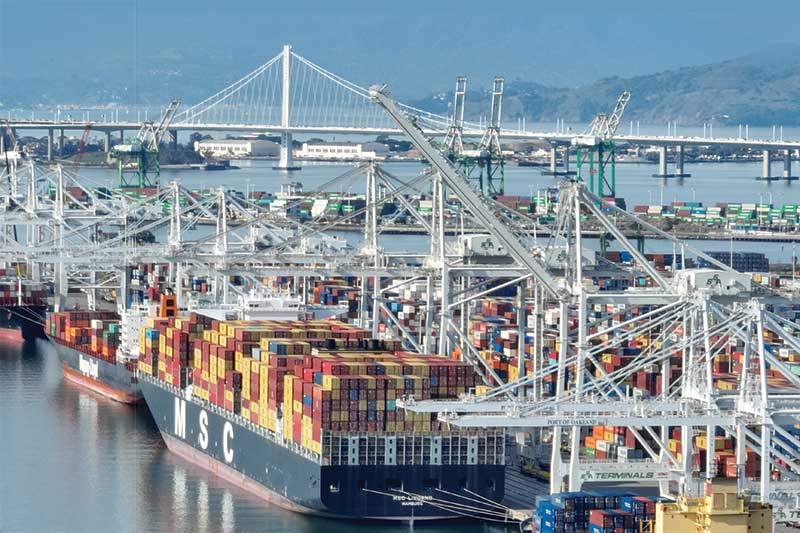

Our port correspondent Karen Thuermer recently reported that our top sources still contend that U.S. seaports are in relatively good shape today compared to three years ago when faced with congestion issues caused by pandemic-related cargo surges.
“It remains clear that while managing significant volume swings driven by the pandemic and ongoing geopolitical issues, U.S. seaports continue to press forward with efforts to improve infrastructure and build in efficiencies,” reports Thuermer. “I would say that this is an unwavering attitude that bodes well for the future.”
One trend that market analysts will continue to watch amid congestion issues and now a looming labor strike on the West Coast will be shifting volumes—and which region will be ready to pick up the additional traffic.
“A closer look at volumes for the last four years at East, West, and Gulf Coasts ports shows how market leadership bounced back and forth between each region’s leading ports,” reports Thuermer. “The reasons were major events such as port congestion, pandemic-driven demand spikes, and labor relations. But it was the top Gulf Coast ports, especially the Port of Houston, that benefitted the most.”
No matter what region they’re putting to work, Logistics Management readers tell us that these 19 North American seaports have done an exceptional job of managing the flow of volume regardless of surrounding conditions. And while all of the ports listed will be taking delivery of 2024 Quest for Quality gold, we’d like to call out Port of Savannah (53.77), Port of Charleston (53.21), and Port of Richmond (53.16) for putting up the three top scores in the category.
Northeast Ports
(Bold indicates leader in attribute category)
| Ease of doing business | Value | Ocean carrier network | Intermodal network | Equipment & operations | Weighted Score | |
| Port Authority of NY & NJ | 8.75 | 8.69 | 10.30 | 8.72 | 9.16 | 45.62 |
| Port of Halifax | 10.03 | 11.12 | 8.87 | 6.46 | 8.64 | 45.11 |
| AVERAGE | 8.76 | 9.38 | 9.55 | 8.15 | 8.82 | 44.65 |
Source: Logistics Management, Peerless Research Group (PRG)
Mid Atlantic Ports
(Bold indicates leader in attribute category)
| Ease of doing business | Value | Ocean carrier network | Intermodal network | Equipment & operations | Weighted Score | |
| Port of Richmond | 9.64 | 10.43 | 10.51 | 11.07 | 11.52 | 53.16 |
| Port of Baltimore | 10.67 | 11.58 | 9.63 | 9.23 | 10.67 | 51.78 |
| Port of Virginia | 10.51 | 10.66 | 10.51 | 9.84 | 9.81 | 51.33 |
| AVERAGE | 10.00 | 10.93 | 9.98 | 9.54 | 10.06 | 50.52 |
Source: Logistics Management, Peerless Research Group (PRG)
South Ports
(Bold indicates leader in attribute category)
| Ease of doing business | Value | Ocean carrier network | Intermodal network | Equipment & operations | Weighted Score | |
| Port of Savannah | 11.70 | 12.05 | 10.94 | 9.69 | 9.39 | 53.77 |
| Port of Charleston | 11.56 | 11.99 | 10.84 | 9.23 | 9.60 | 53.21 |
| Jacksonville Port Authority | 10.84 | 10.83 | 9.89 | 9.23 | 9.60 | 50.38 |
| Port Everglades, FL | 10.44 | 10.01 | 10.24 | 9.35 | 9.82 | 49.86 |
| AVERAGE | 10.26 | 11.31 | 9.98 | 8.97 | 9.30 | 49.83 |
Source: Logistics Management, Peerless Research Group (PRG)
Gulf Ports
(Bold indicates leader in attribute category)
| Ease of doing business | Value | Ocean carrier network | Intermodal network | Equipment & operations | Weighted Score | |
| Port of New Orleans | 10.33 | 9.73 | 9.19 | 8.61 | 8.96 | 46.82 |
| Port of Houston | 9.85 | 9.48 | 10.03 | 8.05 | 8.03 | 45.43 |
| Tampa Port Authority | 11.36 | 9.34 | 8.88 | 7.38 | 7.68 | 44.64 |
| AVERAGE | 9.50 | 8.98 | 9.24 | 7.97 | 8.27 | 43.97 |
Source: Logistics Management, Peerless Research Group (PRG)
Great Lakes Region Ports
(Bold indicates leader in attribute category)
| Ease of doing business | Value | Ocean carrier network | Intermodal network | Equipment & operations | Weighted Score | |
| Port of Chicago | 9.29 | 9.04 | 9.46 | 8.61 | 8.45 | 44.84 |
| Port of Montreal | 8.85 | 9.38 | 8.87 | 8.30 | 8.64 | 44.04 |
| AVERAGE | 8.75 | 9.22 | 9.19 | 7.96 | 8.32 | 43.44 |
Source: Logistics Management, Peerless Research Group (PRG)
West Coast Ports
(Bold indicates leader in attribute category)
| Ease of doing business | Value | Ocean carrier network | Intermodal network | Equipment & operations | Weighted Score | |
| Northwest Seaport Alliance (Ports of Seattle & Tacoma) | 10.51 | 9.90 | 9.36 | 9.23 | 8.64 | 47.64 |
| Port of Long Beach | 9.01 | 9.27 | 10.99 | 8.61 | 9.30 | 47.17 |
| Port of San Francisco | 9.64 | 9.73 | 8.87 | 8.30 | 10.56 | 47.09 |
| Port of Vancouver, Canada | 9.91 | 9.53 | 9.57 | 8.61 | 9.33 | 46.95 |
| Port of Oakland | 9.85 | 8.76 | 9.67 | 9.06 | 9.43 | 46.76 |
| AVERAGE | 8.95 | 9.11 | 9.80 | 8.45 | 8.98 | 45.30 |
Source: Logistics Management, Peerless Research Group (PRG)

Article Topics
Port of Virginia News & Resources
Quest for Quality 2024: North American PortsLatest in Logistics
FTR’s Shippers Conditions Index shows modest growth Trucking executives are set to anxiously welcome in New Year amid uncertainty regarding freight demand ASCM’s top 10 supply chain trends highlight a year of intelligent transformation Tariffs continue to cast a long shadow over freight markets heading into 2026 U.S.-bound imports see November declines, reports S&P Global Market Intelligence FTR Trucking Conditions Index shows slight gain while remaining short of growth AAR reports mixed U.S. carload and intermodal volumes, for week ending December 6 More LogisticsSubscribe to Logistics Management Magazine

Find out what the world's most innovative companies are doing to improve productivity in their plants and distribution centers.
Start your FREE subscription today.
December 2025 Logistics Management

Latest Resources












