
Packaging Corner: Packaging that fits also impresses
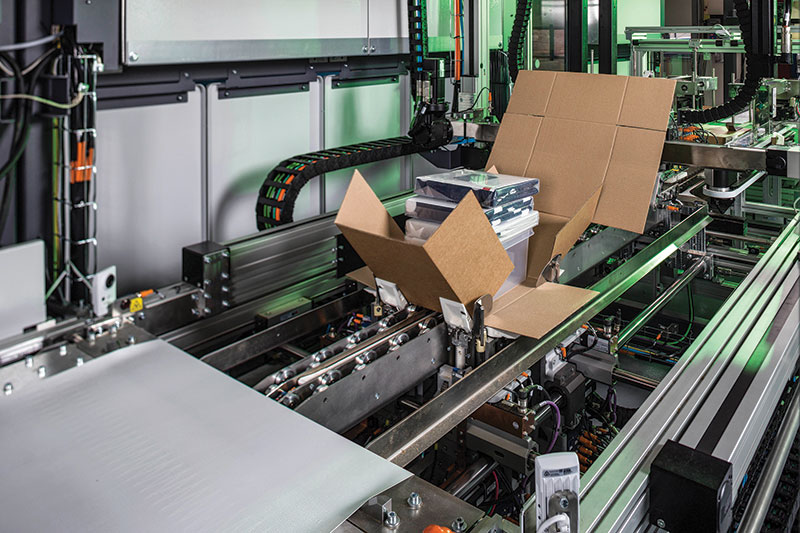
Ever receive a box too big for its contents? What’s worse, the shipper overpaid to ship an unnecessarily oversized box. Automated fit-to-size packaging solves both problems at once.
You know how sometimes you’re kind of aware of something, but it doesn’t entirely register? Here’s one of those to consider: opening an e-commerce package.
How aware are you, really, of the relative size of the box to the contents and how much void fill is in there? Probably you’re not until someone points out at dinner that not all of the void fill wound up in the garbage.
Sean Webb and Holly Busalacki call that the “unboxing experience.” They’re both at Quadient, an automated packaging equipment supplier. Webb is the director of automated packaging solutions in North America, and Busalacki the director of marketing in North America.
The two of them are one step ahead of most people here. “The unboxing experience is definitely an extension of the buying experience. Just think about it,” Webb says. “People do recognize what’s good and bad, and do make a comparison,” adds Busalacki. Once they said that, everything suddenly registered.
What was previously just a routine task took on greater importance—and raised a couple of questions. Why was all that void fill in the box in the first place? Weren’t smaller boxes available for that salt and pepper shaker you ordered? Is all that void fill really good for the environment? Okay, that one might not be top of mind for most of us, but you knew a sustainability angle was coming here.
“A lot of e-commerce companies do not realize that unboxing is part of the buying experience,” says Webb. “But when we talk to them and make the connection, they’re not only listening to the concept of fit-to-size boxes, but pursuing how to make it part of their operations for the benefit of their customers,” he adds.
As Busalacki points out, the benefit of fit-to-size boxes is not just to customers. By definition, it includes the shipper, too. She and Webb point to three different companies that have taken advantage of automated packaging solutions that measure, construct, seal, weigh and label fit-to-size boxes.
CEVA Logistics uses one of Quadient’s automated boxing machines in the Netherlands. It handles 850,000 orders a year, reduces shipping volume of boxes more than 30%, saves $70,000 in void fill costs and creates significant labor efficiencies.
In the United Kingdom, Internet Fusion Group made the switch and reduced shipping volumes equivalent to 90 truckloads a year. In addition, they save more than 11,000 cubic meters of corrugate a year and 80% of their product range no longer requires void fill.
A large footwear and apparel retail chain in the United States offers 70,000 items ranging widely in size. Based on the company’s return on investment analysis, they have the opportunity to reduce shipping volumes 45% while trimming 20% in corrugated usage with the use of fit-to-size automated packaging.
All that sounds like a win-win. After all, it’s always a strong positive any time a company can register savings of 20% or more on their end and make their customers happier. “People are craving predictability and flexibility these days,” says Busalacki. “And automated packaging answers both and more,” she adds.
Or as Webb points out, “automation can be scary if for no other reason than it’s a change from what people are used to. But the customer doesn’t see that. All they know at their end is that the items they ordered arrived in good shape in a right-sized box. Believe it or not, they notice that, even if it takes a while to register,” he adds.

Article Topics
Latest in Logistics
USPS-Amazon contract uncertainty grows as reverse auction plan raises stakes for 2026 renewal Preliminary November Class 8 truck orders see another month of declines U.S. rail carload and intermodal volumes are mixed, for week ending November 29, reports AAR Logistics growth sees mild decline in November, states LMI CBP launches five-year pilot allowing non-asset-based 3PLs Into CTPAT for the first time DHL’s 2025 Peak Season approach includes more planning and less panic Union Pacific–Norfolk Southern merger filing with the STB is delayed delayed until mid-December More LogisticsAbout the Author

Subscribe to Logistics Management Magazine

Find out what the world's most innovative companies are doing to improve productivity in their plants and distribution centers.
Start your FREE subscription today.
December 2025 Logistics Management

Latest Resources












