Ocean Freight: Keeping things afloat
The RMS Titanic's sinking in 1912 highlighted the enduring volatility and challenges in the ocean freight industry, which, despite various efforts and consolidations, continues to face unpredictable pricing and capacity issues exacerbated by global disruptions, prompting ongoing debate about the feasibility of achieving market stability.
April 15, 1912, marked the sinking of the RMS Titanic, an event that reverberated around the world and remains one of fascination, even today.
What many don’t know is that White Star Line, which owned Titanic, was a part of International Mercantile Marine Company, a trust put together and financed by J. P. Morgan. The goal was to establish stability in the boom-and-bust ocean business between Europe and the U.S. by creating a monopoly.
It didn’t work, nor—so far—have any subsequent efforts to bring the market to some sort of “normal” state of stability, despite consolidations and alliances.
Today, the boom-and-bust cycles in the ocean freight business largely remain. The industry has had a long and checkered history, with efforts to manage capacity and service, while turning a sustainable profit from those efforts being fraught with difficulty. Lately there has been substantial consolidation in the business through acquisitions and alliances, yet dramatic swings in pricing remain problematic for carriers and shippers alike.
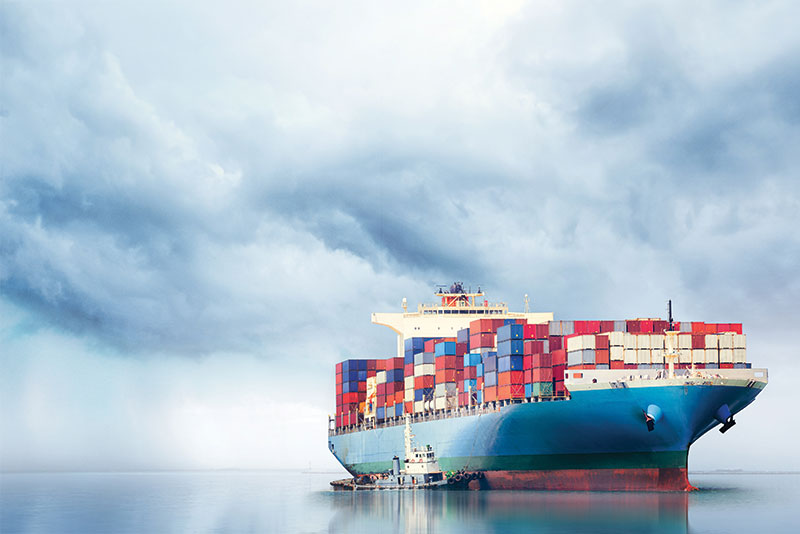
Compounding the challenges in ocean carriage and, more specifically, the container ship business, are the disruptions around the globe with the crisis in the Red Sea and the drought affecting the Panama Canal. This has driven up costs and significantly impacted service as alternative routings have been undertaken to avoid the current flash-points.
Both shippers and carriers routinely go through the oft-dreaded annual RFP process in an effort to bring some form of order and rationality to their business, largely driven by a focus on keeping costs under control and service at acceptable levels. The advantage typically shifts between the parties, depending on levels of capacity available in the market. No magic here; lots of capacity, rates drop; tighter capacity, rates rise.
During the pandemic, rates shot through the roof. A 40-foot container rate of around $1,500 from Shanghai to LA/Long Beach pre-pandemic spiked up to as high as $23,000 and remained high for a sustained period. Of course, additional capacity hit the order books (some 478 new ships in 2021) only to have the bottom fall out of the market and rates decline back close to pre-pandemic levels. They then ratcheted up again with the severe disruptions in the Red Sea.
All of this makes the planning and forecasting much more of a crystal ball exercise than a science.
Is there an answer? How much value is there in market stability in terms of pricing, capacity and service? Or do we just accept this is the way things work and continue living with the continuous drama?
Average shipping container rates for select routes
Per 40-ft. container; weekly; October 6, 2023 to January 4, 2024 
So here’s the question: If I am a shipper, is this landscape acceptable and just something to be endured? Or, is there another way to approach this to gain some measure of predictability and stability—smooth out the peaks and valleys that seem to be a continuing occurrence?
J. P. Morgan was a pretty smart, savvy lad, and he couldn’t solve this, so maybe it’s the best we can hope for, but perhaps some alternative operating models are worth exploring.
In a couple of recent columns, we explored the potential of variable rate pricing in order to stabilize capacity and availability for moving cargo in the trucking business. Perhaps the efficacy of a similar concept can be tested in moving container freight? Anyone want to step up to the plate?
Container ship capacity


Article Topics
Ocean Cargo News & Resources
2025 Ocean Carrier Trends: Mixed signals prevail in 2025 The Ultimate Guide to Evaluating Seaports: 28 Key Factors for Smart Supply Chain Decisions Jaxport Video: America’s Logistics Center Integrating Inventory Into Air vs. Ocean: International transportation modal choice strategies Truckers idled along with 45,000 dock workers in “really creepy” ILA strike 2024 Ocean Cargo Roundtable: Mixed messages roil the high seas State of Logistics 2024: Ocean Cargo More Ocean CargoLatest in Logistics
Looking at the impact of tariffs on U.S. manufacturing UP CEO Vena cites benefits of proposed $85 billion Norfolk Southern merger Proposed Union Pacific-Norfolk Southern merger draws praise, skepticism ahead of STB Filing National diesel average is up for the fourth consecutive week, reports Energy Information Administration Domestic intermodal holds key to future growth as trade uncertainty and long-term declines persist, says intermodal expert Larry Gross Railroads urged to refocus on growth, reliability, and responsiveness to win back market share Q&A: Ali Faghri, Chief Strategy Officer, XPO More LogisticsSubscribe to Logistics Management Magazine

Find out what the world's most innovative companies are doing to improve productivity in their plants and distribution centers.
Start your FREE subscription today.
November 2025 Logistics Management
Latest Resources