
Moore on Pricing: Rail
Future pricing leverage worrisome
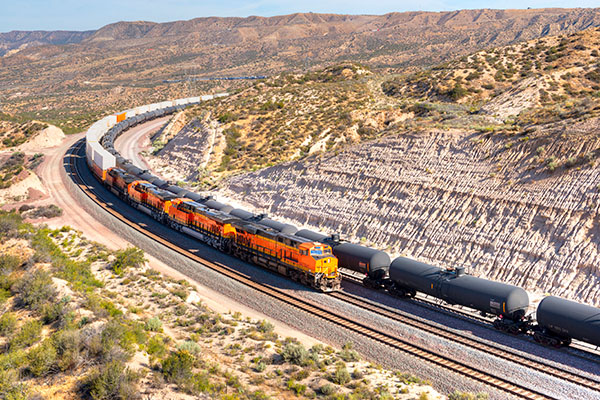
Here’s a quote from a recent Federal Railroad Report (FRA) on rail trends:
“Population and demographic trends pose an enormous challenge for U.S. transportation infrastructure. Forecasts suggest that the United States is becoming a more urbanized country, and urbanized areas will increasingly converge into larger networks of metropolitan areas called ‘megaregions’ as the population continues to grow. It’s forecast that by 2050, 75% of U.S. inhabitants will live in these areas, and 80% of population growth will occur there. As a result, more passenger and freight traffic will move into these regions, and traffic congestion and loss of productivity, as well as their related effects, will diminish the quality of life in and around megaregions.”
This quote is a part of the government’s analysis of the importance of rail in our future as a country. The FRA sees the railroad system as helping to reduce the negative impact of this major population consolidation.
Lower carbon footprint of rail and dedicated, privately owned corridors will enable transit of food, products and people into and between cities as they see it. However, this should alarm shippers and receivers of goods.
As we have seen with other necessities like water and electricity, the government has had to step in to ensure that consumers are not charged “captive” rates by utilities and semi-utilities. The current political debate about access to the Internet and “neutrality” are illustrative of what we can expect to happen as the rail lifelines become more critical in the coming decades.
One solution that’s encouraging to the FRA is intermodal, as the railroads work with highway service providers to take on some of the increasing volumes. The FRA states in its report that “with improvements in service and facilities, rail intermodal will become more competitive and absorb the projected increases in freight movement caused by population growth and the growth of the intermodal movement of goods into the future.”
But, of course, intermodal consumes rail capacity too. Reduction in capacity leads to higher prices (see highway freight rates). Combine this with a oligarchy of private rail companies controlling the U.S. rail system and you see the risk for shippers and receivers.
Railroads historically point to their competition via pipeline, water and highway to distract regulators from the increasing dependency of major metro areas and ports on rail services. In fact, railroads already carry nearly 40% of cargo tonnage domestically in the U.S. according to the Department of Transportation. As megacities continue to develop, the percentage within and between these megaregions that are rail dependent will increase with little chance for more interstate highways or pipelines—and often little or no water services.
As single carrier “captive” rail shippers know well, if you have only one railroad serving your plant, you will pay through the nose to keep freight moving to and from your facility. Now think of that being applied to “captive” metropolitan areas.
So, now that we know the problem, what about a solution. We can return to price regulation as we’ve done with other “utilities” that our population depends on. Or we can design our cities to include production space for food (e.g. hydroponics) and turn to 3D printing for products, but we will still need many tons of freight moved by rail to keep people fed, clothed and housed.
Indeed, there are some radical ideas emerging. Those working on Hyperloop technology claim that they can make an impact on the dependency on rail and highway for major metro areas if their new technology is proven as viable.
Recently air ships, drones and tunneling have been promoted as alternate solutions. The recent failed attempt to get approvals for another tunnel to New York City from New Jersey is illustrative of how difficult this would be. Therefore, any shipper planning facilities in or near metro areas would be wise to think ahead and have competitive modes in place for future price negotiations with the rail oligarchy.

Article Topics
Columns News & Resources
Rail and Intermodal in the Spotlight: Will AI drive a new era? From Cost Savings to Customer Satisfaction: Why a TMS is essential for modern logistics Rail and Intermodal in the Spotlight: Will tech and AI drive a new era? Annual Study of Logistics and Transportation Trends: The great disconnect Myth-Busting Your Supply Chain Design: Tips for building resilience and efficiency A new day at the post office Despite small decline, Services economy remained strong in April, reports ISM More ColumnsLatest in Logistics
Looking at the LTL market with Scooter Sayers U.S. Department of Transportation targets ‘CDL Mills’ as thousands of training providers removed from federal registry National diesel average falls 7.3 cents, down for second consecutive week, reports EIA The Warehouse Efficiency Playbook Drive Agility and Resilience Across Your Supply Chain November Edge Report: What’s shaping freight now Worried About Supplier Risk? This Template Helps You Stay Ahead More LogisticsSubscribe to Logistics Management Magazine

Find out what the world's most innovative companies are doing to improve productivity in their plants and distribution centers.
Start your FREE subscription today.
November 2025 Logistics Management
Latest Resources












