
RILA 2020 Q&A: Jim Gehr, President, Retail, DHL Supply Chain, North America
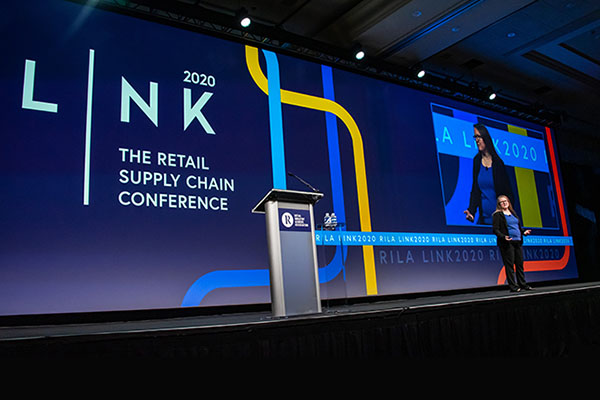
Logistics Management Group News Editor Jeff Berman recently caught up with Jim Gehr, President, Retail, DHL Supply Chain, North America, at the RILA (Retail Industry Leaders Association) LINK 2020 in Dallas. Their conversation focused on a wide range of topics, including trade and tariffs, Peak Season, coronavirus, and last mile logisitcs, among others. A transcript of their conversation is below.
LM: How did the 2019 Peak Season go, in your opinion?
Jim Gehr: We had a very good Peak Season on many fronts. Most of our customers’ volumes were up 20%-to-30% over planned forecasts, which creates challenges, especially in a tight labor market. As a company, we have a lot of strong initiatives in preparation for Peak Season, and we continue to have record Peak Season’s from that standpoint, in looking at maintaining service levels.
LM: In what ways?
Gehr: During the last couple weeks of Peak Season, we were sitting down with customers and strategizing about 2020—that is how good it was. Many of our customers were having good years but having execution issues. The bar is continually raised year after year, and there are people still struggling, with service levels falling off and falling behind. We are aware of a few meltdowns that occurred in the industry, and we are working with some of those people moving forward. Last year, we went a full year, for the first time, with our seven centralized recruiting centers in the U.S. and Canada, which is really facilitated [by] having the appropriate workforce. We stopped using temporary employees and really integrate workers.
LM: Are these workers at similar levels or is it varied?
Gehr: We have different classifications, depending on how much they want to work and things like that. That has been huge, because it has eliminated all of the excessive training and turnover. Turnover for full-time associates last year, for sites open more than two years, is 21%. With many of the operational process changes we have been making inside of facilities and working with our customers and doing the effective planning and all of the operational improvements we have been doing as well with new technologies…we will be deploying new implementations in 11 new sites this year. We still have many seasons throughout the year that go beyond the traditional holiday season, and they have been very responsive to fluctuating needs and demands, and we continue to do very well in this omnichannel environment.
LM: Does the omnichannel environment come with a fair amount of challenges, as well as opportunities, due to there being so many established and emerging service providers?
Gehr: The way we view it is a seller is not going to be successful unless they are developing and enhancing its omnichannel experience for customers. You cannot dictate how a consumer buys, what they want to buy or how and where they want to buy. They want more flexibility and input and the experience on the delivery?
LM: Does that mean same-day delivery?
Gehr: I don’t necessarily think they want everything same-day, with limited SKUs in local markets. Most are looking for good, solid communication about what is going on, in terms of receiving the order and shipping the order on a certain date and giving them updates along the way. I think the consumer is very reasonable, but you need to honor your service commitment. But it is complicated, and I would say that there is nothing, in a way, that is easy. We are able to affect that experience and create an efficient cost experience for the seller along the way. We will continue to refine those opportunities.
LM: The big topics at this conference are trade and tariffs, and also the Coronavirus. What are your thoughts on each, in regards to supply chain operations and market conditions?
Gehr: For trade and tariffs, I don’t view any material impact from that. It definitely affects certain players in certain ways, but, for the most part, I view it as a rebalancing. And with the coronavirus, it accentuates the need to be diverse and balanced. I think many people had already begun to diversify. I don’t think we have seen the peak of that issue. It looks like it does appear it will have a short-term impact on results for ports. Whether that will defer pent-up demand or some demand will evaporate, remains to be seen, but there will be some impact.
LM: What about the impact of coronavirus for your business on a global or domestic level?
Gehr: We have a global focus, but the business we run is North America in the U.S. and Canada. We do work with our customers on a global level and provide networking capabilities across the globe.
LM: Looking at the last-mile logistics market and the Amazon effect, for the size and scale of e-commerce, it is highly efficient. What are some of the key themes, or the thesis, for getting consumers what they want delivery-wise?
Gehr: A lot of it is data analytics, which does not appear very “sexy,” because you cannot see it, but that is where the gains and improvements are being made. We continue to get huge gains and become more efficient and better operators, because we are able to make decisions having better information. And we are continuing to invest huge amounts of money into getting better data, understanding it, and becoming more efficient. It has paid huge returns. Beyond that, to the idea of how this all works, I think consumers are reasonable with their own expectations. For the speed at which they are getting things, I think most people understand if it is a frequent use type item, then that can be faster. Of course, demographics and density plays a key role in that. So if you are outside a densely populated area, it may take a little longer.
LM: How about the inventory component of last mile?
Gehr: Inventory deployment is a big opportunity, even so in terms of why are we moving so much inventory around and what I would view as unnecessarily, even across users and sellers of inventory. If you are a manufacturer and you have multiple marketplaces or you have multiple resellers selling your product, I think the industry is starting to look at more collaboration on the fulfillment side, as opposed to a company buying everything and setting up its own network, why don’t they share networks more often. In many cases, there are a lot of single and double part deliveries from manufacturers being shipped that come out of a shared fulfillment network. These fulfillment networks are extremely expensive, and we could have greater consumer satisfaction with local delivery if we collaborated on shared networks. I see more of that happening, because we use technology for better order management and to stop moving inventory around as much.
LM: Looking back three-to-five years ago, did you think last mile logistics would be as established as it is today?
Gehr: Absolutely. It is what consumers are asking for and is what they will pay for. I think the market is responding quite nicely. We are still figuring it out, working on efficiencies and densities and such. But it is still very decentralized from the standpoint that people are still trying to find a better solution. And there are many things people are doing themselves, and people are providing the service. Last mile will continue to evolve and is not going away.
LM: What are your company growth initiatives for 2020?
Gehr: Growth is very strong with new records being set every year. We will announcing our technological investments, in the coming months. We are in full rollout mode with our technologies. These are not easy to implement since they require integration. We have run dozens of pilots over the last 18 months, and there are a number of solutions that have made it through the hurdles, and we are in national rollout mode.

Article Topics
3PL News & Resources
FTR’s Shippers Conditions Index shows modest growth Trucking executives are set to anxiously welcome in New Year amid uncertainty regarding freight demand ASCM’s top 10 supply chain trends highlight a year of intelligent transformation Tariffs continue to cast a long shadow over freight markets heading into 2026 FTR Trucking Conditions Index shows slight gain while remaining short of growth AAR reports mixed U.S. carload and intermodal volumes, for week ending December 6 U.S. rail carload and intermodal volumes are mixed in November More 3PLLatest in Logistics
FTR’s Shippers Conditions Index shows modest growth Trucking executives are set to anxiously welcome in New Year amid uncertainty regarding freight demand ASCM’s top 10 supply chain trends highlight a year of intelligent transformation Tariffs continue to cast a long shadow over freight markets heading into 2026 U.S.-bound imports see November declines, reports S&P Global Market Intelligence FTR Trucking Conditions Index shows slight gain while remaining short of growth AAR reports mixed U.S. carload and intermodal volumes, for week ending December 6 More LogisticsAbout the Author

Subscribe to Logistics Management Magazine

Find out what the world's most innovative companies are doing to improve productivity in their plants and distribution centers.
Start your FREE subscription today.
December 2025 Logistics Management

Latest Resources












