New Descartes’ study examines consumer preferences, changes, and shifts in e-commerce home delivery preferences
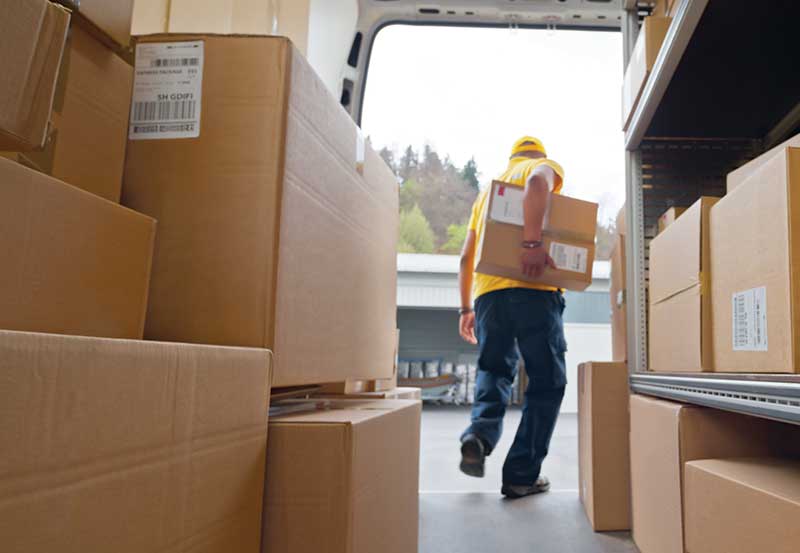
A new study issued today by Waterloo, Ontario-based Descartes, a provider of logistics based on-demand, software-as-a-service offerings, showed some disparities in the intersection of online buying and home delivery processes.
The study, entitled “Online Buying Grows But Too Many Customers Still Experiencing Delivery Woes,” was based on feedback from 8,000 consumers surveyed by Descartes and SAPIO Research, across Europe and North America over the first quarter. This is the third annual edition of Descartes’ e-commerce home delivery report.
The report is replete with key findings and interesting takeaways, including:
- 39% of respondents made more online purchases in the period surveyed this year compared to the same period a year ago;
- 57% made purchases in at least one new product category this year;
- 57% cited convenience as the top reason for increasing purchases;
- 44% preferred lower-cost deliveries and 28% preferred faster deliveries;
- 66% favored delivery options that could result in lower costs to the retailer or delivery company; and
- 67% dealt with delivery problems
For those consumers that experienced delivery problems, that included 21% having negative delivery experiences, 20% saying deliveries are not reliable, and 17% noting they were dissatisfied with the delivery process. What’s more, 63% of surveyed consumers that dealt with delivery problems made that clear to the retailer or delivery company in various ways, including: lost trust in the delivery company; did not order from the retailer again; lost trust in the retailers; and made less online purchases in general, among others.
“While the third year of this study reveals the industry is achieving small, year-over-year improvements across a number of dimensions related to home delivery performance, the level of consumer dissatisfaction remains high,” said Chris Jones, EVP Industry at Descartes., in a statement. “Mediocre delivery performance and inconsistent delivery experiences are, however, solvable problems. There are market proven strategies, operational best practices and technology solutions that retailers and delivery companies can consider to cost-effectively provide an optimal home delivery experience tailored to consumers’ delivery preferences.”
In an interview with LM, Jones said that a key takeaway of the report is there is not enough of an improvement being seen in home delivery, citing the aforementioned 67% of respondents indicating they are dealing with delivery problems, marking only a 2% improvement compared to 69% a year ago, and 73% in 2022, when the effects of the pandemic were still being felt.
“That is not a lot of improvement,” he said. “One would think delivery performance should be much better. E-commerce is not going as crazy as it was before while it is still growing. Yet again, the market continues to underestimate the whole e-commerce home delivery phenomenon. In fact, the study found that nearly 60% [57%] of respondents made a home delivery purchase in a new product category for the first time, so it is not just everybody doing the same thing over and over again. There is more penetration and not just super-improved performance in the consumers’ mind. It says there is a lot of room for improvement here and room for differentiation for the people that do it.”
The study examined the percentage of purchases made online and delivered, from 2022 to 2024, which resulted in very consistent findings, coming in at 46%, 44%, and 45%, for 2022, 2023, and 2024, respectively. What’s more findings over the same period, for the percentage of purchases made online and delivered to a home were also consistent, coming in at 48%, 49%, and 50%, for 2022, 2023, and 2024, respectively.
Those data points reflect how people are “hooked on but not happy with” e-commerce home delivery, according to Jones.
“The number one reason people are buying online is convenience,” he said. “That’s been the case. As more people get exposed to it, they are hanging in there but not always happy with what they are getting, but they are not necessarily walking away.”
The challenge for retailers, he said, is how they view it, as they can keep doing what they are doing, because consumers are buying from them. But the real issue is if they are going to buy from someone else, and that is where the convenience and e-commerce buying process comes into play.
“Consumers can make orders from the couch and not go to the store, and they are willing to put up with the delays or damage,” said Jones.
In ranking the top elements of the delivery process, the study found that security led the way, at 84%, followed by cost (83%), delivery tracking (76%), ordering ease (78%), and returns cost and ease (69%).
And for consumer delivery preferences, it found that 44% viewed lower cost, speed less important (44%) at the top, followed by precise delivery window, speed less important (20%), fastest, timeliness less important (15%), fast and precise, cost less important (13%), and most environmentally friendly, speed less important (7%).
“Cost definitely has an influence, but there is also so much hype around speed,” said Jones. “In reality, people don’t need things that quickly. If you ask someone if they want a fast and free delivery, who is going to say no? Costs stand out by a long shot. I think the message for retailers is are you chasing something that your customers may or may not really care about when it comes to speed? It does not mean you want to wait weeks for a delivery but it could be early next week instead of tomorrow. People have different processes. It can be by products, age, or the environment. That is where the concept of delivery persona comes from really. If you do it right, you are going to have happy customers and might be saving money doing it.”
Please click here to read the complete study.

Article Topics
Descartes News & Resources
Descartes report points to flattish U.S.-bound imports in October U.S. container Imports dip in September after summer surge, reports Descartes U.S.-bound container imports hit second-highest month on record amid tariff and seasonal pressures Descartes report finds that U.S.-bound imports jump 18.2% in July amid trade policy shifts Descartes acquires Finale Inventory June U.S. import container volume sees sequential gains and annual declines, reports Descartes DOJ expands Whistleblower Program in move to target customs fraud, tariff evasion More DescartesLatest in Logistics
Looking at the impact of tariffs on U.S. manufacturing UP CEO Vena cites benefits of proposed $85 billion Norfolk Southern merger Proposed Union Pacific-Norfolk Southern merger draws praise, skepticism ahead of STB Filing National diesel average is up for the fourth consecutive week, reports Energy Information Administration Domestic intermodal holds key to future growth as trade uncertainty and long-term declines persist, says intermodal expert Larry Gross Railroads urged to refocus on growth, reliability, and responsiveness to win back market share Q&A: Ali Faghri, Chief Strategy Officer, XPO More LogisticsAbout the Author

Subscribe to Logistics Management Magazine

Find out what the world's most innovative companies are doing to improve productivity in their plants and distribution centers.
Start your FREE subscription today.
November 2025 Logistics Management

Latest Resources