
Kimberly-Clark streamlines order fulfillment & optimizes transportation
As part of a larger effort to digitize its global supply chain, Kimberly- Clark is putting a combination of machine learning and optimization algorithms to work to optimize its transportation networks—and the savings are up into the multi-million dollars per year.

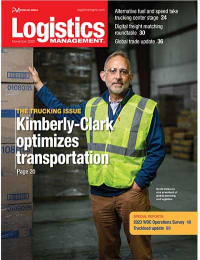
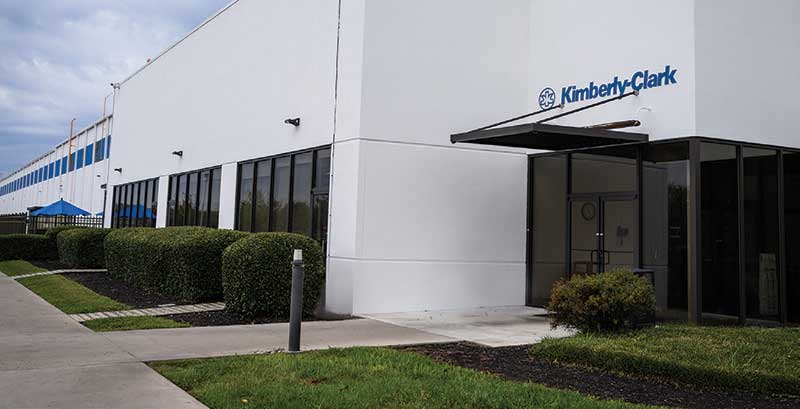
As a global leader in the personal care and professional products industries, Kimberly-Clark Corp. takes its supply chain operations very seriously. After all, its paper-based consumer products are essential to the daily lives of millions of people worldwide. With recognizable brands like Kleenex, Cottonelle and Huggies—to name just a few—in its product portfolio, the 151-year-old company has 45,000 employees and more than $20 billion in annual revenues.
In North America, Kimberly-Clark is continually working to improve, digitalize, and optimize its end-to-end distribution network, which encompasses all manufacturing sites, 10 major distribution centers (DCs), and shipping points throughout the United States and Canada.
On a daily basis, Kimberly-Clark’s operations ship anywhere from 1,100 to 1,500 truckload equivalents of product outbound to its various sites. Roughly 55% to 60% of those goods are shipped direct to customers, while the remaining volume is used to replenish the manufacturer’s inventory, both at producing and non-producing sites.
As it emerged from the global pandemic, Kimberly-Clark began looking for ways to improve product availability both for its customers and for its end consumers. “Availability drives revenue and top-line growth,” says Scott DeGroot, vice president of global planning and logistics.
A second goal was focused on restoring margins, which meant ensuring that the manufacturer was not spending more money than it had to on fulfillment, logistics, and distribution.
Margin improvements wanted
With top-line availability and margin improvements as its two high-level goals, Kimberly-Clark assessed its logistics operations and learned that orders were apt to “bunch up” during the week.
This created fulfillment backlogs that in some cases resulted in orders being shipped later than planned. The issue was more prevalent Monday through Wednesday than it was on, say, a Sunday afternoon.
“That order-bunching was causing us to delay some shipments, and it was also forcing us to pay more money than we needed to in terms of our DC picking labor—and especially in transport,” says DeGroot.
Another cause of the order-bunching was the company’s various systems (e.g., TMS, WMS, planning and order fulfillment systems), none of which “talked” to or shared data with each other. Planners were using one system to determine whether a shipment was ready to go out the door and another system to monitor customer delivery expectations for that shipment. “That led us to the point where we knew we needed a technical solution to the problem,” says DeGroot.
Finding the right solution
Kimberly-Clark began researching solutions that would help resolve its order-bunching challenges while also supporting the manufacturer’s top-line availability and margin improvement goals.
“We did a lot of shopping around and had help from others through our own networks,” says DeGroot. “We were able to identify a handful of companies that offered potential solutions.”
Concurrently, Kimberly-Clark wanted to upgrade its planning ecosystem to include capabilities like real-time visibility across its distribution network, an upgrade to its existing WMS and more robotics in its distribution centers. “With all of that going on, we saw ProvisionAI as a company we’d be able to engage with to help define both the problem and the solution,” DeGroot explains.
And with that, Kimberly-Clark decided to pilot LevelLoad, a cloud-based transportation planning and optimization application that helps manufacturers reduce transportation costs, improve delivery performance, and reduce their environmental impacts. DeGroot says the LevelLoad solution allows Kimberly-Clark to see any constraints—the “bunched orders.” It can then identify orders that can be moved without violating the customer delivery expectation, stock availability, labor availability, or transport capacity at each of its 10 distribution sites.
“We saw this solution as an opportunity to speed up our planning and optimization, and we started to LevelLoad some portion of our deployment shipments,” says DeGroot. Using a combination of machine learning and optimization algorithms, LevelLoad creates transportation plans that are specifically tailored to Kimberly-Clark’s needs.
A human being can’t do this fast enough
The LevelLoad platform takes into account factors such as demand forecasting, transportation capacity and customer service requirements to generate plans that minimize costs while still meeting all customer commitments.
“A human being can’t do that fast enough because they’d have to look at too many systems, each of which changes quickly,” says DeGroot. “Using the platform, we can automatically look across all of our systems and attributes and create shipments that allow us to continually move the orders to the right place.”
The optimized replenishment transportation scheduling solution bridges the gap between supply planning and execution. It augments TMS systems by breaking down the silos between transportation planning and transportation execution.
LevelLoad also balances transportation costs and site capacities while meeting customer service goals. In return, companies like Kimberly-Clark get an executable, streamlined transportation plan that reduces volatility, lowers transportation costs and speeds up deliveries.
Saving money and reducing environmental impacts
DeGroot says that the pilot project has been going “quite well” so far, and that the software is helping the manufacturer overcome stock, loading capacity and transport constraints—both throughout the day and throughout the week.
Kimberly-Clark has automated the distribution planning and deployment process, as well as improved scheduling and increased visibility into filling trucks. And because the trucks are now fuller, the company is also reducing its carbon footprint. To date, LevelLoad has reduced variability daily by 40%, which has improved on-time delivery and saved Kimberly-Clark millions of dollars in transportation costs.
These wins have helped Kimberly-Clark check one box in its larger effort to transform the overall performance of its global supply chain. “This solution set is part of an ongoing, broader program to bring new capabilities to procurement, quality assurance, production, demand planning and manufacturing,” says DeGroot. “As such, it’s part of a much bigger story, which involves the steps that we’re taking to digitize our supply chain.”
From one to many
Kimberly-Clark piloted the software at one of its DCs about a year ago and “saw great success” according to DeGroot, who estimates that the company began saving “tens of thousands of dollars a week” at that single site.
The manufacturer then expanded its use of LevelLoad across all North American distribution sites where the software would make a difference, DeGroot says. “Now, the savings are up into the multi-million dollars per year and are being realized in the form of reduced deployment costs, transport, and labor costs.”
Going forward, DeGroot would like to be able to apply the AI-driven technology on the inbound freight side, where it can be used to optimize inbound freight movement for many of the same reasons that it’s being used on the outbound side.
“We’ll be looking at how we can ‘level load’ raw materials and use technology to support that process—whether that solution was developed by ProvisionAI or another company. Ideally, we’d like to bring the same concept of level loading to production schedules as well,” he adds. “We’re doing it manually now, but certainly that methodology can be applied in a lot of different places. Our goal is to figure out how to do that in the right place and at the right time.” - DeGroot
Put business processes first
Many supply planning systems never factor in the cost and network consequences of their plans. This oversight results in uneven shipment schedules from manufacturing plants to customer-facing warehouses, causing significant negative effects on operations.
For example, an unexpected uptick in trailer arrivals can result in insufficient space and labor to load or unload trucks. These order bunch-ups
can affect customer fill rates as products needed for orders fail to be unloaded on time.
To manufacturers, distributors and retailers that may be dealing with these or other transportation planning-related issues, DeGroot says a good starting point is to be very specific about the business problem that you’re trying to solve. Do this before you start shopping and evaluating technology solutions, he advises, knowing how difficult it can be to match the right solution to the right application if you don’t know the root of the problem.
Next, consider which business process needs to be changed. Is it the deployment process? Is your stock allocation process in need of adjustment? Is your transport planning process taking too much time to do manually? Or, is labor planning the real problem?
“For us, it was all of the above and more, which is why putting the processes behind the business problem first was so important,” says DeGroot. “From there, you can start thinking about the technology set that can fit into the space.”

Article Topics
ProvisionAI News & Resources
Kimberly-Clark streamlines order fulfillment & optimizes transportationLatest in Logistics
Looking at the LTL market with Scooter Sayers U.S. Department of Transportation targets ‘CDL Mills’ as thousands of training providers removed from federal registry National diesel average falls 7.3 cents, down for second consecutive week, reports EIA U.S. Chamber of Commerce-led letter to USTR reiterates support for USMCA Q3 intermodal volumes see annual gains, reports IANA Manufacturing declines for the ninth consecutive month, reports ISM Looking at the impact of tariffs on U.S. manufacturing More LogisticsAbout the Author

Subscribe to Logistics Management Magazine

Find out what the world's most innovative companies are doing to improve productivity in their plants and distribution centers.
Start your FREE subscription today.
November 2025 Logistics Management
Latest Resources












