
Fresh challenge for cold chain
The recent capacity shortages in trucking have been felt across the nation, and if you’re responsible for shipping fresh food products or temperature-sensitive pharmaceuticals, you’re probably particularly anxious.
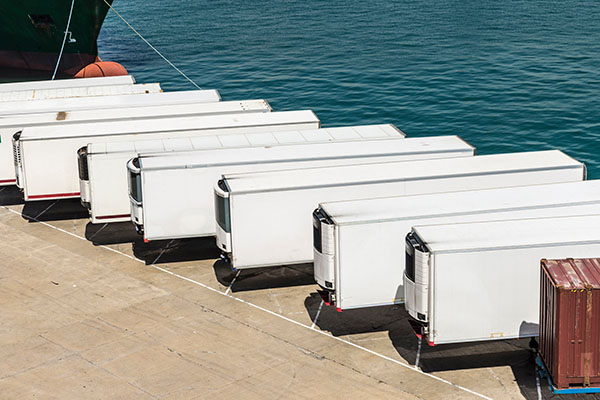

Fresh produce has a short shelf life and temperature-sensitive products require reefer service. Worldwide, the trailers for cold chain have become a major part of the equipment pool. The World Shipping Council estimates the fleet of reefer containers at 1.1 million worldwide, or 6.25% of the approximately 17 million units registered.
This equipment needs capable operators to handle and monitor specialized equipment. In the United States, the focus has recently been on the impact of a national driver shortage and general high demand for capacity.
If shippers and brokers are scrambling to cover loads, the risk of mishandling temperaturesensitive products by inexperienced operators is greatly increased. Indeed, shippers and receivers are rightly concerned about the potential for incidents that result in spoilage of very valuable cargo.
There’s also the chance of unscrupulous operators taking advantage of the chaotic market to introduce counterfeit products such as in pharmaceuticals. There are two areas of vulnerability: lack of visibility or a continuous “pedigree” for the product from manufacturer to consumer; and the risk of spoilage due to delay or improper handling.
Shippers and carriers have been working to avoid these problems for many years, but three new technologies and industry collaborations are about to take the processes for product safety to a whole new level, even in spite of the current scramble for capacity.
“Continuous monitoring” is the Holy Grail of cold chain. Having an unbroken record of location, temperature, and item-level identification enables flawless business intelligence. Operationally, it enables intervention when a metric for one of the critical factors is seen to be out of specification—the more real-time, the faster the intervention.
Many parties are announcing improved visibility, as long as you use their platform. However, a universal standard has been lacking until recently. “Blockchain” seems to be on every conference and boardroom agenda these days.
Described best as a hack-proof digital ledger of the life of a product through a supply chain, this new technology emergence has two key effects. First, in order to implement it, you need visibility across supply chain partners, a move that forces collaboration and coordination.
Fortunately, blockchain requires adherence to a universal standard. Second, the record created replaces the many different transactional systems such as audit and pay, tracing, damage claim arbitration, and even invoicing, thus creating savings all along the supply chain.
Having a blockchain record also enables fast and more significant network modeling and optimization, as the pains of collecting historical transactional details and loading them into a network tool is greatly reduced.
The first thing people talk about in blockchain is security, but in time they will see that data analytics and supply chain remodeling will be the real payoff. Regional and local distribution networks are exploding because of the two-day, one-day and same-day promise of online retail.
Small trucks including personal vehicles are being used to fill in the “last-mile.” With continuous monitoring, blockchain and Uber-style applications enabling entrepreneurial opportunities, we will see more options for cold-chain services from pharma to fresh vegetables.
Recently there have been announcements of autonomous vehicles and drones delivering hot pizzas and cold popsicles to residents in various locations. Today, cold chain is suffering along with all product chains trying to balance supply and demand though traditional networks.
The promise is for global access to better foods, medicines and even ice cream—now that should be the Holy Grail.

Article Topics
Columns News & Resources
2025: Groundhog Day all over again Emerging trends in logistics technology adoption Rail and Intermodal in the Spotlight: Will AI drive a new era? From Cost Savings to Customer Satisfaction: Why a TMS is essential for modern logistics Rail and Intermodal in the Spotlight: Will tech and AI drive a new era? Annual Study of Logistics and Transportation Trends: The great disconnect Myth-Busting Your Supply Chain Design: Tips for building resilience and efficiency More ColumnsLatest in Logistics
Logistics growth sees mild decline in November, states LMI CBP launches five-year pilot allowing non-asset-based 3PLs Into CTPAT for the first time DHL’s 2025 Peak Season approach includes more planning and less panic Union Pacific–Norfolk Southern merger filing with the STB is delayed delayed until mid-December Old Dominion Freight Line issues November operating metrics update Services economy remains on growth track in November, reports ISM Looking at the LTL market with Scooter Sayers More LogisticsSubscribe to Logistics Management Magazine

Find out what the world's most innovative companies are doing to improve productivity in their plants and distribution centers.
Start your FREE subscription today.
December 2025 Logistics Management

Latest Resources












