
FedEx Freight announces plan to close nearly 30 locations
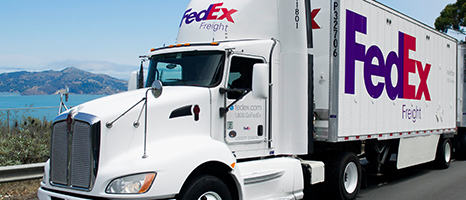
FedEx Freight, the less-than-truckload (LTL) subsidiary of Memphis-based global freight transportation and logistics services provider FedEx said on Monday it will close 29 freight locations and consolidate its operations into other locations, effective August 13, 2023.
In a statement provided to LM, the company said these decisions are being made as FedEx continues to adapt to an evolving business environment.
“We continuously review our network to ensure we have the right design to address changing market dynamics,” the company said. “Through that process, we identified opportunities to consolidate operations in certain locations to improve customer service levels while lowering our cost to serve.”
What’s more, the statement noted that FedEx Freight is enacting an additional furlough for certain job classes beginning May 28, 2023. It explained that eligible employees will be offered permanent transfer opportunities to other markets that have hiring needs.
“FedEx Freight will maintain health benefits for furloughed employees,” it said. “This is a temporary workforce adjustment, and all furloughed employees will be recalled on or before Aug. 25, 2023.”
This follows a November 2022 report that indicated FedEx Freight would begin furloughing employees in December, in order to be in line with lower-than-expected levels of demand.
“In response to current business conditions impacting volumes, FedEx Freight is enacting a temporary furlough in some U.S. markets to align our workforce with operational requirements,” read a statement from FedEx freight provided to LM in December. “Some eligible employees will be offered permanent transfer opportunities to other markets that have hiring needs. FedEx Freight will maintain health benefits and provide other financial incentives for furloughed employees and anticipates that many employees will volunteer to participate in the program. The company will continue to evaluate the environment and bring back furloughed employees as business circumstances allow.”
Both these developments have come at a time when freight volumes continue to see moderation, as many consumers continue to shift spending preferences to more services-based categories, rather than on physical goods, which was prevalent throughout the course of the pandemic.
In early April, FedEx announced that effective June 2024, it will consolidate all of its operating companies into a single organization.
FedEx described this consolidation as a phased transition that will subsequently bring nearly all of its operating companies—FedEx Express, FedEx Ground, FedEx Services, as well as other FedEx operating companies—into Federal Express Corporation, and transition into what it called a single company operating a unified, fully integrated air-ground network. And it also noted that its less-than-truckload subsidiary, FedEx Freight, will remain as a standalone operation within Federal Express Corporation.
The company expects the consolidation to enable it to save $4 billion worth of permanent cost reductions in fiscal 2025, with $1.2 billion in Surface Network; $1.3 billion in Air Network & International; and $1.5 billion in General & Administrative. FedEx added that Network 2.0 is expected to generate another incremental $2.0 billion in savings in fiscal 2027, noting that it is projecting costs up to $2 billion by the end of 2025 to implement its business optimization initiatives, which include DRIVE and Network 2.0.
The expected $1.2 billion in Surface Network savings is pegged to come from $450 million in ground linehaul operations; $300 million in ground dock operations, $150 million in P&D (pickup and delivery) operations, and $300 million in express U.S. surface operations. FedEx said that it will be increasing the use of company-owned intermodal containers for 90% of the volume it moves by rail, while increasing its miles on rail transport from 8% to 15%, for an expected $80 million in savings, coupled with a 6% reduction for volume in international containers, as well as a 36% reduction in rates on rail compared to on-the-road transportation.
Fiscal third quarter earnings results for FedEx, which were announced on March, were impacted by the ongoing pair of demand weakness and inflation.
Quarterly revenue—at $22.2 billion—was off 6% annually, and net income—at $865 million was below the $1.22 billion recorded a year ago. Diluted earnings per share—at $3.41—fell 7.4%. And FedEx Freight saw revenue fall 3%, to $2.186 billion, with operating income up 13%, to $386 million, due to an 11% increase in revenue per shipment, as well as a gain on the sale of a facility, partially offset by decreased shipments.

Article Topics
FedEx Freight News & Resources
36th Annual State of Logistics: Tariffs and market uncertainty challenge LTL carriers’ profitability With FedEx Freight separation set for 2026, Smith and Martin tapped to lead nation’s largest LTL carrier FedEx reports fiscal Q3 earnings growth amid economic concerns Reverse Logistics in 2025: Turning returns into a competitive advantage FedEx Freight President Moll will retire on January 31 FedEx announces that FedEx Freight will be separated into its own standalone company FedEx is ‘conducting an assessment’ of its LTL unit, FedEx Freight More FedEx FreightLatest in Logistics
FTR’s Shippers Conditions Index shows modest growth Trucking executives are set to anxiously welcome in New Year amid uncertainty regarding freight demand ASCM’s top 10 supply chain trends highlight a year of intelligent transformation Tariffs continue to cast a long shadow over freight markets heading into 2026 U.S.-bound imports see November declines, reports S&P Global Market Intelligence FTR Trucking Conditions Index shows slight gain while remaining short of growth AAR reports mixed U.S. carload and intermodal volumes, for week ending December 6 More LogisticsAbout the Author

Subscribe to Logistics Management Magazine

Find out what the world's most innovative companies are doing to improve productivity in their plants and distribution centers.
Start your FREE subscription today.
December 2025 Logistics Management

Latest Resources












