
EVs + AVs = FVs (Future Vehicles): A seismic wave?
This is a game-changing transformation for transportation, with much the same impact of the jump from sail to steam power and steam to diesel propulsion.
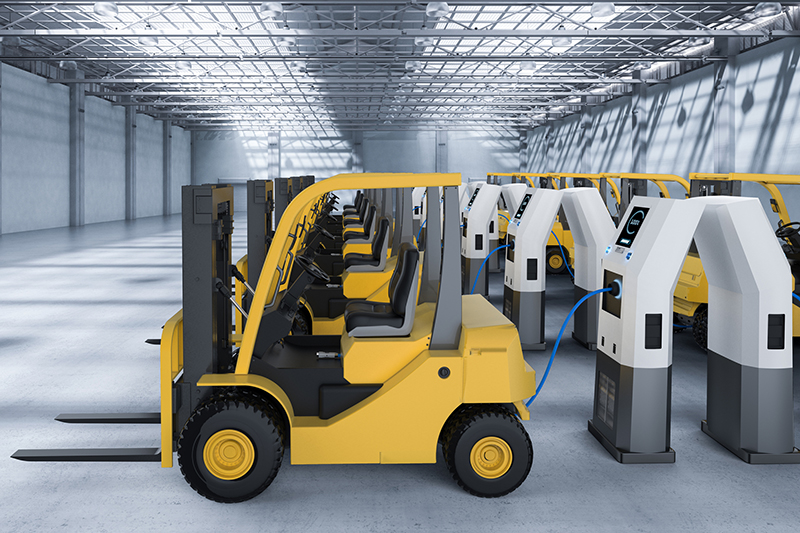

Autonomous vehicles (AVs) and electric vehicles (EVs) are a hot topic, and development is proceeding apace. If you’re a shipper, large or small, there’s a huge transformational impact on the horizon. While we don’t fully know what that will be yet, we can posit some potential benefits and risks, such as they are.
Driving this rapid shift is a series of “igniters” from an environmental push to economics and efficiencies unheard of until now. Also amping change is the uncertainty about the future of fossil fuel availability and cost. As Tom Moore, executive VP of the National Private Truck Council, pointed out in his March newsletter: “Margins on diesel doubled from 2021.” And this puts continuing pressure on both carriers and shippers, while opening the doors for broader innovation of alternatives.
EVs have much appeal, from performance (0 mph to 60 mph in a flash) to no more stops at the gas pump and, of course, significantly lower maintenance costs. As battery technology improves and range and charging infrastructure expands, the EV population will grow rapidly.
“EV sales will soar to about 73 million units in 2040, up from around 2 million in 2020,” according to forecasts by Goldman Sachs Research. “The percentage of EVs in worldwide car sales, meanwhile, is expected to rise to 61% from 2% during that span.”
So, a tsunami of change is underway. Coupling that shift with AVs will radically alter the face of surface transportation and improve the operating economics for carriers and shippers. The technology is roaring ahead and capabilities are impressive.
“AVs will perhaps be the biggest structural change in transportation of goods since the advent of the steam engine,” says Mike Reiss, managing director, EY Supply Chain. “Once assets can move freely 24/7—without HOS, with inductive charging and coupled with ‘dark warehouses’—transport will truly become a shared, commoditized asset used on a first-come first-served basis and doubling the speed of commerce.”
The bigger challenge is the emotional fear of change, which will need to be overcome, but it’s mainly perception. A few years ago, a fatality involving an AV made front-page news, yet the 38,000 highway deaths annually are hardly noticed.
The national mindset will have to adapt to the new world—and it will, as it has with the emergence of new technologies in the past. People in the early 1800s riding the first passenger trains were warned that speeds over 12 mph could cause fatalities by sucking the air out of the lungs. No more do elevators have human operators, yet nobody thinks twice about riding one.
Recently, the National Highway Traffic Safety Administration officially changed the rules, eliminating the requirement for AV manufacturers to provide steering wheels and pedals. GM unveiled a Bolt EV in 2018 without a steering wheel, so we are on our way to an interesting future.
AVs will go a long way to ameliorating the chronic shortage of long-haul truck drivers and will facilitate repetitive tasks, such as mail and parcel deliveries in certain areas. Long-term, AVs will vastly improve highway safety and will also enable increasing highway capacity by facilitating more efficient and safe use of roadways where AVs can operate at higher speeds—and on more limited headways than anything possible with human drivers.
AVs and EVs will also have a significant impact on ancillary services and costs, such as vehicle insurance, fueling infrastructure, need for gasoline and diesel refining capacity as well as the demand for the electrical energy to propel all the new vehicles.
This is a game-changing transformation for transportation, with much the same impact of the jump from sail to steam power and steam to diesel propulsion. Whatever the speed of change, it will be fun to watch.

Article Topics
EY News & Resources
Looking at how a ‘Moneyball’ approach is able to lift supply chains Assessing the impact of the ILA-USMX deal for the future of U.S. ports Strategically integrating 3PLs into your operations The artificial intelligence (AI) conundrum Managed services in network design Going Deep with 3PLs EVs + AVs = FVs (Future Vehicles): A seismic wave? More EYLatest in Logistics
Union Pacific–Norfolk Southern merger filing with the STB is delayed delayed until mid-December Old Dominion Freight Line issues November operating metrics update Services economy remains on growth track in November, reports ISM Looking at the LTL market with Scooter Sayers U.S. Department of Transportation targets ‘CDL Mills’ as thousands of training providers removed from federal registry Key Ocean, Air, and Trade Trends as We Approach the New Year National diesel average falls 7.3 cents, down for second consecutive week, reports EIA More LogisticsSubscribe to Logistics Management Magazine

Find out what the world's most innovative companies are doing to improve productivity in their plants and distribution centers.
Start your FREE subscription today.
November 2025 Logistics Management
Latest Resources












