
Orchestration: The Future of Supply Chain
Digitalization is already delivering significant advances in productivity, speed and visibility to supply chain operations. Orchestration promises to build on and amplify those benefits.
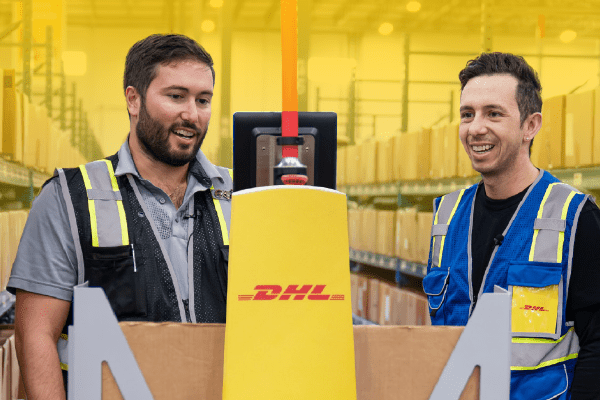
Digitalization is already delivering significant advances in productivity, speed and visibility to supply chain operations. Orchestration promises to build on and amplify those benefits.
Advancing Digitalization
Supply chain digitalization has advanced rapidly in the last four years. Within DHL Supply Chain, over 7,200 digitalization projects have been completed. These projects touch virtually every aspect of the supply chain and cover a broad range of technologies, including robotics, sortation and packing technologies, intelligent process automation, and artificial intelligence.
Each digitalization project targets specific use cases within the supply chain based on the operational value that can be realized. For example, robotic-assisted picking and goods-to-person storage and retrieval systems have enabled improvements in picking productivity of 2-5X. Similarly, robotic unloading and sortation systems are automating repetitive and physically demanding tasks to free up workers for higher-level tasks.
Yet these systems are also part of a larger “macro” process—the movement of materials and products into and through an enterprise to serve customers in the most efficient way possible. Achieving that goal involves more than robotics and other digitalization technologies. It encompasses people, equipment, data analytics, and the materials and products themselves.
As digitalization continues to advance, it is creating opportunities not only to improve specific processes but to optimize material flow—and the resources that support it—across the entire supply chain. That’s where orchestration comes in.
The Value of Orchestration
Today’s supply chains are subject to a high degree of variability on any given day. Trucks arriving late, employees calling in sick, order volumes exceeding projections, and equipment failures are just some of the issues that can impact daily operational plans. Warehouse and transportation managers regularly adapt to these disruptions as best they can to minimize their impact on customers, but the consequence is often inefficient resource utilization.
The goal of orchestration is to eliminate these inefficiencies by dynamically balancing supply chain resources so that the value of every resource is maximized, and orders can be filled faster, more efficiently and at lower cost.
With the complexity of today’s supply chains, that represents a significant challenge. But like the digitalization journey itself, which is ongoing despite the incredible progress that has been made, supply chain orchestration represents a process rather than an event.
Advancing Orchestration in the Warehouse
With so many supply chain resources centralized within its walls, the warehouse represents fertile ground for the seeds of orchestration to be planted and nurtured.
For example, many DHL Supply Chain operations already utilize multiple robotic and automation solutions—and the number of these operations is growing. So, the challenge today isn’t just implementing and optimizing automation to address specific use cases but orchestrating the operation of multiple automation systems and the people that support them to unlock new levels of speed, efficiency and productivity.
That’s being accomplished by integrating automation technologies at the system level in ways that enable continuous and harmonized data flow and visibility, building what is, in effect, a central nervous system for the warehouse. As this platform evolves and expands, it will enable accurate, real-time visibility into prioritized tasks within the warehouse, inventory and locations, and the availability and productivity of operational resources.
With this level of visibility, managers could, for example, dynamically adjust the ratio of assisted-picking robots to human pickers to ensure an unexpectedly high number of priority orders meet their target shipment times. Or they could re-allocate resources across picking, packing and outbound delivery to eliminate bottlenecks at any stage of the material flow process.
In short, advancing orchestration within the warehouse creates opportunities to constantly balance resources, optimize labor in real time, and continuously smooth processes as demand fluctuates. But the value of orchestration doesn’t end there.
Orchestration Across the Supply Chain
Applying this same philosophy to processes outside the warehouse delivers similar benefits. Within transportation there is often a significant opportunity to reduce costs by minimizing the miles trucks travel empty after making deliveries. Orchestration strategies are being applied to address this challenge, supported by optimizations such as daily dynamic routing and driver utilization during non-peak periods. Likewise, the process of returns management, which has become a major pain point for eCommerce, is ripe for orchestration.
Finally, the true potential of orchestration will be realized when it is applied to the planning, coordination and execution of all supply chain activities, including transportation, warehousing, packaging and inventory. With new tools like AI available, an end-to-end orchestration strategy will increase forecast accuracy, maximize resource utilization, remove existing inefficiencies, and enhance customer service.
Your Orchestration Partner
The challenges associated with advancing orchestration will be similar to those of accelerating digitalization. Like digitalization, effective orchestration requires both deep supply chain experience and technology expertise along with proven processes for managing technology and people.
Consequently, partnerships with third-party logistics providers like DHL Supply Chain that provide end-to-end supply solutions and have a track record for innovation, operational excellence and continuous improvement will be essential to realizing the benefits of orchestration.
For more information on orchestration and DHL Supply Chain’s capabilities, visit dhl.com/allin.

Article Topics
DHL Supply Chain News & Resources
Despite billions invested, supply chain technology is still falling short, says DHL report DHL executives forecast subdued but strategic 2025 Peak Season amid global trade shifts DHL Supply Chain says it has agreed to acquire SDS Rx, expand healthcare reach DHL Supply Chain North America and GXO each announce executive leadership changes DHL Supply Chain increases e-commerce logistics offerings, with acquisition of IDS Fulfillment DHL Supply Chain boosts reverse logistics services, with acquisition of Inmar Supply Chain Solutions Five Best Practices that Support Accelerated Supply Chain Digitalization More DHL Supply ChainLatest in Logistics
PwC report indicates transportation and logistics dealmaking activity is focused on strategy, not scale ShipMatrix reports strong Cyber Week delivery performance results National diesel average falls for the fourth straight week, reports EIA FTR’s Shippers Conditions Index shows modest growth Trucking executives are set to anxiously welcome in New Year amid uncertainty regarding freight demand ASCM’s top 10 supply chain trends highlight a year of intelligent transformation Tariffs continue to cast a long shadow over freight markets heading into 2026 More LogisticsSubscribe to Logistics Management Magazine

Find out what the world's most innovative companies are doing to improve productivity in their plants and distribution centers.
Start your FREE subscription today.
December 2025 Logistics Management

Latest Resources












