
Logistics Management 2012 Salary Survey
Latest Logistics News
32nd Annual Study of Logistics and Transportation Trends: Navigating a shallow pool of resources 2023 LTL Study: Partner for reliability 2023 Logistics Salary Survey: Strong numbers, high demand 2023 Warehouse Equipment Survey: Tighter budgets prompt targeted spend 2022 Less Than Truckload Study: Trials and tribulations of rising rates More Photos
According to the findings of Logistics Management’s 28th Annual Salary Survey, average earnings and compensation have actually leveled off over the past year. However, our research team also found that an aging workforce is giving way to younger, more highly trained professionals who also happen to be savvy technologists. For the logistics professionals who have adopted today’s technological tools, higher salaries are clearly corresponding.
But our research team warns that the cutting edge skills that newlyhired workers might have coming out of college are going to be obsolete in three years to five years, so they have to determine how to keep improving in key areas such as decision analysis, IT tools, cross-functional and cross organizational teaming, as well as finance.
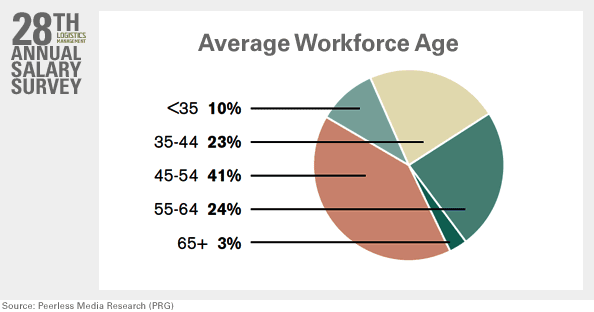
Also worth noting, say our researchers, is that now, more than ever, experience pays. Young people joining the workforce should aim to grow within their current organization, rather than chasing after that better offer. In fact, our survey indicates that the long-term payoff could be substantial.
This year’s results, based on 801 qualified LM reader respondents, indicate that 64 percent did see a modest salary increase in 2011. Of that number, the average bump was 6 percent.
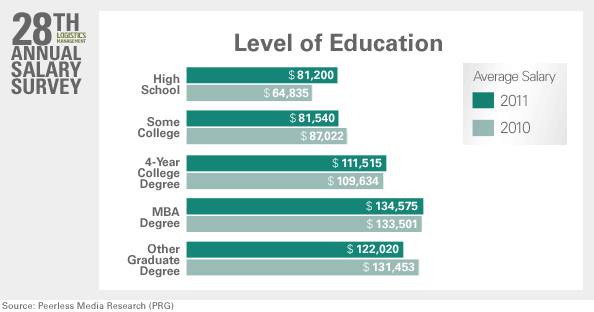
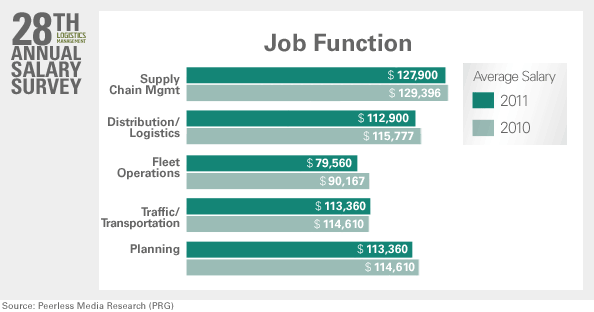
Those respondents with the title of “logistic manager” earned an average salary of $95,479 in 2010 and brought in a slightly higher $96,120 in 2011. For supply chain managers, the average increase was more impressive: up from $100,159 in 2010 to $128,335 in 2011. Corporate or division managers made significant salary gains as well. They earned an average of $157,320 in 2011 versus $138,630 in 2010. The overall median this year bumped up a meager $1,000 to $91,000.
Educators and executive recruiters echoed this sentiment during interviews in the weeks immediately following the release of this year’s salary survey data.
“Talent management—recruitment, development, and retention—is an increasing challenge across many fronts in supply chain management as the discipline and business becomes more complex,” says Dr. Theodore Stank, professor of logistics at the University of Tennessee. He says that the move toward e-commerce is just one way that “old dogs” have to learn new tricks, while companies are also struggling to find people with good decision analysis skills in order to use all of the new data available to them.
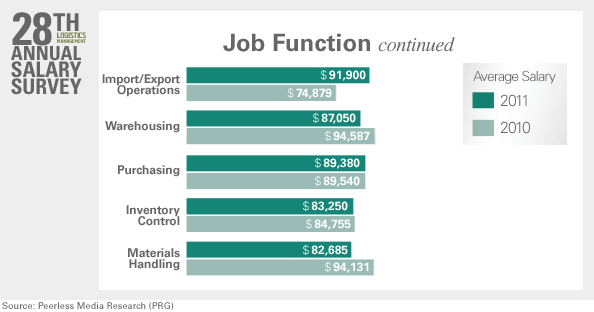
“Most organizations do not have a well-articulated talent management strategy,” says Stank. “Business executives need to ask a number of key questions: What kinds of new people do they need to buy from the market? What can they develop in the people they already have? How do they keep people progressing in their careers to deal with tomorrow’s new challenges? The companies that are figuring this out first are winning the war for talent.”
The Logistics Management and PRG research teams also found that logistics professionals with a skill set including information technology are among the highest paid. This did not surprise Stank. His advice for young and old alike is to “stay thirsty, my friends.” He believes that everyone at a management level must be committed to a lifetime of learning.
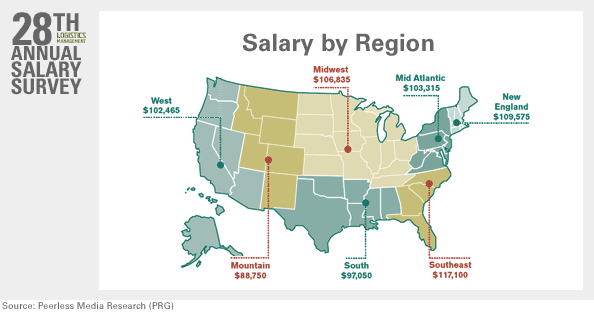
The same can’t be said for moving from one geographic area to another; however, as our survey shows, working in the nation’s heartland has some clear economic advantages. Not only is the cost of living lower there, the concentration of manufacturing and heavy industry remains rooted in this region. While not leading the pack in base salary levels, 36 percent of this year’s respondents came from the Midwest, earning an average of $106,835. The Southeast earned the highest average salary at $117,100, New England respondents earned an average $109,575, and the West earned an average $102,465.
Getting them to “settle down” might be made easier by providing bonuses based on performance, says Brenda Gautier, director of carrier engagement for MW Logistics, LLC in Dallas. “Given the added responsibilities logistics managers are taking on these days, we expect them to work smarter and be more efficient,” she says. “And if they can contribute to the company’s bottom line, they should get something beyond their salary at the end of the year.”

Article Topics
Photos News & Resources
32nd Annual Study of Logistics and Transportation Trends: Navigating a shallow pool of resources 2023 LTL Study: Partner for reliability 2023 Logistics Salary Survey: Strong numbers, high demand 2023 Warehouse Equipment Survey: Tighter budgets prompt targeted spend 2022 Less Than Truckload Study: Trials and tribulations of rising rates 38th Annual Salary Survey: Salaries begin to rebound 2021 Warehouse/DC Equipment Survey: Preparing for post-pandemic volumes More PhotosLatest in Logistics
FTR’s Shippers Conditions Index shows modest growth Trucking executives are set to anxiously welcome in New Year amid uncertainty regarding freight demand ASCM’s top 10 supply chain trends highlight a year of intelligent transformation Tariffs continue to cast a long shadow over freight markets heading into 2026 U.S.-bound imports see November declines, reports S&P Global Market Intelligence FTR Trucking Conditions Index shows slight gain while remaining short of growth AAR reports mixed U.S. carload and intermodal volumes, for week ending December 6 More LogisticsAbout the Author

Subscribe to Logistics Management Magazine

Find out what the world's most innovative companies are doing to improve productivity in their plants and distribution centers.
Start your FREE subscription today.
December 2025 Logistics Management

Latest Resources












