
Four U.S. railroads file challenges against FRA’s two-person crew mandate, says report
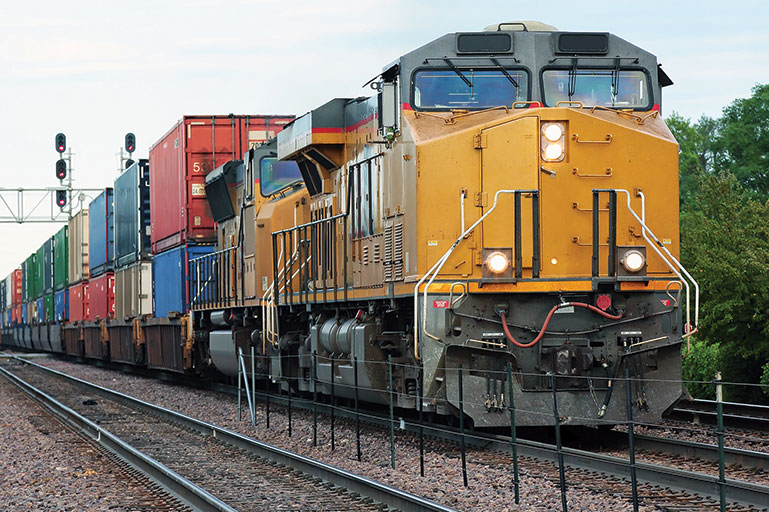
Following the issuing of a final rule by the United States Department of Transportation’s Federal Railroad Administration (FRA) earlier this month, establishing minimum safety requirements for train crew sizes, with the new rule requiring a second crew member on all trains, four U.S.-based railroads are calling on federal appeals courts to toss out the rule, calling it “arbitrary, capricious, and an illegal abuse of discretion,” according to an Associated Press report.
The report said the four railroads filing identical challenges—in different appellate courts—included Class I railroad carriers Union Pacific and BNSF and short-line carriers Indiana Railroad and Florida East Coast Railway.
And the report added that the freight railroad industry “has long opposed such a regulation,” noting that the Association of American Railroads (AAR) recently said that the rule was unfounded and not supported by safety data. It also cited a statement from Union Pacific, in which the carrier said the rule lacks data showing that two people in a cab are safer than one, with the rule hindering its ability to “compete in a world where technology is changing the transportation industry and prevents us from preparing our workforce for jobs of the future.
When it issued the final rule earlier this month, FRA explained that explained having a second crewmember provides various safety functions that are not able to be realized on a single-person crew. As an example, without the final rule, it noted how on a train with one crewmember, railroads could initiate single-crew operations and not perform a rigorous risk assessment, mitigate known risks or notify the FRA.
“The final rule closes that loophole that by establishing minimum standards and a federal oversight process to empower communities and railroad workers to make their voices heard by allowing for public input during FRA’s decision-making process on whether to grant special approval for one-person train crew operations,” said FRA.
And it added that FRA reviewed and considered more than 13,500 written comments received during the 146-day comment period—in addition to the testimony from a one-day public hearing—in finalizing the final rule.
“The volume of comments from rail workers and their families, as well as comments from the general public impacted by long trains and other issues, raised legitimate safety concerns that railroads, on their own, have not been able to adequately address,” said FRA Administrator Amit Bose in a statement. “Today’s final rule acknowledges the important role both crewmembers play in the safe operations of trains, and it comes at a time when the latest annual data reflects some troubling trends that demonstrate the need to improve safety. FRA is taking proactive steps to protect the public, workers, and communities where trains operate across the country.”
Key provisions in the FRA’s final rule include:
- requiring railroads to staff every train operation with a minimum of two crewmembers (including a locomotive engineer and an additional crewmember who will typically be a conductor) that travel with the train and can directly communicate with each other even if one crewmember is not in the locomotive cab, with certain one-person train crew exceptions permitted under specified circumstances;
- providing criteria for instituting one-person train crew operations in certain circumstances through exceptions to the two-crewmember mandate, conditional exceptions based on the type of operation, or a special approval process option;
- give small businesses greater flexibility without sacrificing safety, since the operations of railroads that qualify as small businesses are generally less complex than Class I railroad operations;
- require each railroad with certain types of one-person train crew operations to abide by minimum requirements to prevent uncontrollable train movements if a one-person train crew were: to become incapacitated; maintain communication between a railroad employee, usually a dispatcher, supervisor, manager, or intermittently assisting crewmember, and the one-person train crewmember to convey operational instructions and ensure the one-person crewmember’s personal safety;
- require the lead locomotive of certain operations with a one-person crew be equipped with an alerter—a device or system installed in the locomotive cab to promote continuous, active locomotive engineer attentiveness by monitoring select, locomotive engineer-induced control activities—and the crewmember must alert the tester to confirm it is working before departure; and
- require that each Class II and III freight railroad that (a) plans to initiate a one-person train crew operation after the final rule’s effective date and (b) will not be transporting certain types or quantities of hazardous materials determined to pose the highest risk in transportation, must provide FRA with written notification of the operation before commencing the operation, in addition to complying with the alerter, communication, and mitigation measures requirements, among other provisions
“Common sense tells us that large freight trains, some of which can be over three miles long, should have at least two crew members on board—and now there’s a federal regulation in place to ensure trains are safely staffed,” said U.S. Transportation Secretary Pete Buttigieg in a statement. “This rule requiring safe train crew sizes is long overdue, and we are proud to deliver this change that will make workers, passengers, and communities safer.”
From the perspective of the railroads, the Association of American Railroads (AAR) blasted the final rule, saying there is a lack of evidence connecting crew size to safety and adding that the FRA did not go forward with a similar rule in 2019 after failing to identify evidence to justify a safety need.
In making its case, AAR officials explained that rail carriers prioritize data-driven safety improvements through extensive employee training and private investments in technology and infrastructure. And they added that these actions have brought about tangible results, including: the casualty rate for Class I railroad employees down by 63% since 200—reaching an all-time low in 2023—and the overall train accident rate down 27% since 2000 and 6% since 2022.
“Railroads are committed to working with our union counterparts and policymakers to build on this momentum and advance proven solutions that meaningfully advance safety,” said AAR President & CEO Ian Jefferies in a statement. “Unfortunately, the crew size rule takes the industry in the exact opposite direction. Railroads are committed to working with our union counterparts and policymakers to build on this momentum and advance proven solutions that meaningfully advance safety. Unfortunately, the crew size rule takes the industry in the exact opposite direction.”
What’s more, on a historical basis, AAR said that railroad staffing and crew size policies have been managed through the collective bargaining process, which provides for direct dialogue between rail carriers and the unions representing their employees. The FRA’s overreach into this area will diminish the importance of collective bargaining by inserting the regulator between parties, it said.
In a December 2023 interview with LM, Jefferies said that AAR had significant concerns about a permanent mandate to have two individuals located in the cab of a locomotive at all times.
“We currently have most passenger rail and several short-lines and most train operations around other parts of the world, including Europe, safely operate with one individual in the cab of a locomotive,” he said. “Train crew staffing has always been an issue of collective bargaining. That's where it belongs. And we used to have five in the cab of the locomotive, and right now we have two. Over time during that, that evolution, the railroads have gotten significantly safer. And we believe that bargaining is the place to be there. Follow the data. We just think that data-driven safety improvements are the way to go.” - Ian Jefferies

Article Topics
BNSF News & Resources
Proposed Union Pacific-Norfolk Southern merger draws praise, skepticism ahead of STB Filing CSX and CN sign an MOU focused on a new intermodal service into Nashville Looking at the Intermodal market with Larry Gross, President, Gross Transportation Consulting CSX and BNSF launch national intermodal partnership Report points to the possibility of Union Pacific acquiring Norfolk Southern as increasing BNSF introduces new Los Angeles to Houston expedited intermodal service J.B. Hunt, BNSF, and GMXT launch Quantum de México, focusing on U.S.–Mexico Intermodal Freight More BNSFLatest in Logistics
ISM forecast sees a manufacturing rebound in 2026 as services maintain steady expansion PwC report indicates transportation and logistics dealmaking activity is focused on strategy, not scale ShipMatrix reports strong Cyber Week delivery performance results National diesel average falls for the fourth straight week, reports EIA FTR’s Shippers Conditions Index shows modest growth Trucking executives are set to anxiously welcome in New Year amid uncertainty regarding freight demand ASCM’s top 10 supply chain trends highlight a year of intelligent transformation More LogisticsAbout the Author

Subscribe to Logistics Management Magazine

Find out what the world's most innovative companies are doing to improve productivity in their plants and distribution centers.
Start your FREE subscription today.
December 2025 Logistics Management

Latest Resources












