
2024 Labor Issue: Putting more smiles on more faces
The Annual Salary Survey by Logistics Management reveals that despite economic challenges, salaries in logistics remained stable with increased job satisfaction driven by a sense of accomplishment, relationships, location, and benefits, highlighting progressive company practices and technology to enhance employee engagement and retention.

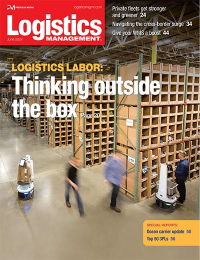
I’m never surprised to learn that our Annual Salary Survey feature that runs in the April issue of Logistics Management (LM) is by far the
best-read piece of editorial for the year. It’s human nature to want to know how your compensation compares with peers.
As we reported back in April, even amidst the economic fog that hung over the majority of 2023, LM readers told us that salaries remained fairly consistent from 2023 to 2024, with nearly 60% reporting salary increases by an average of 5%—not bad, all things considered.
One thing that has surprised me over the past couple years since the pandemic and the e-commerce boom are the “job satisfaction” numbers—which by all accounts are off the charts, especially in the midst of what’s being called the longest, ongoing labor shortage in a generation.
In our 2024 Salary Survey, 94% of the logistics management professionals who responded told us that they’re “very” to “somewhat” satisfied with their careers. In fact, just over half of this year’s respondents (51%) say they’re “very satisfied,” and nearly 80% would recommend a logistics career to a family member or friend.
And while we focus on straight-forward salary and high-level satisfaction numbers in April, this month we dig in to find out what logistics operations are doing to achieve such high marks in job satisfaction. These days, the “feeling of accomplishment” ranks higher than “salary” in terms of factors that lead to job satisfaction, “while relationship with colleagues,” “location,” and “benefits” are all in the top five of what makes and keeps people happy.
Contributing editor Bridget McCrea offers her annual look at some of fresh best practices, technology and progressive thinking that companies are putting to work to minimize turnover, improve employee engagement, and maximize the value of their human workforce—still the most valuable asset of any organization.
“By all reports, people got burnt out during the e-commerce boom, which only perpetuated the labor shortage issue,” says McCrea. “Now, companies that feel stuck in this cycle and looking for ways to balance their workloads with their available labor forces need to focus on developing managers who understand the value of retention, listen to employees, and then provide them with flexible options.”
For example, today, progressive companies are meeting that need to feel more “accomplished” by applying technology to help make certain warehouse/DC jobs less monotonous. “The move toward collaborative robotics that can manage heavy lifting and repetitive tasks tend to attract and retain employees who want to work for companies who invest in cutting-edge automation,” says McCrea. “It signals to the employee that they have an eye on the future.”
Indeed, taking out the mundane and repetitive tasks can free up time for more productive employee engagement elsewhere. According to McCrea, this level of employee experience improvement on the floor, matched with the opportunity to achieve better work/life balance, should be a retention home-run.
“Something as simple as a mobile, self-serve scheduling app that gives employees more control over their schedules will not only help with retention,” says McCrea, “but also open up recruitment to employees who need more shift flexibility, like students or parents juggling school schedules—two often-overlooked populations to pull from.”
This level of progressive thinking will keep satisfaction levels high and open the door for more smiles on more faces inside your operation.

Article Topics
Labor News & Resources
Looking at the impact of tariffs on U.S. manufacturing GXO posts record-setting Q3 earnings results UPS makes progress on key deliverable of deal with Teamsters, plans to install AC in 5,000 delivery vehicles Largest rail union, SMART-TD, signals its support for proposed Union Pacific-Norfolk Southern merger UPS buyout plan for drivers sparks union backlash DHL Express Canada workers ratify new deal Fed holds rates steady amid tariff issues, leaving logistics sector in holding pattern More LaborLatest in Logistics
ISM forecast sees a manufacturing rebound in 2026 as services maintain steady expansion PwC report indicates transportation and logistics dealmaking activity is focused on strategy, not scale ShipMatrix reports strong Cyber Week delivery performance results National diesel average falls for the fourth straight week, reports EIA FTR’s Shippers Conditions Index shows modest growth Trucking executives are set to anxiously welcome in New Year amid uncertainty regarding freight demand ASCM’s top 10 supply chain trends highlight a year of intelligent transformation More LogisticsAbout the Author

Subscribe to Logistics Management Magazine

Find out what the world's most innovative companies are doing to improve productivity in their plants and distribution centers.
Start your FREE subscription today.
December 2025 Logistics Management

Latest Resources












